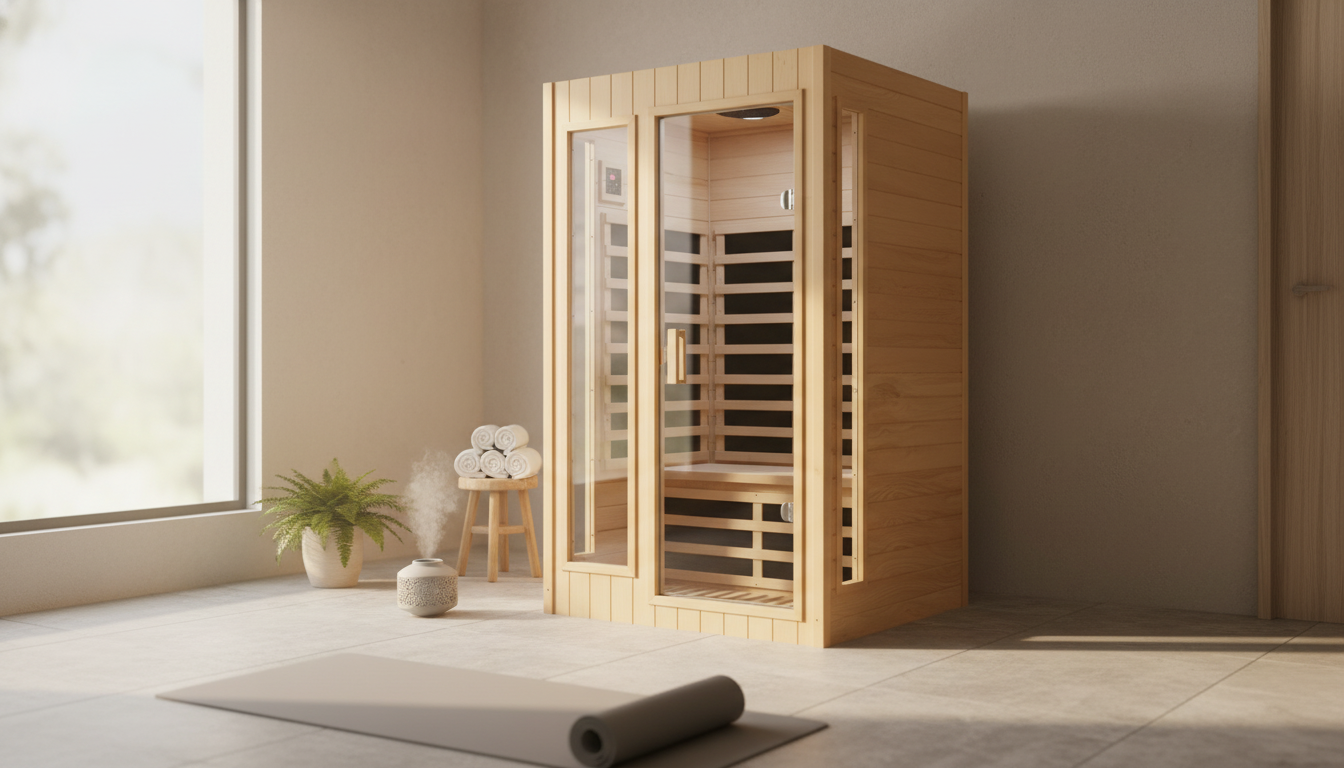
A 2-person infrared sauna can make heat therapy feel less like an occasional splurge and more like a repeatable at-home routine. Compared with many traditional steam-style setups, infrared models often feel more controllable day to day: warm-up is typically quicker, the air can feel easier to breathe, and sessions can be tailored to shorter windows of time. When a cabin is built from hemlock wood and paired with a low-EMF heating design, the goal is a comfortable, predictable experience that fits into normal home life—plus modern touches like Bluetooth for audio.
Quick Overview of the Sauna
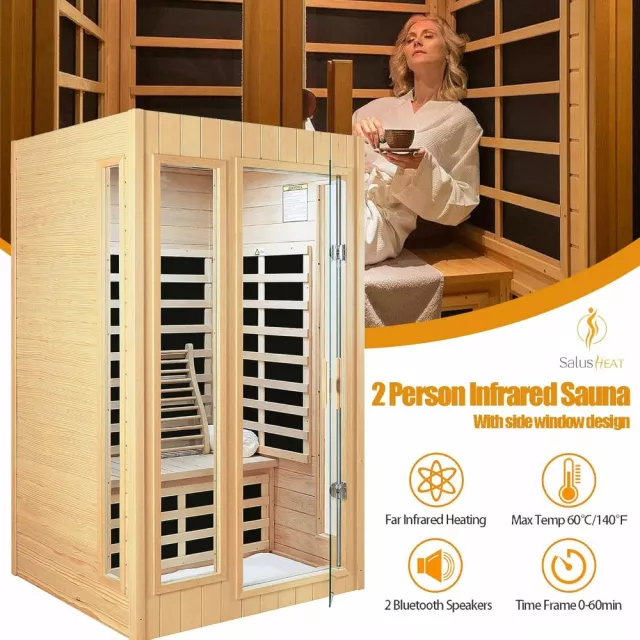
A 2-person infrared sauna is sized to let two adults sit comfortably side-by-side, while also doubling as an extra-spacious solo option. Instead of focusing on heating the entire air volume first, infrared heaters deliver radiant warmth that many people describe as steady and less “stuffy” than humid heat. Hemlock wood is a common cabin material because it’s stable in warm, dry conditions, and Bluetooth connectivity lets you play music, podcasts, or guided breathwork without adding more equipment to the room. “Low EMF” design is intended to reduce electromagnetic exposure near heating components compared with higher-EMF alternatives.
At-a-Glance Specifications
| Feature |
What it means for daily use |
| Capacity: 2-person |
Room to sit side-by-side; also works as a roomy solo sauna. |
| Power: 1500W |
Typical household-friendly draw; influences warm-up time and peak heat stability. |
| Cabin material: Hemlock wood |
Naturally suited to heat; helps the cabin feel solid and comfortable to the touch. |
| Bluetooth audio |
Plays sound from a phone/tablet for relaxation or timers without extra devices. |
| Low EMF |
Prioritizes reduced EMF levels near heating components when properly installed and used. |
Comfort and Session Experience
The most noticeable difference for many first-time owners is how infrared heat “lands.” Rather than a heavy blanket of hot air, the warmth is often described as more direct and consistent, especially once the panels are fully warmed. For people who dislike a humid, foggy feeling, an infrared cabin can feel easier to tolerate while still encouraging a solid sweat response.
The two-person layout matters more than it sounds. For couples, it turns sessions into shared downtime. For solo users, the extra width can make it easier to change posture—sitting upright, leaning back, or turning slightly—without feeling boxed in. That flexibility can help you stay comfortable as your body warms.
Infrared cabins are typically quiet: no water boiling, no steam generator cycling, and minimal mechanical noise. If Bluetooth audio is included, it can become the “routine anchor”—one playlist, one timer, one guided meditation—making it easier to show up consistently, even on busy evenings.
Sweating patterns vary. Many people start to sweat several minutes in, after their core temperature begins to rise. Hydrating before and after sessions can support comfort, and it’s worth keeping a towel inside the sauna to sit on and to wipe perspiration as needed.
Low EMF: What It Is and What to Verify
EMF (electromagnetic fields) are produced by electrical products, and levels depend on the design, wiring, components, operating load, and how close you are to the source. In a sauna context, “low EMF” generally refers to choices such as wiring layout, grounding, shielding, and heater construction that aim to reduce measurable fields where a person sits.
Because “low EMF” can be used as a broad marketing label, it’s smart to verify details before committing. Ask how testing was performed, where measurements were taken (for example, at the bench, near the backrest, and at specific distances from heaters), and which units were reported. In practical terms, intensity typically drops as distance increases—so posture and seating position can change what you’re exposed to. For general background on EMF, the World Health Organization provides an accessible overview: Electromagnetic fields and public health (WHO).
If you use an implanted medical device or have a medical concern about exposure, follow your clinician’s guidance and the device manufacturer’s recommendations for proximity to electrical equipment.
Hemlock Wood Cabin: Build, Smell, and Maintenance
Power and Placement: What 1500W Means at Home
Bluetooth Audio and Controls: Small Features That Affect Consistency
How to Choose the Right 2-Person Infrared Sauna
Safety Notes and Best Practices
Heat tolerance varies widely. Start with shorter sessions and moderate temperatures, then increase gradually based on comfort. Hydrate before and after, and stop if dizziness, nausea, or unusual discomfort shows up. The CDC’s guidance on heat stress signs is a useful reference point for recognizing when your body is signaling “enough”: Heat stress prevention and warning signs (CDC/NIOSH).
Seek clinician guidance if you’re pregnant, have cardiovascular concerns, low blood pressure, fever/illness, or implanted devices. Avoid alcohol before or during sessions due to dehydration risk and impaired judgment. For a broader look at what research suggests (and doesn’t) about sauna use and health, see: Sauna for health — what the research says (NIH/NCCIH).
FAQ
How much space is needed for a 2-person infrared sauna?
Plan for the sauna’s footprint plus extra clearance for door swing, airflow, and comfortable entry/exit. Also confirm ceiling height, a nearby suitable outlet, and a level floor so the cabin sits square and the door seals properly.
What does “low EMF” mean for an infrared sauna?
It refers to design choices intended to reduce electromagnetic field levels inside the cabin, but readings depend on distance and how/where measurements were taken. Look for published test data that states measurement locations (such as bench height) and operating conditions.
Is hemlock wood hard to maintain in a home sauna?
Hemlock is typically easy to care for with simple habits: wipe surfaces after sessions, avoid harsh cleaners, and leave the door slightly ajar to dry out. Periodic gentle cleaning helps prevent lingering odors over time.
Recommended for you









Leave a comment