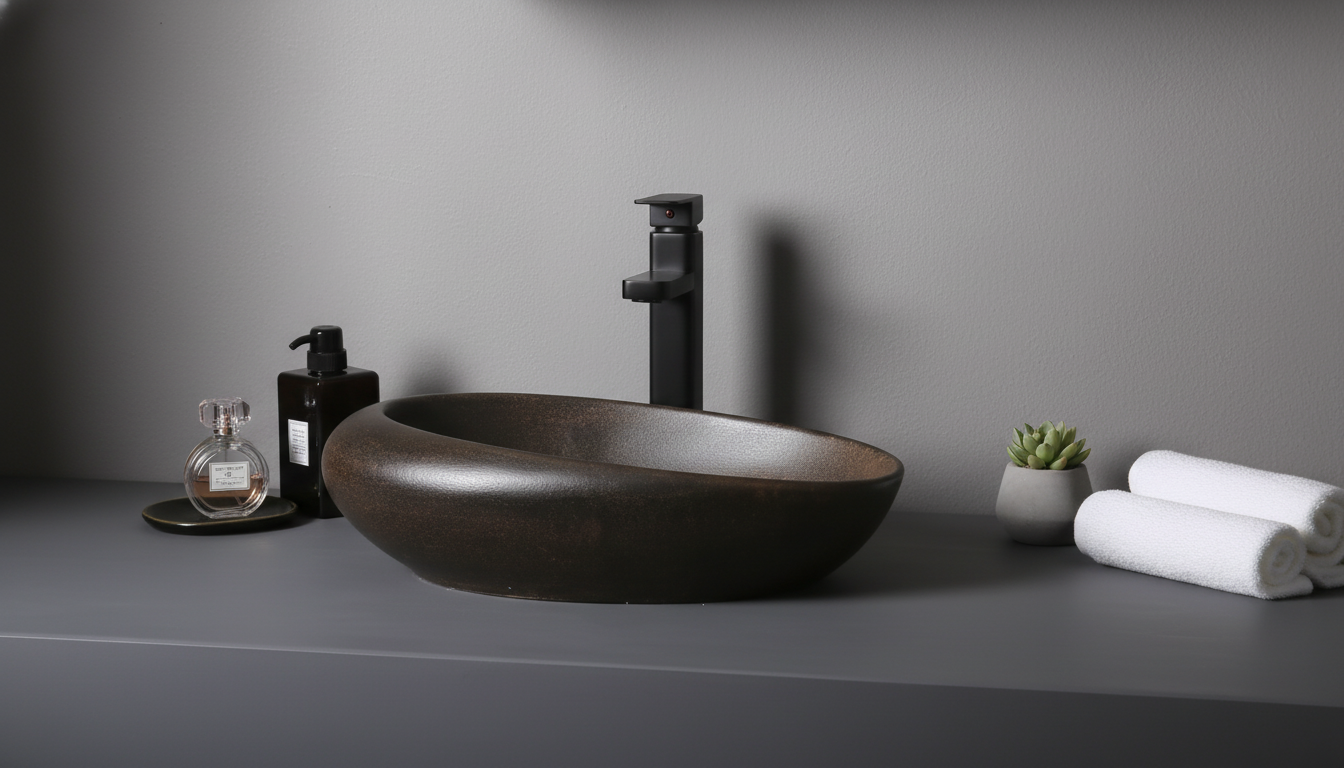
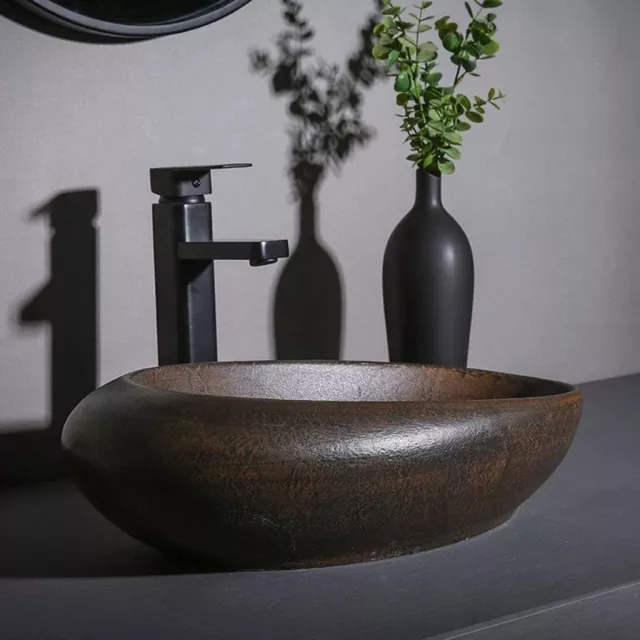
A brown oval ceramic vessel sink brings a warm, furniture-like accent to a bathroom while keeping the countertop look clean and modern. Because the bowl sits above the counter, the vessel style naturally becomes a focal point—especially on simple vanities—while pairing easily with wall-mount faucets or taller deck-mount “vessel” faucets. With the right sizing, faucet reach, and care routine, glazed ceramic can stay glossy and easy to wipe down for years.
What Makes an Oval Vessel Sink Work So Well
- Soft oval profile: Rounded edges reduce sharp corners, so daily wiping feels faster and less fussy.
- High visual impact with minimal remodeling: A vessel installation can elevate a basic vanity into a statement without changing cabinetry.
- Glazed ceramic is easy to live with: The finished surface resists common bathroom staining and cleans well with non-abrasive products.
- Brown plays well with warm materials: It complements wood vanities, brushed gold accents, and warmer stone tones while still feeling modern.
Design Fit: Color, Countertops, and Hardware Pairings
Brown ceramic can read as earthy, spa-like, or softly modern depending on the surrounding finishes. For a crisp contrast, pair it with a light quartz top or a white marble-look surface. For a cohesive palette, medium wood tones and warm off-whites make the sink feel intentionally integrated rather than “added on.”
- Countertops: Light stone provides contrast; warm solid-surface materials can make the look feel seamless and calm.
- Hardware: Brushed brass, champagne bronze, matte black, and oil-rubbed bronze commonly coordinate with brown ceramic.
- Lighting: Warm-temperature bulbs (soft white) usually keep brown glaze looking rich rather than flat or gray.
- Style direction: Oval vessel sinks can lean transitional, Japandi, or modern farmhouse based on faucet shape and vanity detailing.
Ceramic Construction: Benefits and Tradeoffs
Glazed ceramic remains a popular bathroom material because it’s practical: it handles humidity well, doesn’t need sealing, and wipes clean without specialty products. The glaze creates a non-porous finished surface that helps resist water absorption and reduces how strongly soap scum and cosmetics cling.
- Durability in real bathrooms: Ceramic is stable under heat and humidity swings, which matters in family baths and frequently used primary suites.
- Chipping is the main risk: Dropping a heavy bottle or tool can chip glaze. Keeping heavy items off the rim and out of the bowl reduces the chance of damage.
- Shine lasts with gentle care: Abrasive powders and scouring pads can create micro-scratches that dull the surface over time.
How to Choose: Size, Faucet Reach, and the Right Setup
A vessel sink’s comfort comes down to measurements and water trajectory. Before selecting a bowl, confirm vanity depth, faucet placement, and whether the sink includes an overflow. A little planning up front prevents common annoyances like splashing, cramped hand room, and hard-to-clean gaps behind the sink.
- Vanity depth and bowl placement: Leave enough counter space from the rim to the front edge so hands fit comfortably and water stays inside the bowl.
- Faucet height and projection: Vessel sinks generally need a taller spout and sufficient reach so water lands closer to the drain—not on the rim.
- Drain compatibility: Many vessel sinks use a standard lavatory drain opening. A grid-style pop-up is often chosen for a clean, minimal look.
- Overflow (or no overflow): Some vessel sinks are designed without an overflow; if so, select a compatible non-overflow drain and avoid leaving the water running unattended.
- Cutout type: Confirm whether the sink requires a full cutout, partial cutout, or only a drain-hole opening.
- Wall/backsplash clearance: If the bowl sits close to a wall, check faucet handle clearance and cleaning access behind the sink.
Quick Planning Checklist for an Oval Ceramic Vessel Sink
| Decision Point |
What to Check |
Good Target |
| Vanity top space |
Depth and left/right clearance around the bowl |
Enough room to wash hands without hitting the rim or wall |
| Faucet type |
Wall-mount vs tall deck-mount vessel faucet |
Spout reaches near the drain centerline |
| Spout height |
Distance from spout outlet to sink rim |
Comfortable hand room with reduced splashing |
| Drain selection |
Overflow vs no-overflow, finish match |
Compatible drain body and cleanable stopper |
| Countertop material |
Sealing and cutout method (stone, solid surface, wood) |
Clean cut with sealed edges to protect against moisture |
Installation Notes for Vessel Sinks (Without the Guesswork)
Vessel sinks are often straightforward to set, but small alignment mistakes can be noticeable because the bowl sits fully in view. Start with a dry fit, confirm faucet alignment, and check level before anything becomes permanent.
For general clearance planning, the NKBA Bathroom Planning Guidelines are a useful reference point. If water efficiency is a priority, EPA WaterSense explains faucet flow basics and efficiency labeling.
Daily Care and Long-Term Maintenance
Common Pairings: Faucets, Drains, and Vanity Styles
FAQ
Do vessel sinks splash more than undermount sinks?
They can, but splashing is mostly controlled by faucet reach, aeration, water pressure, and bowl depth. Aim the water stream toward the drain area and choose a spout height that leaves hand room without sending water from too high above the rim.
Can an oval ceramic vessel sink be installed on a wood countertop?
Yes, as long as the wood is properly sealed and the cutout edges are protected against moisture. Use bathroom-rated silicone where appropriate and wipe up standing water so it doesn’t sit around the base.
What cleaner is safe for glazed ceramic bathroom sinks?
Mild dish soap or a pH-neutral bathroom cleaner with a soft cloth is typically safe for glazed ceramic. Avoid abrasive powders and scouring pads; for mineral deposits, use a gentle approach and rinse thoroughly afterward.
Recommended for you










Leave a comment