5.28 GPM Indoor Gas Tankless Water Heater with 132,000 BTU: What to Expect for Instant Hot Water
A gas tankless water heater can deliver hot water on demand without storing it in a tank, but day-to-day comfort depends on more than the headline GPM number. A 5.28 GPM, 132,000 BTU indoor unit can be a strong fit for many homes, yet real performance varies with temperature rise (how cold your incoming water is), how many fixtures run at once, and whether the installation supports proper venting, combustion air, and gas supply.
Below is what this size of indoor gas tankless water heater typically does well, what limits it in colder conditions, and what to plan for so “instant” hot water feels consistent at showers and sinks.
How a Gas Tankless Water Heater Delivers Instant Hot Water
When you open a hot-water fixture, water begins moving through the heater. A flow sensor detects that demand and signals the ignition system to fire the burner. From there, the unit modulates burner output (and sometimes water flow) to hold the selected outlet temperature.
“Instant” means the heater produces hot water continuously while water is running, rather than relying on stored hot water in a tank. There is still a short delay at the fixture caused by the hot-water pipe run: the cool water sitting in the line has to clear before hot water arrives. Longer runs generally mean longer waits, even if the heater itself heats quickly.
Stable outlet temperature depends on steady flow and adequate gas pressure. Quick changes in demand—such as a toilet refill, a washing machine fill, or someone adjusting a shower valve—can cause small temperature swings, especially if the heater is operating near its capacity. Because this is an indoor gas appliance, correct venting and combustion air provisions are essential to keep exhaust safely outside the home.
Performance Basics: Flow Rate vs. Temperature Rise
The most common surprise with tankless systems is that the advertised flow rate isn’t a fixed promise across all climates. The colder the incoming water, the more energy it takes to raise that water to a comfortable shower temperature. With a 132,000 BTU burner, you generally get more usable GPM at a smaller temperature rise and less usable GPM at a larger temperature rise.
Temperature rise is simply the difference between incoming cold-water temperature and the outlet setpoint. For example, heating 45°F water to 110°F requires a 65°F rise. In winter, many regions see incoming water drop into the 40s (or lower), which increases the rise needed to hit a comfortable 105–115°F at the fixture.
Sizing snapshot: how temperature rise affects usable flow
| Scenario |
Typical inlet temp |
Target outlet temp |
Temp rise |
Impact on usable GPM |
| Warm-climate incoming water |
65°F |
110°F |
45°F |
Higher usable GPM; easier to run multiple fixtures |
| Mild-season incoming water |
55°F |
110°F |
55°F |
Moderate usable GPM; one shower + sink may be comfortable |
| Cold-climate winter incoming water |
40°F |
110°F |
70°F |
Lower usable GPM; simultaneous fixtures may require staggering use |
| Higher setpoint for mixing (e.g., with tempering) |
55°F |
120°F |
65°F |
May reduce GPM at the heater, but can improve distribution and mixing flexibility |
If multiple fixtures run at once, total required GPM adds up fast. Two showers and a bathroom sink can easily push beyond what smaller units can sustain at winter inlet temperatures. Many homes improve comfort by using low-flow fixtures and by setting the heater to a practical temperature that balances capacity and safety (often with a mixing/tempering strategy when higher setpoints are needed).
Indoor Installation Requirements That Matter Most
Venting and combustion air
Indoor tankless heaters must vent exhaust gases outdoors using vent materials and routing approved for that model and fuel type. Vent diameter, maximum vent length, number of elbows, and termination location all affect safe operation. Combustion air is equally important: tight homes may need a dedicated air intake or other make-up air provisions to avoid backdrafting and poor combustion.
Gas supply sizing
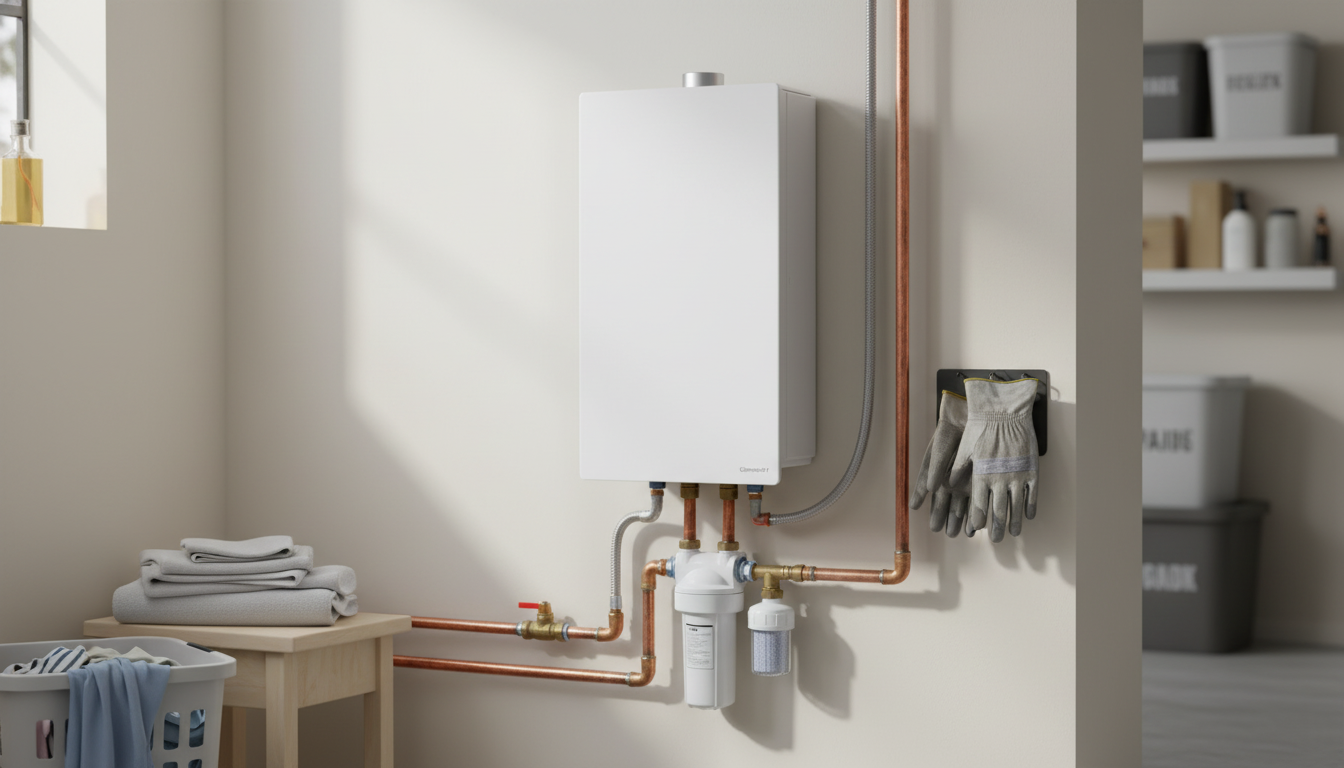
Water connections, service valves, and electrical
Comfort Planning for Bathrooms: Showers, Faucets, and Simultaneous Use
Operating Costs and Efficiency: Where Savings Come From
For more background on energy performance and typical considerations, see the U.S. Department of Energy overview of tankless (on-demand) water heaters.
Maintenance and Water Quality: Keeping Performance Consistent
Fixture flow rates also influence performance. If you’re considering low-flow shower heads and faucets, the EPA’s WaterSense resources are a useful reference for typical efficiency standards and labeled products.
How to Choose the Right GPM and BTU for an Indoor Tankless Heater
For performance verification, you can also look up certified ratings using the AHRI Directory when comparing specific models.
Safety and Code Considerations
FAQ
Will a 5.28 GPM tankless heater run two showers at the same time?
Sometimes, but it depends on incoming water temperature, the outlet setpoint, and each shower head’s actual flow rate. In colder months, the usable GPM at a comfortable temperature can drop, so two showers may require reduced flow, a slightly lower setpoint, or staggering usage.
What size gas line is needed for a 132,000 BTU indoor tankless water heater?
It must be sized using a gas piping chart that accounts for pipe length, fittings, gas type, and the total BTU load of all connected appliances. Undersized gas lines can cause ignition problems and reduced hot-water output, so a licensed installer should verify the final sizing.
How often should an indoor tankless water heater be flushed for scale?
Many homes flush about once per year, but hard water or higher temperature settings can require more frequent descaling. Isolation valves make the manufacturer-approved flushing procedure faster and help keep performance consistent.
Recommended for you









Leave a comment