Road Bike Cleats for SPD-SL and LOOK KEO: Fit, Float, and Long-Lasting Performance
Road cleats do more than clip shoes into pedals—they influence knee tracking, comfort on long rides, and how securely power transfers through each pedal stroke. This guide breaks down compatibility between SPD-SL and LOOK KEO-style cleats, how to pick the right float, and practical setup steps for a stable, quiet, and durable connection.
What road-style cleats change on the bike
Road-style cleats are designed around a broader pedal platform and a more rigid shoe interface than many walk-friendly systems. That changes how the bike feels under load and how predictable the clip-in experience is.
- Stability under load: Wider contact areas typically feel more planted during sprints and steady climbs, especially when you’re driving through the downstroke.
- Knee comfort: Float and alignment help reduce strain from small tracking differences between left and right legs.
- Entry/exit feel: Tension settings and cleat wear affect how positive clipping in feels and how predictable release is at stops.
- Pedaling efficiency: Correct fore–aft and side-to-side placement supports consistent power through the stroke, reducing “hot spots” and unwanted ankle compensation.
SPD-SL vs LOOK KEO: what’s similar and what isn’t
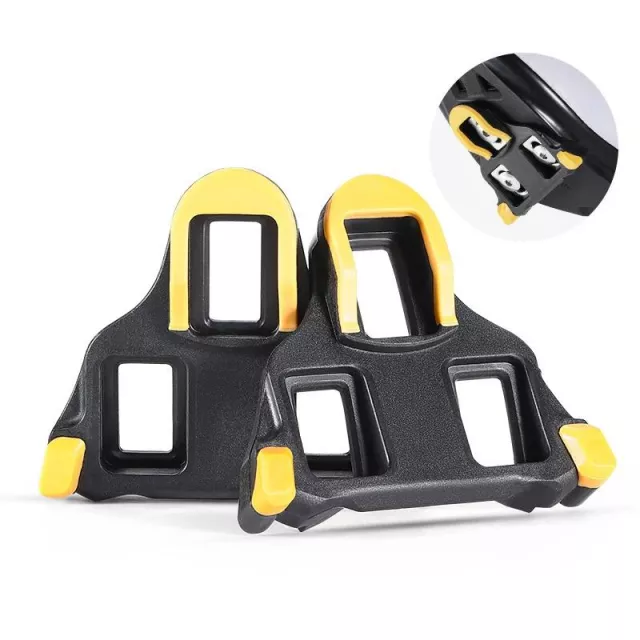
SPD-SL and LOOK KEO are both 3-bolt road standards built for a secure engagement and a stable platform. The key is that “3-bolt” describes the shoe mounting pattern, not cross-compatibility between pedal families.
- Both are 3-bolt road standards designed for a broad platform and secure engagement.
- Cleat shapes and interface details differ; even when they look close, mixing systems can cause poor engagement or unsafe release.
- Most road shoes with a 3-bolt pattern can mount either style of cleat, but the pedal system still dictates which cleat is required.
- Float options vary by manufacturer and color coding; always match the intended float to the rider’s needs and fit.
Quick comparison of common road pedal/cleat systems
| Feature |
SPD-SL |
LOOK KEO |
SPD (2-bolt, reference) |
| Bolt pattern on shoe |
3-bolt |
3-bolt |
2-bolt |
| Typical use |
Road |
Road |
MTB/Gravel/Commuting |
| Platform feel |
Wide, stable |
Wide, stable |
Smaller, walk-friendly |
| Walkability |
Limited (road cleat protrudes) |
Limited (road cleat protrudes) |
Better (recessed in many shoes) |
| Common float ranges |
Varies by cleat version |
Varies by cleat version |
Varies; often multi-release options |
| Mix-and-match between brands |
Not recommended |
Not recommended |
Often brand-specific within SPD ecosystem |
Compatibility checklist before buying
A correct match starts with the pedals, then works backward to shoes and hardware. A few minutes of checking prevents messy returns and reduces the chance of “mystery” creaks later.
- Confirm pedal system first: The pedal model determines which cleat family is compatible.
- Confirm shoe drilling: Most road shoes support 3-bolt; some shoes can be adapted from 4-bolt to 3-bolt using an adapter plate.
- Check hardware: Ensure bolts, washers, and any backing plates are included or compatible with the shoe’s sole.
- Look for wear indicators: Some road cleats include colored wear zones or markings that help identify when replacement is due.
- If switching systems, plan a fresh fit: A different cleat shape can shift stance width and fore–aft position slightly.
For manufacturer-specific fit notes and compatibility guidance, start with the pedal maker’s resources: Shimano and LOOK.
Float, release angle, and knee-friendly setup
Float is the small amount of rotational movement your foot can make while clipped in. For many riders, the “right” float is the one that keeps the knee tracking naturally when fatigue sets in.
- Float basics: Float is the degree of rotational movement allowed while clipped in; more float can reduce knee stress for many riders.
- Too little float: Can feel locked-in; it may be preferred for racing but can amplify fit issues if alignment is off even slightly.
- Too much float: Can feel vague; it may benefit riders with sensitive knees but can require extra attention to saddle height, setback, and cleat rotation.
- Release behavior: Depends on both the cleat and pedal; adjust pedal tension to match rider confidence and experience level.
If pain shows up only when clipping in (not in flat shoes), it’s often a sign the cleat rotation or stance width is forcing the foot away from its natural angle. A neutral reset is usually more effective than chasing small tweaks.
How to Choose Road Bike Cleats When Stock Is Limited
When selection is thin, the goal is to buy the correct cleat family first, then choose the float and durability features that best match your riding. Avoid “close enough” substitutes—cleats are a safety-critical interface.
Installation steps for quiet, secure engagement
For a more detailed, general walk-through of cleat positioning basics, see this reference from BikeRadar.
Maintenance and when to replace cleats
FAQ
What is the difference between SPD-SL and Look Keo?
Both are 3-bolt road systems with a broad platform, but they use different cleat shapes and pedal interfaces, so the cleats are not interchangeable. Float options and release feel vary by cleat version, and walkability is limited for both because the cleat protrudes from the sole.
Are SPD-SL harder than SPD?
They can feel harder mainly when walking, since road cleats protrude and are easier to slip on. On the bike, difficulty depends more on pedal tension, technique, and cleat condition than on the bolt pattern itself.
Are Shimano SPD-SL cleats compatible with Look Keo?
No—SPD-SL cleats are not intended to work with LOOK KEO pedals. Mixing systems can lead to poor engagement or unpredictable release, so the cleat should always match the pedal model.
Recommended for you










Leave a comment