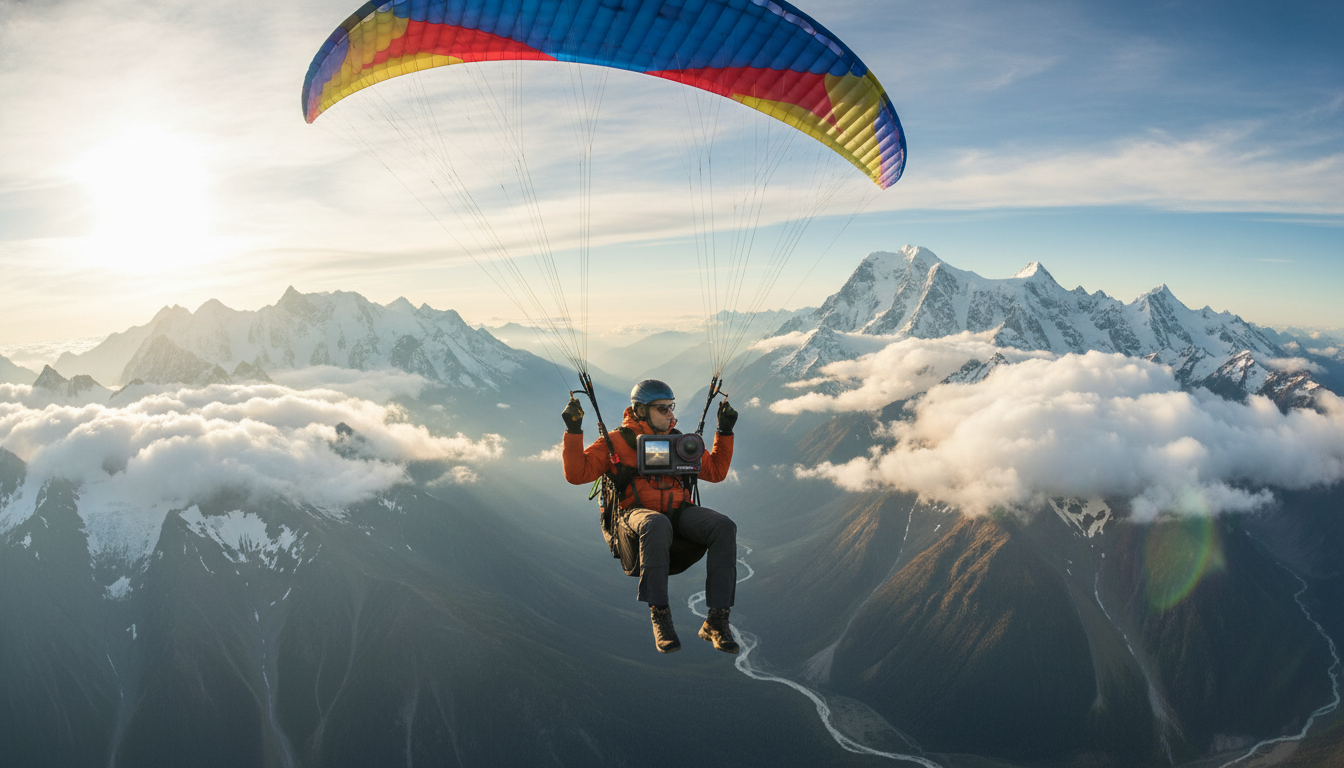
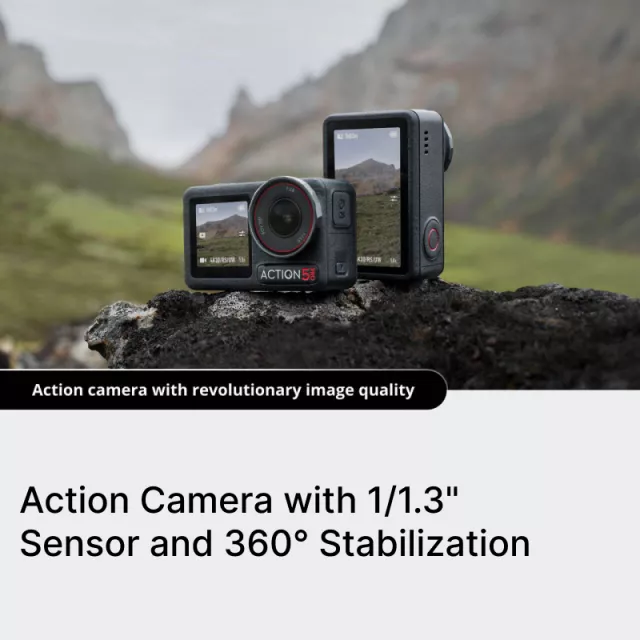
Adventure footage looks best when the camera can handle fast motion, harsh lighting, and unpredictable terrain without turning clips into shaky, noisy video. A larger 1/1.3″ sensor helps capture cleaner detail in dim forests or late-day rides, while 360° stabilization is designed to keep horizons and subjects steady during runs, climbs, and descents. For more guidance, see 10 Best Cameras for Adventure Photography (in 2023).
What a 1/1.3″ Sensor Changes Outdoors
Sensor size is one of the biggest practical upgrades for real-world adventure filming because it influences how cleanly the camera handles shadows, highlight transitions, and fast shutter speeds.
- Improved low-light clarity for sunrise, dusk, tree cover, and indoor transitions, where smaller sensors often smear detail or show heavy noise.
- Better dynamic range to hold sky detail while keeping shadows usable—helpful when a bright ridgeline sits above a dark trail corridor.
- More flexibility when color-grading, especially in mixed lighting like snowfields with dark pines, or water reflections that push highlights.
- Cleaner image at faster shutter speeds when freezing action (spray, gravel, roost, and quick body movement) without the picture falling apart.
In practice, the gain shows up when you’re moving quickly between light zones: cresting a hill into open sun, dropping into shade, then popping back out to glare. A larger sensor gives the camera more room to keep textures intact instead of turning them into blotchy patches.
How 360° Stabilization Helps on Real Trails
Stabilization isn’t only about “less shake.” For action cameras, the more meaningful benefit is keeping footage watchable when your body is constantly pitching, rolling, and absorbing impacts.
- Reduces micro-jitters from footsteps, handlebars, or helmet vibrations so fine detail (like trail texture) doesn’t sparkle or shimmer.
- Helps maintain a level horizon when the camera tilts during turns, jumps, and banking—especially noticeable on skis and bikes.
- Makes handheld clips more usable without a gimbal, which is ideal for quick B-roll at a viewpoint or mid-ride stop.
- Pairs well with wide-angle views to keep motion smooth while preserving immersion and speed.
For chest mounts and helmet mounts, 360°-style horizon leveling can be the difference between “dynamic lean” and “unintentionally crooked.” The goal isn’t to erase movement; it’s to keep the frame readable while your line choice and speed do the storytelling.
Recording Modes That Matter for Adventure Filming
Specs only matter when they translate into usable clips. Focus on modes that protect detail in motion, keep editing simple, and match the light you actually ride in.
- High frame rates for slow motion (jumps, sprays, impacts, and trick analysis) without excessive blur.
- Higher bitrates and efficient codecs for sharper detail in moving foliage, water, and gravel—areas that often break apart with heavy compression.
- Wide and linear viewing options to balance the classic action-cam “big world” feel versus straighter lines and less edge stretch.
- Reliable audio capture and wind management for narration, trail sounds, and crowd noise without constant distortion.
Common settings and when to use them
| Scenario |
Suggested resolution & FPS |
Shutter/ISO approach |
Notes |
| Mountain biking, helmet/chest mount |
4K 60fps |
Faster shutter; moderate ISO ceiling |
Stabilization benefits from wider field of view; keep the lens clean from dust |
| Running or hiking POV |
4K 30fps |
Balanced shutter; lower ISO when possible |
Lower FPS can improve low-light performance and battery life |
| Snow sports (bright, high contrast) |
4K 60fps |
Faster shutter; low ISO |
Protect highlights; consider exposure compensation in intense glare |
| Under canopy / dusk |
4K 30fps |
Avoid overly fast shutter; raise ISO carefully |
A larger sensor helps reduce noise; stabilization can soften if light is very low |
| Slow-motion highlights |
1080p 120fps (or higher if available) |
Fast shutter; higher light recommended |
Use for short clips; expect increased storage use |
Codec support can also affect workflow and file size. If your camera offers H.265/HEVC, it can preserve detail at lower bitrates than older formats, though it may require a more capable phone or computer for editing (overview: NVIDIA’s H.264/H.265 guide).
Build, Mounting, and Field Practicalities
- Mount ecosystem: helmet, chest, handlebar, backpack strap, and extension poles each change perspective and vibration. Bring at least one backup mount option.
- Weather resistance: rain, mud, splashes, and temperature swings are normal. If you’re comparing models, it helps to understand IP ratings and what they mean for dust/water protection (IEC 60529 IP ratings).
- Battery strategy: cold reduces runtime. Keep spares warm, and plan quick swaps between runs rather than pushing one battery to zero.
- Storage: higher bitrates and high-frame-rate modes demand fast microSD cards. Check Video Speed Class guidance to avoid dropped frames (SD Association speed classes).
- Controls in real conditions: glove-friendly buttons, screen brightness in hard sun, and quick access to key settings can save a shot.
How to Choose the Right Action Camera for Adventure Filming
Quick Setup for Smoother, Cleaner Clips
FAQ
Does a 1/1.3″ sensor make a noticeable difference for action footage?
Yes—especially in low light and high-contrast scenes, where a larger sensor can hold cleaner shadow detail and smoother highlight transitions. It also helps when using faster shutter speeds to freeze action, though results still depend on settings and a clean lens.
What is 360° stabilization and when is it most useful?
360° stabilization typically combines multi-axis electronic stabilization with horizon leveling to keep the frame steadier even when the camera rolls or tilts. It’s most useful for skiing, biking, and running where frequent leaning, banking, and impacts can make footage hard to watch.
Which settings work best for mountain biking and skiing?
In good light, 4K 60fps with a faster shutter and controlled ISO is a reliable choice for sharp, smooth action. In lower light or under tree cover, 4K 30fps can reduce noise and preserve detail, and you can choose wide or linear based on how much distortion you want.
Recommended for you







Leave a comment