Can you see galaxies with a refractor telescope?
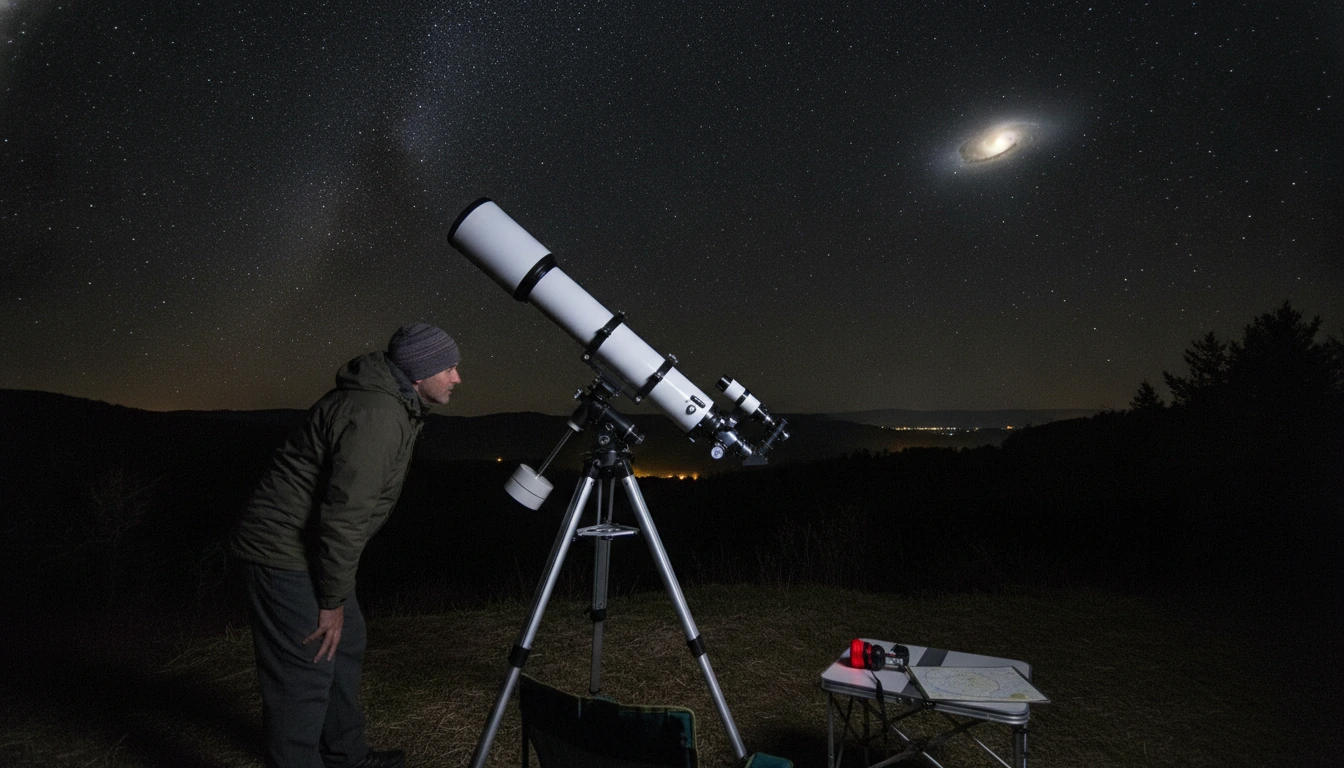
Yes—some galaxies are visible in a refractor telescope, but what you’ll see depends heavily on aperture, sky darkness, and magnification choices. With a small refractor (around 60–80mm), the brightest galaxies like Andromeda (M31) can appear as a faint, oval “smudge” with a brighter core under dark skies. In suburban or city light pollution, that same galaxy may be difficult or invisible.
With a mid-size refractor (around 90–120mm), you can pick up more bright Messier galaxies (like M81 and M82 in Ursa Major) and begin to notice differences in shape—elongated halos, brighter centers, and nearby companion galaxies. Even then, don’t expect colorful spiral arms through the eyepiece; galaxies generally appear as subtle shades of gray because they’re so dim and your night vision relies more on rod cells than color-sensitive cones.
What makes galaxies easier (or harder) to see?
Sky conditions matter more than almost anything
A dark, transparent sky is the biggest upgrade for galaxy observing. Under Bortle 2–4 skies, a modest refractor can show many more galaxies than a larger scope under bright city lights.
Aperture and optics help, but technique does too
More aperture gathers more light, which increases galaxy visibility. High-quality refractor optics can improve contrast and star sharpness, making faint fuzzies easier to detect. Also try “averted vision” (looking slightly to the side of the target) and gentle sweeping of the field to help your eye catch faint details.
Mount stability makes faint targets less frustrating
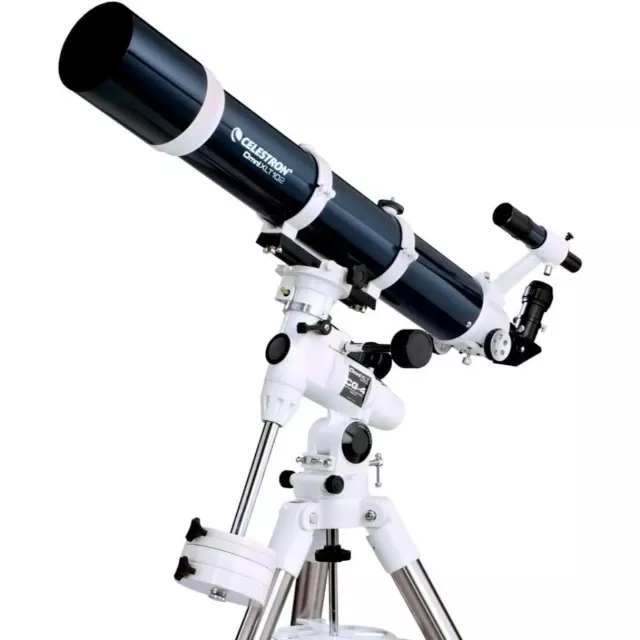
Galaxies are low-contrast objects, so a steady view matters. A stable equatorial setup can make it easier to keep the target centered at higher magnifications. For practical guidance on refractors, coatings, and mount considerations, see the main guide here: hand-figured refractor, XLT coatings, and manual EQ mount guide.
FAQ
What’s the best eyepiece magnification for galaxies?
Start low to medium power (often around 30x–80x) to keep the image bright and frame the galaxy. Increase magnification only if the galaxy stays visible and contrast improves.
Recommended for you









Leave a comment