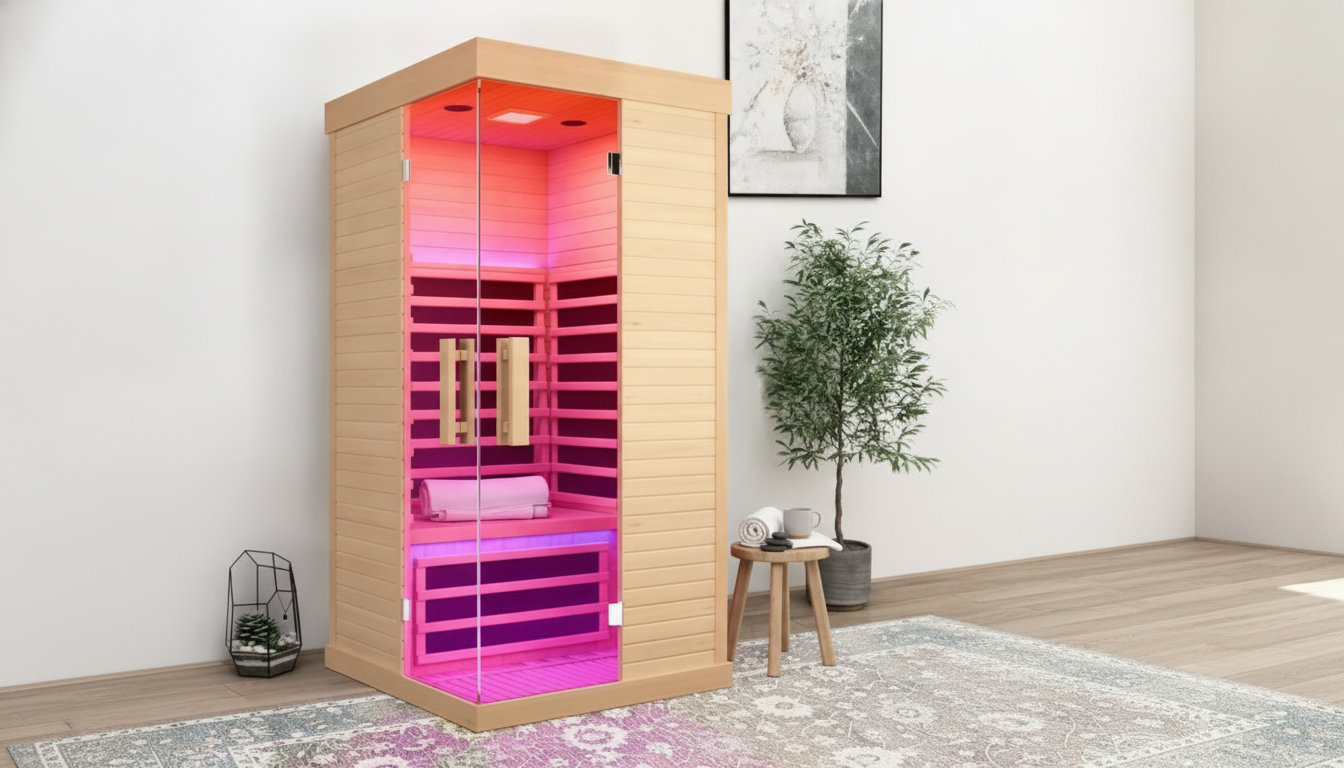
A one-person far infrared sauna can deliver a private spa feel in a surprisingly small footprint—ideal for apartments, home gyms, or a quiet corner of a primary suite. The most “luxury” options go beyond simply getting hot: they focus on even, comfortable heat, a calm interior environment, premium materials that stay pleasant indoors, and practical safety details that make regular use feel effortless.
What Makes a One-Person Far Infrared Sauna Feel “Luxury”
Luxury, in a single-person cabin, is less about size and more about refinement. With limited space, every design decision affects comfort, heat balance, and how relaxing a session feels.
- Refined interior comfort: Ergonomic seating, smooth edges, and a layout that avoids “hot spot” pressure points help you sit still comfortably and enjoy steady warmth.
- Premium materials: Quality wood selection, stable joinery, and low-odor construction matter indoors, where lingering smells and rough finishes are more noticeable.
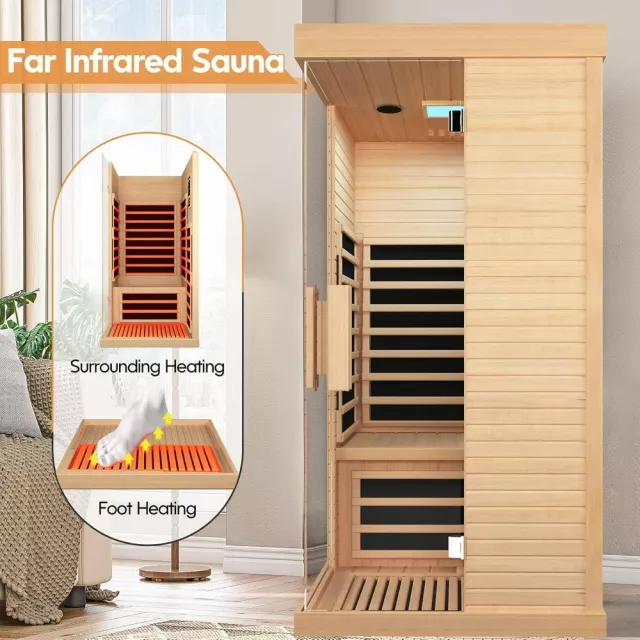
- Heating performance: Consistent infrared coverage across the body tends to feel more spa-like than relying on one concentrated panel.
- Thoughtful details: Calm lighting, intuitive controls, and a quiet interior ambiance support a decompression routine—especially for evening sessions.
- Confidence in safety: Clear electrical requirements, reliable temperature/time controls, and sensible ventilation guidance reduce friction (and worry) around daily use.
How Far Infrared Heat Works Indoors
Far infrared systems use radiant energy designed to warm the body directly while also warming the surrounding air over time. Many people prefer the experience because sessions often feel steady and breathable rather than aggressively hot.
- Typical sessions are built around a comfortable, consistent heat instead of extreme temperatures.
- Compact, one-person cabins can warm efficiently, but still need safe clearances and airflow for the electronics and exterior surfaces.
- Humidity is generally low compared with steam-style experiences, which can be easier to tolerate for longer sessions.
- A stable indoor setup depends on level flooring, a nearby outlet that matches the unit’s requirements, and reasonable room ventilation.
For general safety context around infrared devices and heat exposure, review resources from the FDA and sauna guidance from Mayo Clinic.
Far Infrared vs. Traditional Sauna (At-Home Perspective)
| Feature |
Far Infrared Sauna |
Traditional (Heater/Rocks) Sauna |
| Primary heat style |
Radiant infrared panels |
Heats air and surfaces via sauna heater |
| Typical feel |
Gentle, even warmth at lower air temps |
Hotter air temperature with stronger ambient heat |
| Humidity |
Usually dry, low humidity |
Dry with optional steam when water is added (model dependent) |
| Warm-up |
Often faster in small cabins |
Can take longer depending on heater and room volume |
| Indoor considerations |
Electrical needs + ventilation; minimal moisture |
Electrical needs + higher heat load; more heat to room surfaces |
Placement and Indoor Setup Checklist
A luxury sauna experience starts before the first session. A stable, well-planned placement helps the cabin run efficiently, keeps the room comfortable, and reduces wear over time.
- Choose a stable, level surface: Avoid soft carpet if it causes rocking or uneven weight distribution. A firm, flat floor helps the door seal properly and reduces squeaks.
- Leave clearance around the unit: Plan space for air circulation and for servicing panels or electronics if needed. Tight placement can trap heat and make maintenance harder.
- Plan the electrical route: Dedicated circuits may be recommended for higher-power units. Avoid extension cords and confirm the outlet location before delivery.
- Confirm delivery measurements: Doorway widths, hallway turns, stair clearance, and elevator rules can matter even for compact cabins.
- Keep the room comfortable: A small fan, cracked door, or steady room ventilation can improve comfort during longer sessions.
Comfort Features That Matter in a One-Person Cabin
In a solo sauna, comfort features aren’t “nice-to-haves”—they’re what makes the experience sustainable. The goal is to settle in quickly, stay relaxed, and step out feeling refreshed rather than restless.
Care, Cleaning, and Long-Term Ownership
For additional background on sauna use and general heat-therapy considerations, the NIH (NCCIH) offers a helpful overview.
How to Choose the Right Luxury Indoor One-Person Far Infrared Sauna
Quick Fit-and-Feature Comparison Checklist
| Decision Point |
What to Verify |
Why It Matters |
| Space planning |
Exterior dimensions + clearance needs |
Prevents cramped placement and overheating of nearby surfaces |
| Delivery path |
Doorway width, turns, stairs, elevator rules |
Avoids last-minute installation problems |
| Electrical |
Outlet type, circuit capacity, cord length |
Supports safe, reliable operation |
| Heating layout |
Panel placement (back/side/leg) |
More even warmth and comfort |
| Comfort |
Bench size, headroom, lighting |
Longer, more relaxing sessions |
| Care |
Cleaning guidance and ventilation needs |
Keeps the cabin fresh and low-maintenance |
FAQ
How much space is needed for a one-person indoor infrared sauna?
Plan for the sauna’s footprint plus a little clearance around the sides and back for airflow and service access, and enough room for the door to swing comfortably. Also measure the full delivery path—doorways, hallway turns, stairs, and tight corners—so the panels can be brought in and assembled without damage.
Do far infrared saunas need special electrical wiring?
Some do, depending on the unit’s voltage and amp draw, so it’s important to verify requirements before purchase and placement. Avoid extension cords, and if you’re unsure whether your outlet or circuit is appropriate, consult a qualified electrician for a safe, reliable setup.
How often can a far infrared sauna be used safely?
Follow the manufacturer’s guidance and build up gradually based on personal tolerance, starting with shorter sessions and prioritizing hydration. If you’re pregnant, have cardiovascular concerns, or take medications that affect heat tolerance, check with a clinician before establishing a frequent routine.
Recommended for you









Leave a comment