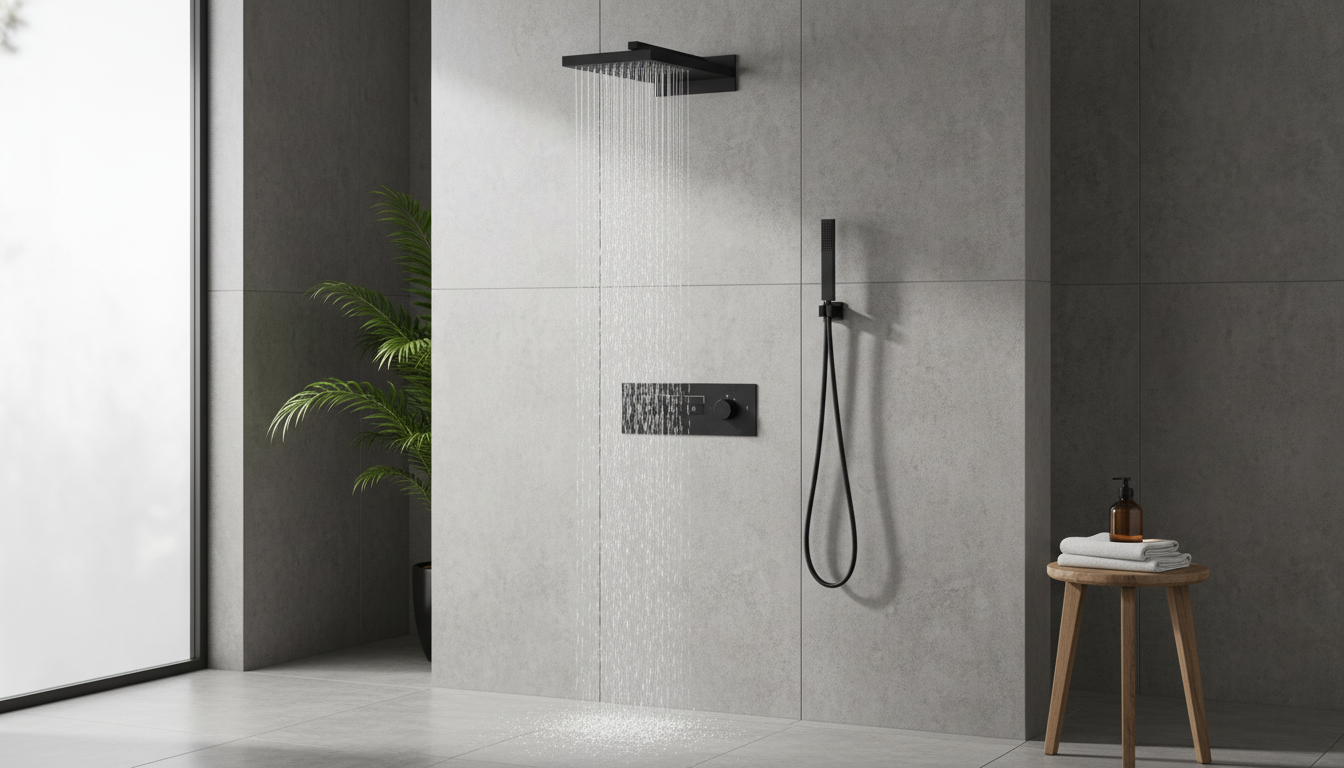
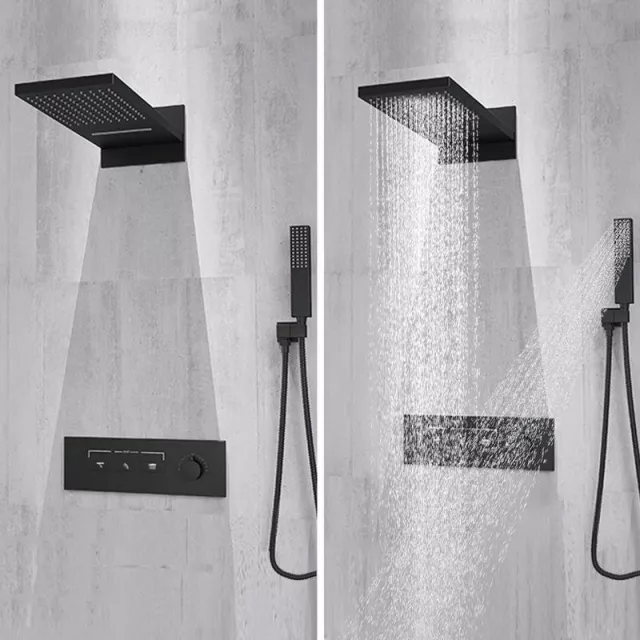
A wall-mounted shower system with a waterfall outlet brings a spa-like sheet of water into a clean, architectural layout. This high-end black brass set pairs a bold finish with durable metal construction and a streamlined, space-saving installation that suits modern bathrooms and elevated remodels.
What Makes a Waterfall Shower System Feel Different
A waterfall outlet is designed to send water across a wider face so it drops in a smooth, laminar-style stream. Instead of a dispersed spray pattern, the water reads more like a cascade—visually striking and noticeably different on the shoulders and scalp.
- A waterfall outlet delivers a wide, laminar-style stream that feels more like a cascade than a spray.
- Creates a distinct sensory contrast to a traditional shower head—best for relaxation, rinsing shampoo quickly, and adding a premium focal point.
- Waterfall outlets typically perform best when home water pressure and flow are within normal ranges; low pressure can reduce the “sheet” effect.
If you’re used to a high-velocity spray, a waterfall can feel softer and more enveloping. Many homeowners choose it for the “hotel shower” experience and the strong design statement it creates on a feature wall.
Design Details: Wall-Mounted Layout and Black Brass Finish
Wall-mounted shower systems keep lines crisp and surfaces more open, which can make a bathroom feel larger. With the plumbing and controls aligned to the wall plane, the overall look is more intentional—especially when paired with large-format tile or a symmetrical layout.
- Wall-mounted configuration keeps the floor area visually clean and simplifies matching with wall tile patterns.
- Black hardware reads modern and high-contrast, pairing well with white tile, stone textures, warm woods, and matte accessories.
- Brass construction is valued for longevity and corrosion resistance when compared with lighter metals.
- A cohesive set (outlet + controls) helps maintain consistent lines and finish across visible components.
Matte and satin black finishes can look especially refined against light grout lines and pale stone, while still coordinating with darker, moodier palettes. In either case, consistent finish across the outlet and trim helps the installation look “built-in” rather than mixed-and-matched.
Build Quality and Materials to Look For in High-End Sets
Premium shower sets tend to feel solid in hand and steady on the wall—qualities that usually come down to what’s inside the trim, not just what’s visible. In wet, frequently used environments, material choices and serviceability matter as much as styling.
- Solid brass components in key areas (valve body, spout/outlet, and main fittings) support long service life in wet environments.
- Quality plating/coating helps resist discoloration and water spotting; matte black finishes often benefit from gentle cleaning to avoid sheen changes.
- Ceramic disc cartridges are common in premium controls for smooth operation and reduced dripping over time.
- Standard plumbing connections and serviceable cartridges make future maintenance easier.
When comparing sets, look beyond surface descriptions. “All-metal” can still mean mixed alloys in critical areas, while true brass construction in the valve and outlet assembly is often a better long-term bet for corrosion resistance and stability.
Water Performance and Comfort Considerations
Waterfall outlets prioritize coverage and feel, but the experience depends on how well the fixture matches your home’s supply conditions. A strong, continuous sheet typically needs adequate flow and balanced pressure between hot and cold lines.
- Waterfall outlets prioritize coverage and feel; pairing with an optional secondary shower function (when available) improves day-to-day versatility.
- Temperature stability depends on the valve design, household hot-water capacity, and pressure balance between hot and cold lines.
- For consistent performance, confirm the home’s pressure and any local flow restrictions before selecting a high-flow fixture.
- In hard-water areas, mineral buildup can change the shape of the water sheet; routine wipe-downs help preserve the cascade effect.
If water efficiency is a priority, it’s also worth understanding local flow-rate rules and certifications. The EPA WaterSense program offers guidance on water-saving fixtures and labeling, which can help set expectations for performance and consumption.
Installation Notes for Wall-Mounted Shower Systems
For code and standards references, resources like the International Association of Plumbing and Mechanical Officials (IAPMO) and the American Society of Plumbing Engineers (ASPE) can be helpful when planning professional-grade installations.
How to Choose the Right High-End Waterfall Shower Set
Care, Cleaning, and Finish Preservation
At-a-Glance Specifications
FAQ
Does a waterfall outlet need higher water pressure than a standard shower head?
Not always, but the “sheet” look is more sensitive to pressure and flow than a typical spray head. If household pressure is low, the waterfall can break up or look thinner, so it’s smart to verify your home’s PSI/flow and any local flow-rate limits before choosing a wide outlet.
Is black brass hard to keep clean in a shower?
It’s manageable with simple, gentle upkeep. Wiping the surface after use and cleaning with mild soap and water helps prevent water spots, while avoiding abrasive pads and acidic cleaners helps preserve the black finish—especially in hard-water areas.
Can a wall-mounted shower system be installed in an existing shower without re-tiling?
Sometimes, but it depends on where the current valve sits and whether there’s access behind the wall. Many wall-mounted installations require opening the wall to set the rough-in depth correctly and to maintain proper waterproofing, so a professional assessment is usually the safest path.
Recommended for you










Leave a comment