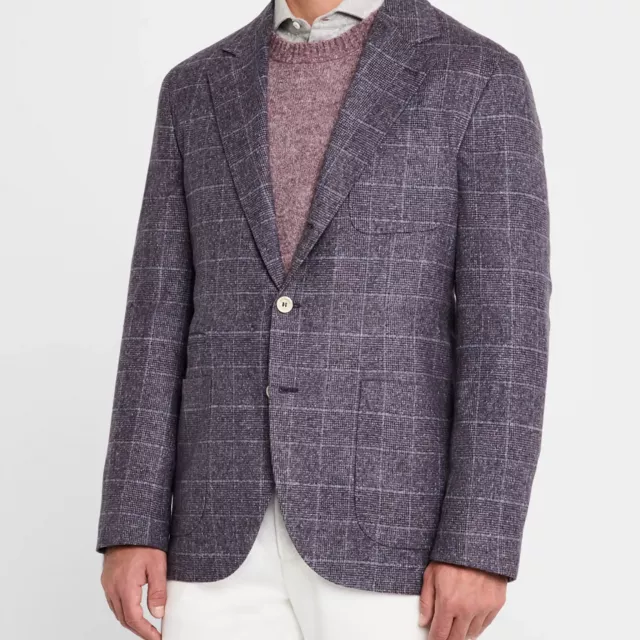
A tailored check blazer in a wool-silk blend brings together structure, softness, and a subtle sheen that elevates everyday outfits. This piece is designed to move easily between refined daywear and evening occasions, pairing the sharp lines of classic suiting with the lighter hand-feel of a blended cloth.
What Sets a Wool-Silk Check Blazer Apart
A check blazer in a wool-silk blend sits in a sweet spot: polished enough for meetings and dinners, but versatile enough to wear with denim or knitwear. The fabric mix is the real differentiator—wool contributes a tailored backbone, while silk adds a refined surface that makes the pattern look richer under changing light.
- Wool provides body, drape, and resilience, helping the jacket hold its shape through repeated wear.
- Silk introduces a smoother surface and gentle luminosity that makes the check pattern appear more dimensional under light.
- A check pattern reads polished without feeling formal, making it easier to style than a solid blazer in many wardrobes.
- The blend can feel lighter and more breathable than heavy all-wool suiting, depending on weave and lining.
For a quick refresher on how each fiber behaves, see the overviews from Encyclopaedia Britannica (Wool) and Encyclopaedia Britannica (Silk).
Materials and Fabric Feel
Expect a refined, slightly textured hand typical of tailored wool blends, with silk contributing a cleaner, smoother finish. On a check pattern, that combination matters: wool helps create depth and contrast, while silk gives crisper line definition at the intersections.
- Expect a refined, slightly textured hand typical of tailored wool blends, with silk contributing a cleaner, smoother finish.
- The check motif benefits from the blend: wool gives contrast and depth, silk adds clarity to lines and intersections.
- Seasonal comfort depends on fabric weight and lining; a wool-silk blend often suits transitional months and climate-controlled settings.
Wool vs. Silk vs. Wool-Silk Blend at a Glance
| Fabric |
Strengths |
Watch-outs |
Best use |
| Wool |
Shape retention, warmth, crease recovery |
Can feel warmer; may pill with friction depending on grade |
Workwear, travel, cooler seasons |
| Silk |
Softness, sheen, fluid drape |
More delicate; can snag; usually needs careful pressing |
Occasionwear, layering, adding polish |
| Wool-silk blend |
Balanced structure with subtle luster; refined surface |
Care is closer to tailored wool (often dry clean); avoid rough abrasion |
Versatile tailoring across day-to-evening |
Design Details to Look For in a Check Blazer
Great tailoring is often felt before it’s noticed. A check blazer can look “busy” if proportions are off, so clean construction and careful finishing help the pattern read intentional rather than loud.
- Shoulder construction: lightly structured shoulders look clean while staying comfortable for longer wear.
- Lapel proportions: classic lapels keep the jacket timeless; slimmer lapels read modern and sleek.
- Pattern matching: checks aligned at seams (where possible) signal careful cutting and tailoring.
- Functional elements: real pockets, interior pockets, and quality buttoning improve daily usability.
- Lining and finishing: a smooth lining helps layering and reduces friction at elbows and across the back.
Small details add up in wear, too: a well-set collar reduces gaping, and clean sleeve pitch helps the jacket sit naturally when reaching forward (useful at a desk, in a car, or during travel).
Fit and Sizing Notes for Tailored Jackets
A blazer can be beautiful on a hanger and still feel off if the fit isn’t right. The most important checkpoints focus on the areas that are difficult (or costly) to alter, especially shoulders and collar.
- Shoulders: should sit flat with no divots or overhang; this is the hardest area to alter cleanly.
- Button stance: when fastened, the front should close without pulling into an “X” shape; slight shaping is fine.
- Sleeve length: ideal is near the wrist bone, leaving a small amount of shirt cuff visible if layered.
- Jacket length: a balanced blazer typically covers the seat; shorter lengths read more casual, longer reads more formal.
- Alterations: sleeve length and waist suppression are often straightforward; shoulder width is more complex.
If the jacket feels tight across the upper back when moving your arms forward, sizing up and tailoring the waist often looks cleaner than forcing a close size through the shoulders.
How to Style a Wool-Silk Check Blazer
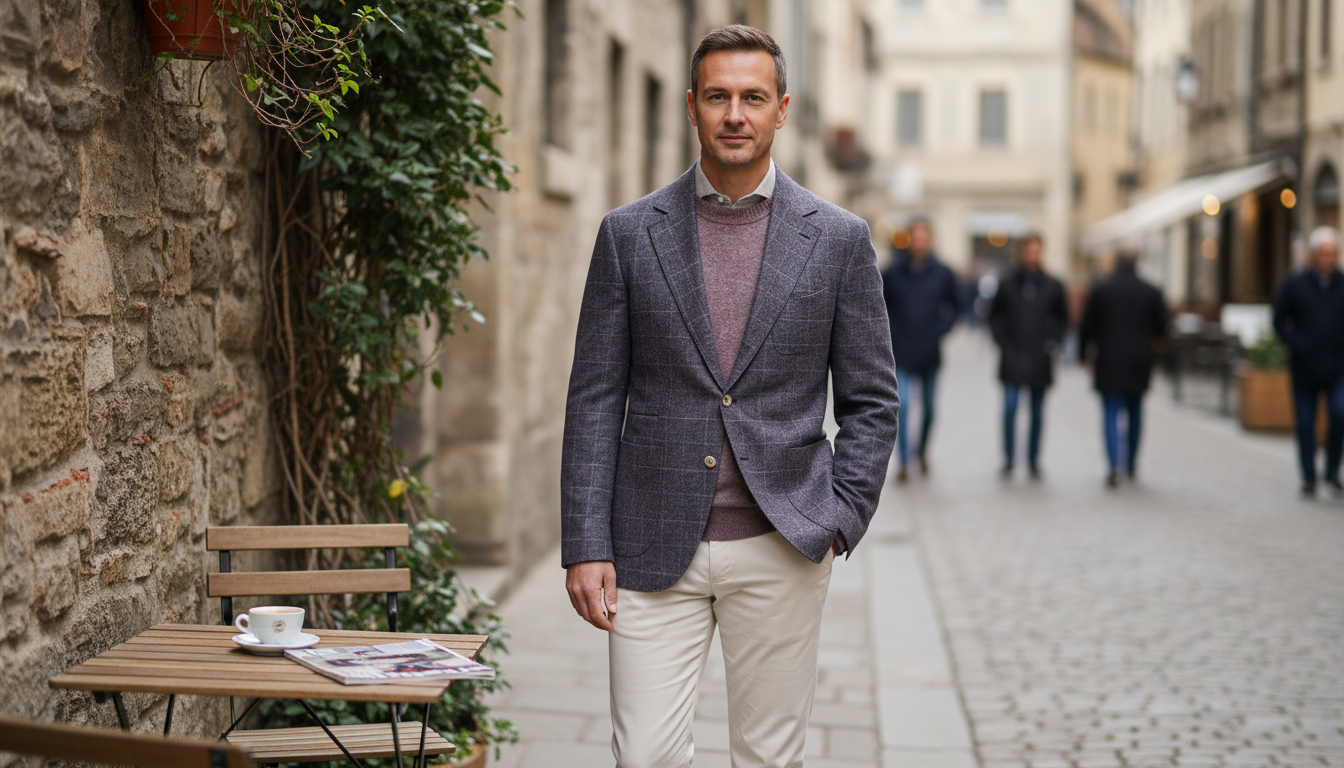
The easiest way to wear a check is to let it be the only pattern in the outfit. Keep the rest of the look tonal or solid so the blazer reads sophisticated rather than distracting.
- Business-ready: pair with a crisp poplin shirt, tailored trousers, and leather loafers or oxfords; keep colors quiet to let the check lead.
- Smart casual: combine with a fine-gauge knit, dark denim, and suede footwear for a relaxed but elevated look.
- Evening polish: wear over a monochrome base (black, charcoal, deep navy) to sharpen the silhouette and enhance the fabric’s sheen.
- Texture balancing: pair with matte, solid pieces (cotton, flannel, brushed wool) to avoid competing patterns.
For accessories, lean minimal: a simple belt, understated watch, and a pocket square in a solid or near-solid weave keeps the outfit cohesive.
How to Choose the Right Blazer If This One Isn’t Available
Care and Longevity
For general best practices on maintenance, Woolmark’s guidance on wool care is a helpful reference: Woolmark — How to Care for Wool.
FAQ
What fabric does Brunello Cucinelli use?
Brunello Cucinelli is known for premium natural fibers such as cashmere, wool, silk, linen, and cotton, often blended to fine-tune drape, softness, and durability. The exact fabric composition varies by season, category, and the intended feel of each garment.
Does Brunello Cucinelli have women’s clothing?
Yes. Brunello Cucinelli produces both women’s and men’s collections, typically including tailoring, knitwear, outerwear, and accessories designed with the brand’s understated, elevated aesthetic.
What is so special about Brunello Cucinelli?
The brand is widely recognized for meticulous craftsmanship, high-quality materials, and a refined, understated design language. Its made-in-Italy heritage and focus on elevated essentials contribute to its reputation for timeless luxury.
Recommended for you










Leave a comment