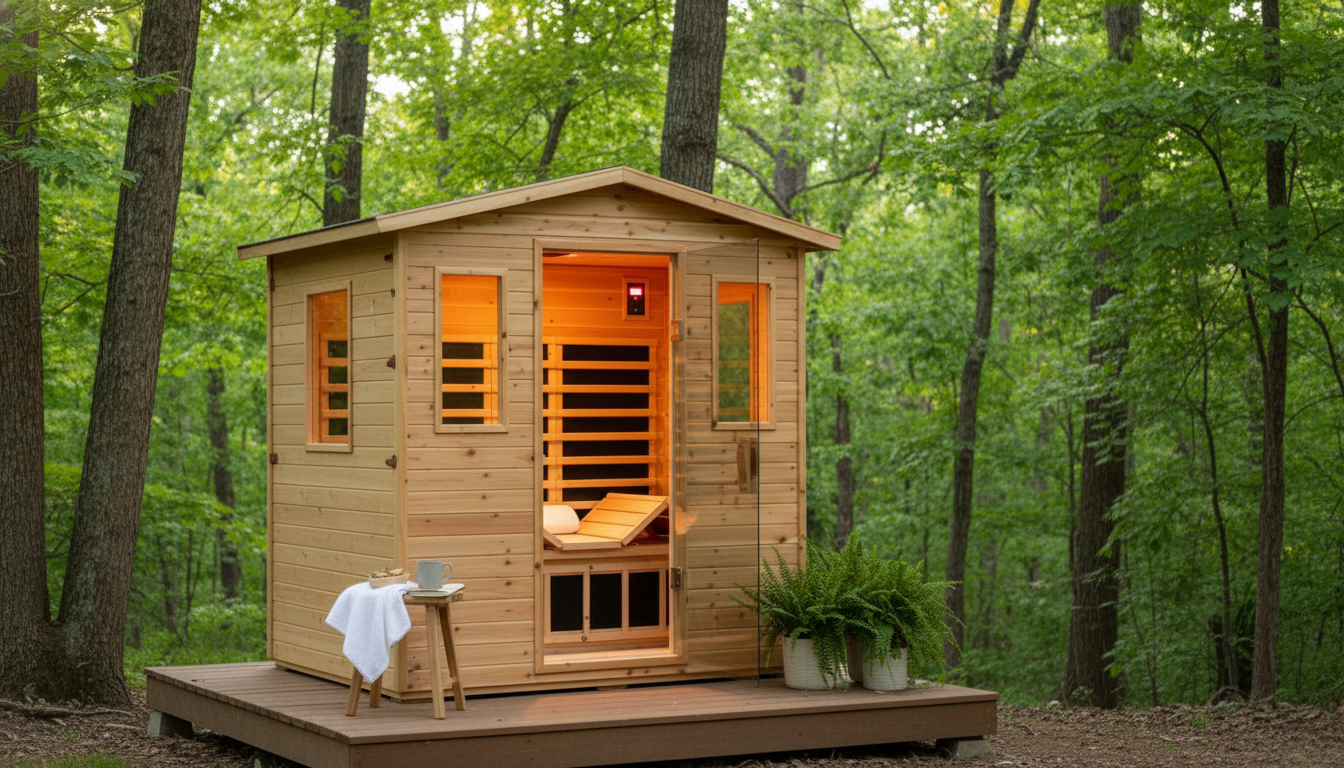
A spacious outdoor infrared sauna designed for up to three people, combining targeted infrared heat with integrated red light therapy. The foldable seat adds flexibility for stretching, cooldown posture changes, or making room for different body sizes and routines. This guide focuses on placement, comfort, safety, and what to verify before committing to an outdoor wellness setup.
What This Outdoor Infrared Sauna Is Built For
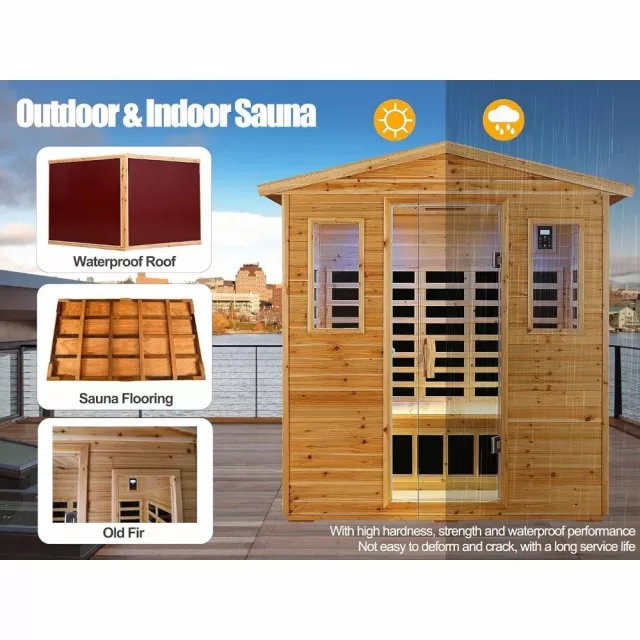
This style of outdoor infrared sauna is made for shared sessions and flexible routines. Most “3-person” cabins fit two adults comfortably with extra space to shift positions, while three adults can fit depending on shoulder room and how upright everyone sits. Because it’s intended for outdoor living—on a patio, deck, or near a pool—site conditions like airflow, drainage, and weather exposure matter as much as the sauna itself.
Unlike traditional hot-air saunas, infrared designs focus on radiant heat that’s felt more directly on the body. Add integrated red light therapy and the cabin becomes a single stop for heat plus light, which many people fold into recovery and relaxation habits.
Infrared Heat: What to Expect During a Session
Infrared heat commonly feels “deeper” and more targeted on skin and muscles, even when the cabin’s air temperature is lower than what many associate with classic sauna rooms. That can make sessions feel approachable, but it’s still real heat stress—especially outdoors during summer.
Session pacing and sweat profile
Many people start with shorter, easier sessions and build up over time based on comfort and medical guidance. Sweat can ramp gradually, so hydration and a deliberate cooldown are important. Outdoors, wind and ambient heat can change how quickly you warm up and how you feel when you step out.
Breathing comfort and airflow
Ventilation is often overlooked. Check whether the design uses a simple fresh-air intake and exhaust, and whether that airflow feels comfortable at higher heat. A cabin that feels “stuffy” can cut sessions short even if the temperature is manageable.
Red Light Therapy Integration
Red light therapy is commonly used for skin appearance support and recovery-oriented routines. Pairing it with infrared heat can be convenient, turning a session into a multi-modal wind-down after training or a long day. Evidence and outcomes vary by individual, so consistency and realistic expectations matter more than chasing intensity.
Placement and usability
Before committing, verify where the light panels sit relative to actual seating positions. The best placement reaches common target areas (back, torso, legs) without forcing you to twist, hunch, or sit uncomfortably close. If multiple people will use the sauna, think about whether each seat gets useful exposure—or if one spot becomes the “good light seat.”
Foldable Seat: Comfort, Accessibility, and Space Management
A foldable seat is a practical upgrade in a small-group sauna because it changes how the cabin can be used from day to day.
- Flexible layout: Fold it down for extra sitting options or fold it up to open space for standing stretches, mobility work, or easier entry/exit.
- Comfort strategy: If heat stratifies (warmer up high), a lower fold-down position can feel like a gentler “break” without ending the session.
- Shared sessions: When three people are inside, folding a seat can create elbow room and reduce the cramped feeling that sometimes comes with “max capacity” use.
- Outdoor durability: Confirm the hinge/hardware is corrosion-resistant and easy to wipe down. Moisture plus moving parts is where outdoor wear shows up first.
Outdoor Placement and Site Requirements
Outdoor installations reward good planning. A sauna that’s perfectly assembled can still develop issues if the base shifts or water pools around it.
Foundation, drainage, and clearances
Use a level, stable base—such as a concrete pad, properly set pavers, or a deck rated for the load. Uneven support can stress panels and cause door alignment problems over time. Choose a spot that naturally sheds rainwater and avoids low points where puddles form.
Sun, wind, and sprinklers
Power, Heating Performance, and Cold-Weather Use
Safety and Comfort Guidelines
Care, Cleaning, and Outdoor Longevity
How to Choose the Right Outdoor Infrared Sauna for a Small Group
Outdoor sauna decision checklist
| Decision point |
What to verify |
Why it matters |
| Placement |
Level base, drainage, clearances |
Prevents warping, improves safety, supports long-term performance |
| Power |
Dedicated circuit, GFCI/outdoor-rated outlet, plug type |
Reduces nuisance trips and improves electrical safety |
| Comfort |
Bench depth, headroom, foldable seat usefulness |
Determines whether sessions feel relaxing or cramped |
| Wellness features |
Red light position and usability |
Ensures the light reaches intended areas without awkward posture |
| Maintenance |
Access to panels/controls, cleaning routine |
Simplifies upkeep and extends lifespan |
Setup and First-Week Checklist
Lock in a simple routine—preheat, towel placement, hydration, cooldown—so sessions stay consistent and safe. For deeper reading on potential benefits and risks, see Harvard Health Publishing’s overview on saunas and this review on sauna bathing and cardiovascular health at NCBI (PubMed Central).
Value Factors That Influence the Real Cost of Ownership
FAQ
Can an outdoor infrared sauna be used in winter?
Yes, but warm-up time often increases and heat loss is higher when opening the door. Wind protection, good door seals, and a safe non-slip path to and from the sauna become especially important in cold weather.
How long should a typical infrared sauna session last?
Many people start with shorter sessions and gradually increase as they learn their tolerance. Hydration and stopping immediately for warning symptoms matter, and medical conditions or certain medications may require clinician guidance on duration.
What does a foldable seat add compared with a fixed bench?
It adds flexibility for stretching, leg elevation, and easier entry/exit, and it can help manage space when multiple users share the cabin. For outdoor use, it’s also worth keeping the hinge area clean and dry to protect the folding mechanism.
Recommended for you








Leave a comment