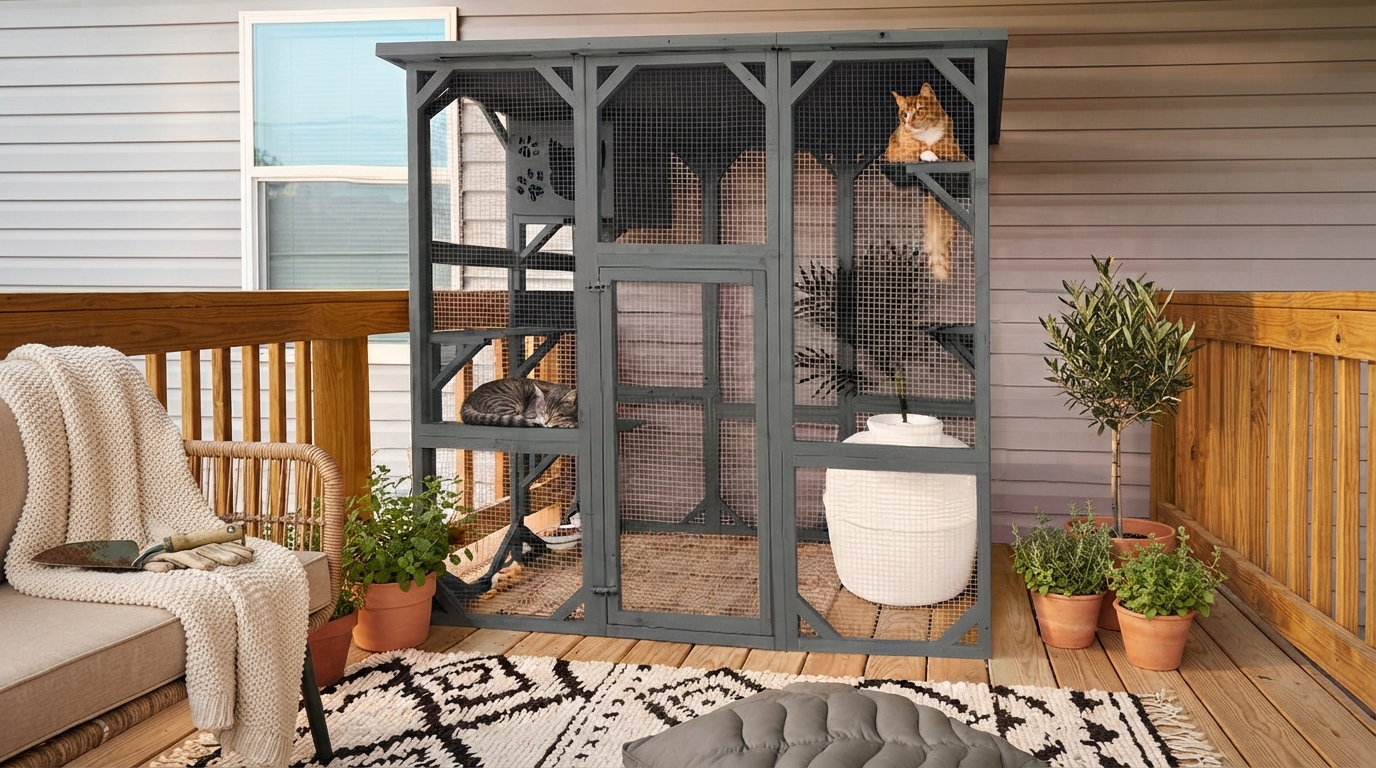
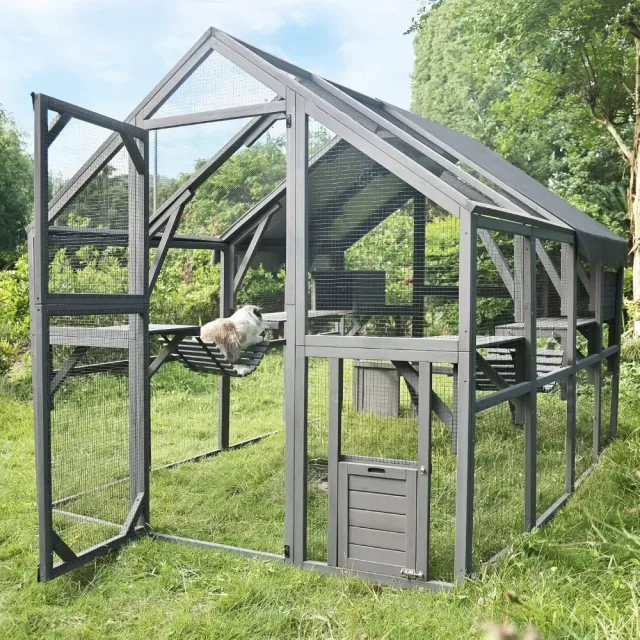
A roomy outdoor enclosure gives cats fresh air, climbing space, and a protected place to lounge while helping reduce risks from traffic, predators, and roaming. This guide breaks down what to look for in a wooden enclosure with built-in platforms, a sheltered house, and a weatherproof roof, plus practical tips for placement, setup, and upkeep in real-world conditions. For more guidance, see Community Cat Shelter Options Gallery.
What This Style of Enclosure Adds to Outdoor Time
- Creates a contained outdoor area for supervised or semi-supervised time without free roaming.
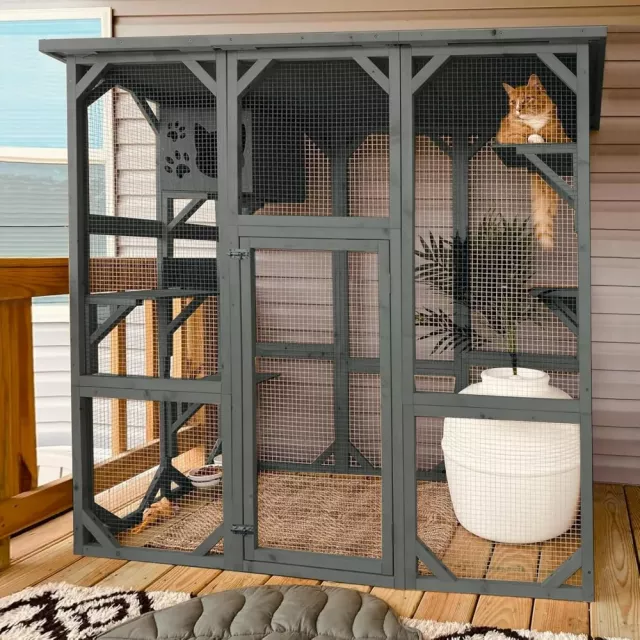
- Platforms add vertical variety for climbing, perching, and sunning—useful for multi-cat households to reduce crowding.
- A built-in house gives a shaded, wind-protected retreat that helps cats feel secure during noise or weather changes.
- A weatherproof roof helps manage rain and harsh sun, supporting longer, more comfortable sessions outside.
Many cat families use an enclosure as a middle ground: the sensory enrichment of outdoors with added protection. For broader outdoor-safety guidance, see resources from the American Veterinary Medical Association (AVMA) and Humane World for Animals. For further reading, see Best Outdoor Cat Enclosures and Catios for 2026: Top 10 Safe Picks ….
Core Components to Check Before Buying
- Frame and wood finish: look for smooth edges, sealed or treated surfaces, and hardware that resists rust outdoors.
- Wire mesh: openings should be small enough to prevent head escape and deter wildlife paws; verify tight fastening with no sharp ends.
- Platforms and ramps: confirm weight support, traction, and spacing so cats can move confidently between levels.
- Enclosed house: ensure adequate interior space, ventilation, and a floor that can handle damp paws or bedding.
Before assembly, run a quick visual check of every panel and fastener. A “finished” enclosure should feel finished: no splinters, no bent mesh, and no latch that needs to be jiggled into place.
Weatherproof Roof: What “Weather-Ready” Should Mean
- Rain handling: a roof should shed water away from the main door and platform areas; consider overhang and slope.
- Sun protection: solid roofing plus shaded zones reduces overheating risk; provide additional shade in high-UV climates.
- Wind and storms: anchor points matter—outdoor enclosures should be secured so gusts can’t shift or tip the structure.
- Seasonal use: in colder months, add insulated bedding in the house and limit time outdoors during extreme temperatures.
If your yard gets sideways rain, prioritize roof coverage that extends past mesh walls and door seams. In hot regions, shade is safety: a roof panel plus a shaded corner inside the enclosure helps cats regulate their comfort without having to “tough it out” in direct sun.
Platforms and House: Comfort, Enrichment, and Behavior Benefits
- Vertical space supports natural behaviors like scanning, climbing, and choosing preferred heights.
- Multiple platforms can reduce resource guarding by giving cats separate resting spots.
- A sheltered house can function as a “safe room,” improving confidence for timid cats.
- Add-ons that pair well: washable cushions, a scratching pad, and a water bowl mounted or placed away from litter areas.
Look for platform surfaces that offer grip (especially when damp) and edges that don’t pinch paws. If the enclosure includes ramps, gentle angles and stable attachment points make a big difference for kittens, seniors, and cats that launch themselves enthusiastically from level to level.
Placement and Setup Tips for Real Backyards and Patios
- Choose a level surface: patios, pavers, or a firm deck reduce wobble and door misalignment over time.
- Balance sun and shade: morning sun with afternoon shade is often ideal; avoid all-day direct sun in hot regions.
- Plan for drainage: keep the base out of pooling water; consider a slightly raised platform or drainage mat beneath.
- Keep it calm: place away from barking-dog fences, loud AC units, or high-traffic walkways to reduce stress.
- Access and workflow: ensure doors open fully and there’s space to clean, refresh bedding, and safely transfer cats.
Also consider what your cat will see through the mesh. If neighborhood cats often patrol your fence line, positioning the enclosure so there’s a partial visual break (a shrub, privacy panel, or a calm side of the yard) can reduce agitation and fence-running.
Safety Checks and Routine Maintenance
How to Choose the Right Size and Layout
Quick Fit Guide for Platforms, House, and Roof Features
| Household |
Recommended layout focus |
Useful add-ons |
| Single active cat |
More platforms and open climbing routes |
Scratching surface, toy rotation clip |
| Two cats |
Separate perches and a roomy house entrance |
Two beds, two resting platforms |
| Senior or low-mobility cat |
Lower steps/ramps, fewer steep transitions |
Non-slip pads, thicker bedding |
| Hot or rainy climate |
Strong roof coverage and shaded zones |
Extra shade cloth, raised base mat |
Day-One Setup Checklist
FAQ
Can an outdoor enclosure be left outside year-round?
Many can, but long-term durability depends on roof quality, wood sealing, drainage, anchoring, and your local weather extremes. Plan to inspect it regularly, reseal wood as needed, and take extra precautions before major storms.
How many cats can use one enclosure with platforms and a house?
It depends on the enclosure’s floor space and how many separate perches it provides. Aim for multiple resting spots so cats can spread out, and watch for crowding or guarding; if tension rises, shorten sessions or add more shelves.
What should be placed inside to keep cats comfortable and safe?
Use washable bedding, fresh water, shaded areas, and traction pads for ramps and platforms. Avoid leaving food out for long periods, skip string-like hazards, and choose toys that are sturdy and suitable for outdoor conditions.
Recommended for you









Leave a comment