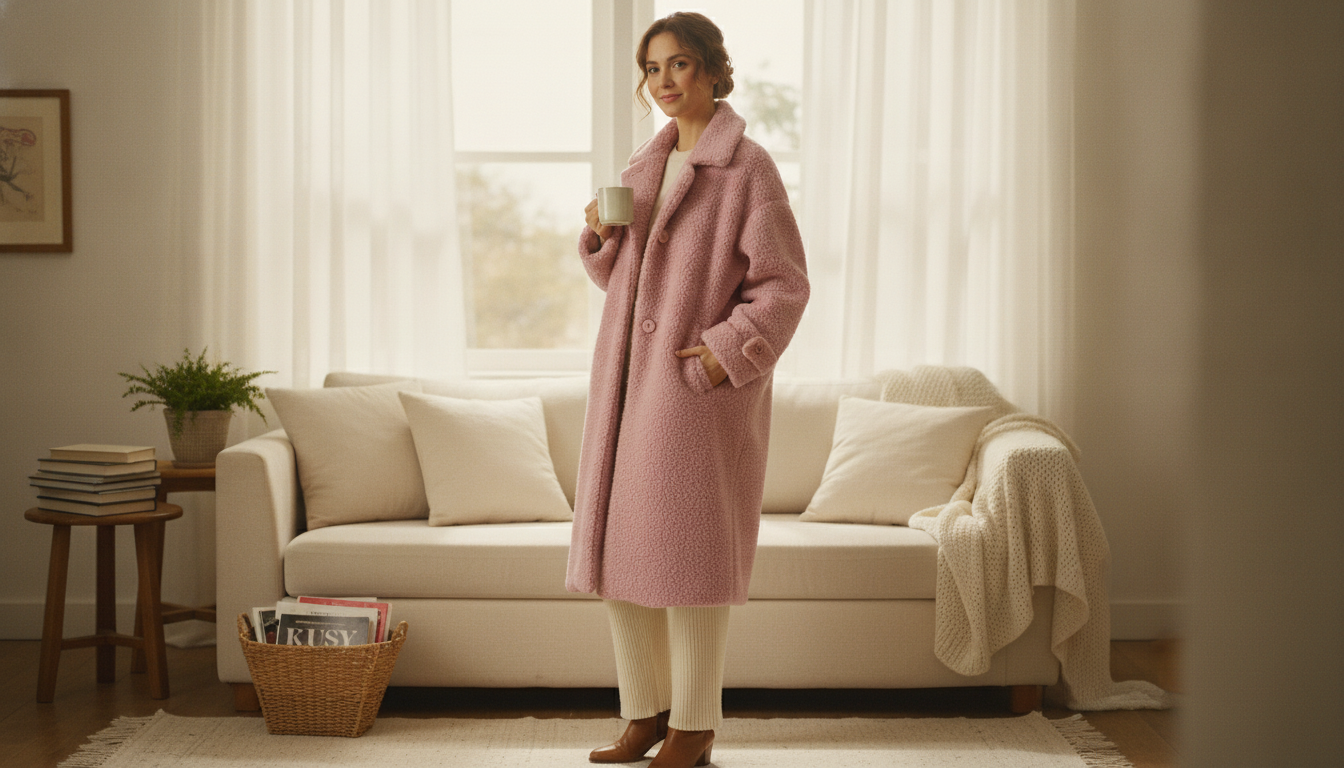
A warm wool coat is a cold-weather staple that pairs insulation with an elevated, structured silhouette. The key is knowing what actually creates warmth (it’s not just thickness), how to judge fabric and construction at a glance, how to fit a coat so it works over real-life layers, and how to care for wool so it stays smooth and shape-holding year after year. If you’re eyeing a pink wool coat, it can be both winter-ready and surprisingly versatile—especially when you style it with the right neutrals and accessories.
What Makes a Wool Coat Feel Truly Warm
Wool has a natural crimp that helps trap pockets of air, which is why it can feel insulating without looking overly bulky. Still, warmth comes from multiple factors working together: fabric weight, weave density, lining, length, and how effectively the coat seals at the neck, front opening, and cuffs.
Coverage matters more than many shoppers expect. A mid-thigh to calf-length hem reduces heat loss around the hips and thighs, which can be the first area to feel cold during commutes or long outdoor waits. A collar that can sit higher (or a lapel that closes snugly) is also a major difference-maker on windy days.
Finally, “warmth” has a practical side: if a coat is too tight to wear over your typical sweater or blazer, it may feel colder than a roomier coat made from the same material because strain causes gaping at the front and drafts around the chest and neckline.
Warmth Checklist for Wool Coats
| Feature |
What to Look For |
Why It Matters |
| Fabric feel and density |
Smooth, tightly woven surface; substantial hand-feel |
Tighter weaves reduce wind penetration and heat loss |
| Lining |
Full lining through body and sleeves |
Adds comfort, reduces friction when layering, can improve warmth retention |
| Length |
Mid-thigh to calf length for colder climates |
More coverage equals better heat retention |
| Collar/closure |
Higher neckline, secure buttons or belt, storm flap if present |
Seals gaps where cold air enters |
| Fit for layering |
Room for a knit underneath without pulling at shoulders |
Warmth increases with practical layering space |
How to Choose the Right Warm Wool Coat
Start with how and where you’ll wear it. Windy cities, open-air platforms, and long walks tend to reward longer lengths and higher closures. If your winter is mostly car-to-door, a shorter style may be workable—but it still needs a dense weave and a closure that sits flat to avoid drafts.
Next, read the fiber content label closely. Higher wool percentages typically improve warmth and breathability. Blends can be beneficial too—depending on what’s added. Some fibers increase softness, others increase durability, and some help resist wrinkling. If you want a quick primer on labeling basics, the Federal Trade Commission’s Wool Products Labeling Act overview is a helpful reference.
Construction details often reveal whether a coat will hold up (and hold warmth). Look for clean seams, securely attached buttons, tidy buttonholes, and a lining that doesn’t twist when you move your arms. If the sleeves feel grabby over a sweater, the coat may be less comfortable and less likely to get worn often—no matter how warm it is on paper.
Fit should be decided from the shoulders first, since that’s the hardest area to tailor. The shoulder seam should sit close to your natural shoulder without collapsing or drooping. Then test movement: lift your arms, sit down, and button the coat fully. A winter coat must feel good when closed—because that’s when you need it most.
Do a layering test with the thickest top you’ll realistically wear: a chunky knit, hoodie, or blazer. If you’re between sizes, the size that accommodates layers is usually the warmer option, since strain across the chest and buttons creates openings for cold air.
Fit and Silhouette: Flattering Warmth Without Bulk
Warm doesn’t have to mean oversized. A well-chosen silhouette can keep heat in while looking polished. Single-breasted coats often read sleeker and are easy to wear over mixed outfits. Double-breasted styles add overlap at the front, which can feel noticeably cozier in wind.
Color Notes: Styling a Pink Wool Coat for Winter
Wool Care Basics: Keep It Warm, Smooth, and Fresh
For seasonal storage, clean the coat before putting it away, store it in a breathable garment bag, and use cedar or lavender moth deterrents placed nearby (not pressed directly against the fabric). Always follow the care label, and avoid heat that can shrink or felt wool. The Woolmark Company’s wool care guidance is a reliable resource for everyday maintenance, and Britannica’s overview of wool provides useful background on why the fiber behaves the way it does.
Common Mistakes That Make a “Warm” Coat Feel Cold
FAQ
Is a wool coat warmer than a puffer jacket?
It depends on insulation and conditions: puffers often win in extreme cold because loft traps a lot of air, while wool coats excel at breathable warmth with a more polished look. Wind resistance and length matter for both, and a wool coat that layers well can feel warmer in daily use than a tight coat that can’t close comfortably.
How should a warm wool coat fit if it will be worn over sweaters?
It should fit cleanly at the shoulders, allow easy arm movement, and button without pulling or gaping across the chest and upper back. Try it on over your thickest typical sweater to confirm sleeve comfort and that cuffs reach your wrists.
How often should a wool coat be dry cleaned?
As infrequently as possible unless it’s visibly soiled or has absorbed strong odors. Regular airing, brushing, and spot-cleaning usually extend the time between cleanings; always follow the care label to protect the wool fibers and structure.
Recommended for you









Leave a comment