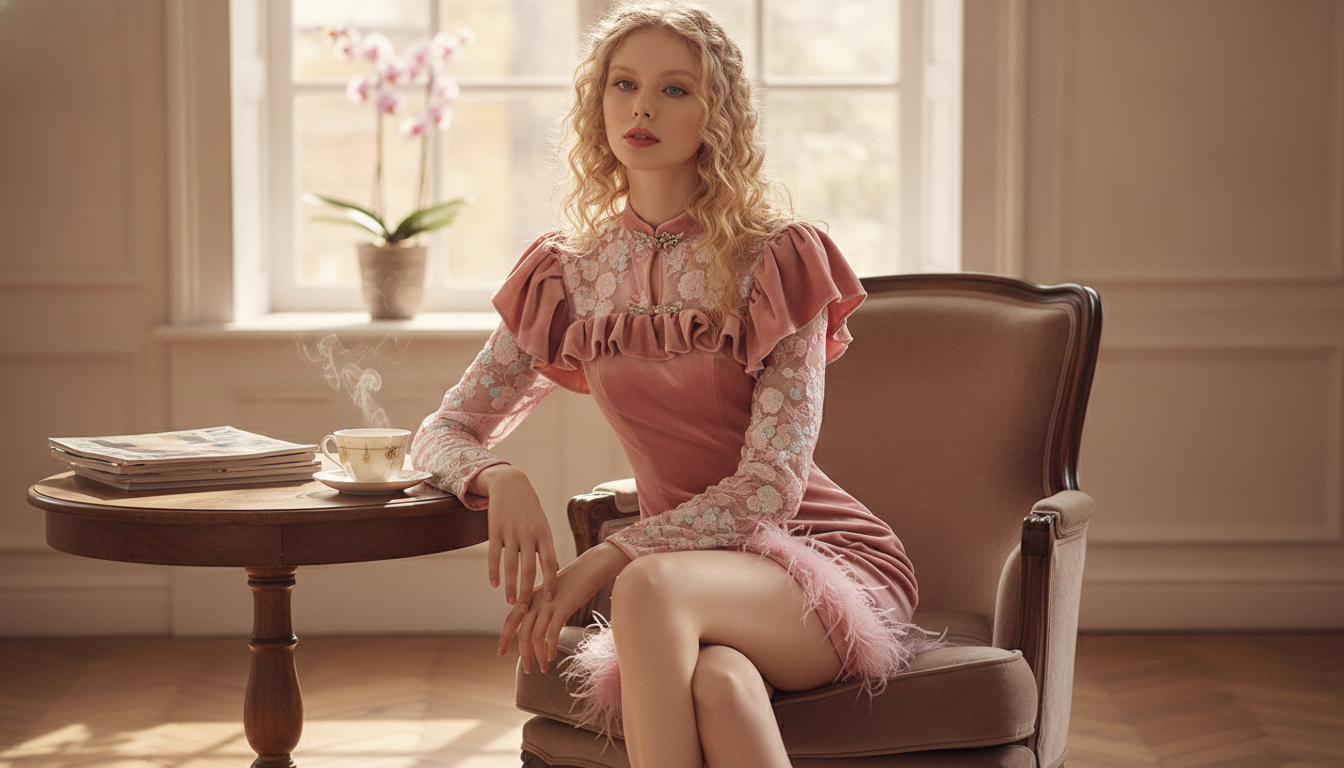
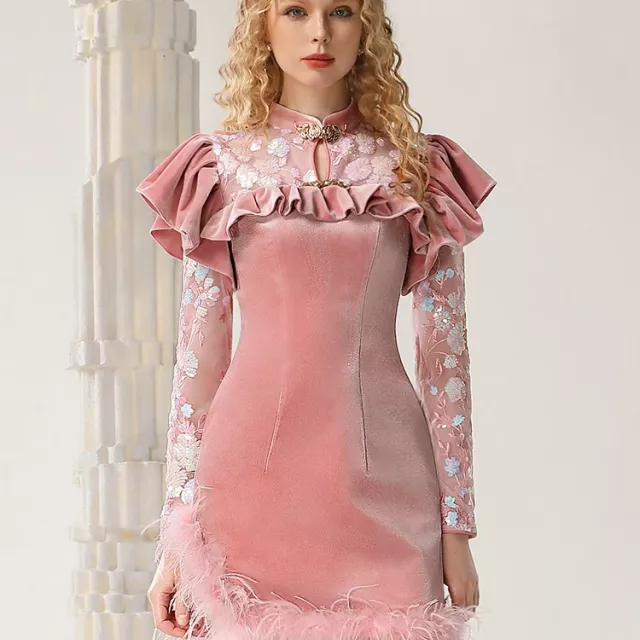
A velvet cheongsam with court-style drama brings together sculpted tradition and eveningwear glamour. With plush texture, ornate beading, and feather accents, this look is designed for formal moments where silhouette, detailing, and movement matter as much as comfort and fit. The result is a statement piece that reads ceremonial under warm indoor lighting, yet feels intentionally modern through its streamlined lines and controlled sparkle. For background on the qipao/cheongsam’s cultural and fashion evolution, see Encyclopaedia Britannica’s overview of the qipao and fashion history resources from The Metropolitan Museum of Art. For more guidance, see [PDF] Volume 4, Issue 4, Winter 2020 – The Journal of Dress History.
How to Choose
Because velvet and embellishments both affect drape, the best choice comes down to balancing structure, comfort, and the level of detail the occasion calls for. Start by confirming your measurements (especially bust and hips), then decide how “regal” you want the finish to feel: concentrated beading at the neckline and bodice reads refined, while feather trim adds movement that becomes more noticeable in photos and on the dance floor. For further reading, see [PDF] Ornamentalism: Costuming and the Portrayal of the Chinese Woman ….
- Pick the silhouette first: a classic cheongsam line feels most court-style when it skims closely through the torso without wrinkling or pulling.
- Choose the event level: heavier beading and longer lengths tend to feel most at home at galas, formal dinners, and evening ceremonies.
- Consider comfort zones: if you’ll be seated for long stretches, prioritize a secure ribcage fit and a slit height that won’t require constant adjustment.
- Plan accessories early: velvet already “reads” rich; understated shoes and a simple clutch keep the focus on the dress details.
What Makes This Cheongsam Feel Court-Style
- Velvet body creates a rich, light-catching finish that reads formal under indoor lighting and nighttime settings.
- Cheongsam structure emphasizes a clean, elongated line through the torso for a poised, ceremonial feel.
- Beaded embellishment adds dimensional sparkle without relying on loud prints.
- Feather details introduce soft motion at the edges, balancing the dress’s tailored shape.
- Overall effect leans “regal” rather than casual—best for events with dress codes or photo-forward settings.
Design Details to Notice Up Close
- Velvet pile direction can subtly change shade depending on how it’s brushed; this is normal and part of the luxe effect.
- Beading typically sits at focal areas (neckline, bodice, or side) to highlight the cheongsam’s clean lines rather than overwhelm them.
- Feather trim looks most refined when it’s used as a finish (cuffs/hem/side accents) instead of covering large panels.
- A fitted cheongsam should feel secure through the ribcage and waist while still allowing seated comfort.
- Small construction choices—lining, seam finishing, and closure placement—determine whether the dress feels “costume” or truly elevated.
How to Choose the Right Fit and Length
A cheongsam is designed to look precise, so fit shows immediately—especially in velvet, where light emphasizes any pulling or rippling. Aim for clean lines through the bust and hips, a defined waist that doesn’t pinch when you sit, and shoulders that allow you to move naturally. If the dress includes extensive beadwork, remember that embellishments can reduce flexibility and slightly change how the fabric lays.
- Start with the bust and hip measurements; cheongsam silhouettes are less forgiving than wrap or A-line dresses.
- If between sizes, choose the size that fits the hips first; the waist is often easier to tailor than the hip area.
- Check arm and shoulder mobility—beaded areas can reduce stretch, and velvet drapes differently than woven satin.
- Choose length based on venue: midi for dinners and receptions, longer lengths for galas and formal ceremonies.
- Consider slit height if present: higher slits lengthen the leg but may feel less comfortable for seated events.
Quick fit guide for velvet cheongsam styles
| Area |
Best sign it fits well |
Common issue |
Simple fix |
| Bust |
Smooth across chest without pulling |
Gapping or strain at seams |
Try one size up or add subtle bust darts |
| Waist |
Defined shape without tightness when sitting |
Waistband-like squeeze |
Tailor the waist or choose a less rigid size |
| Hips |
Fabric falls cleanly with no horizontal lines |
Ride-up when walking |
Prioritize hip fit; tailoring works best after |
| Shoulders/arms |
Can lift arms comfortably |
Restricted movement |
Check shoulder width; avoid tight beaded placement |
| Length/slit |
Easy stride and seated comfort |
Catching or overexposure |
Hem to ankle/midi; adjust slit if needed |
When to Wear It: Occasions and Styling Direction
- Ideal for weddings (as a guest where appropriate), formal dinners, holiday parties, and stage-ready celebrations.
- For a court-inspired finish, pair with minimal jewelry and let the beading act as the focal point.
- Shoes: sleek heels for elongation; closed-toe styles look especially refined with velvet.
- Outerwear: a tailored coat or a simple wrap; avoid bulky knits that crush velvet texture.
- Hair and makeup: polished, sculpted looks complement the structured cheongsam silhouette.
Care and Storage for Velvet, Beading, and Feathers
Choosing Accessories Without Competing With the Details
FAQ
How should a velvet cheongsam feel when it fits correctly?
It should lie smoothly across the bust and hips with a defined waist that doesn’t strain when you sit. A tailored cheongsam will feel secure, but it shouldn’t restrict breathing, pull at seams, or limit comfortable arm movement.
Will beading and feathers feel scratchy or heavy?
They can add some weight, but comfort depends on lining and where embellishments are placed. Check for rubbing at the underarm and side seams, and choose smooth underlayers to reduce friction during wear.
Can an embellished velvet dress be altered?
Often yes, but it depends on where beadwork and feather trim sit. Hems and small waist refinements are usually simpler than reshaping heavily embellished panels, so it’s best handled by a tailor experienced with formalwear.
Recommended for you









Leave a comment