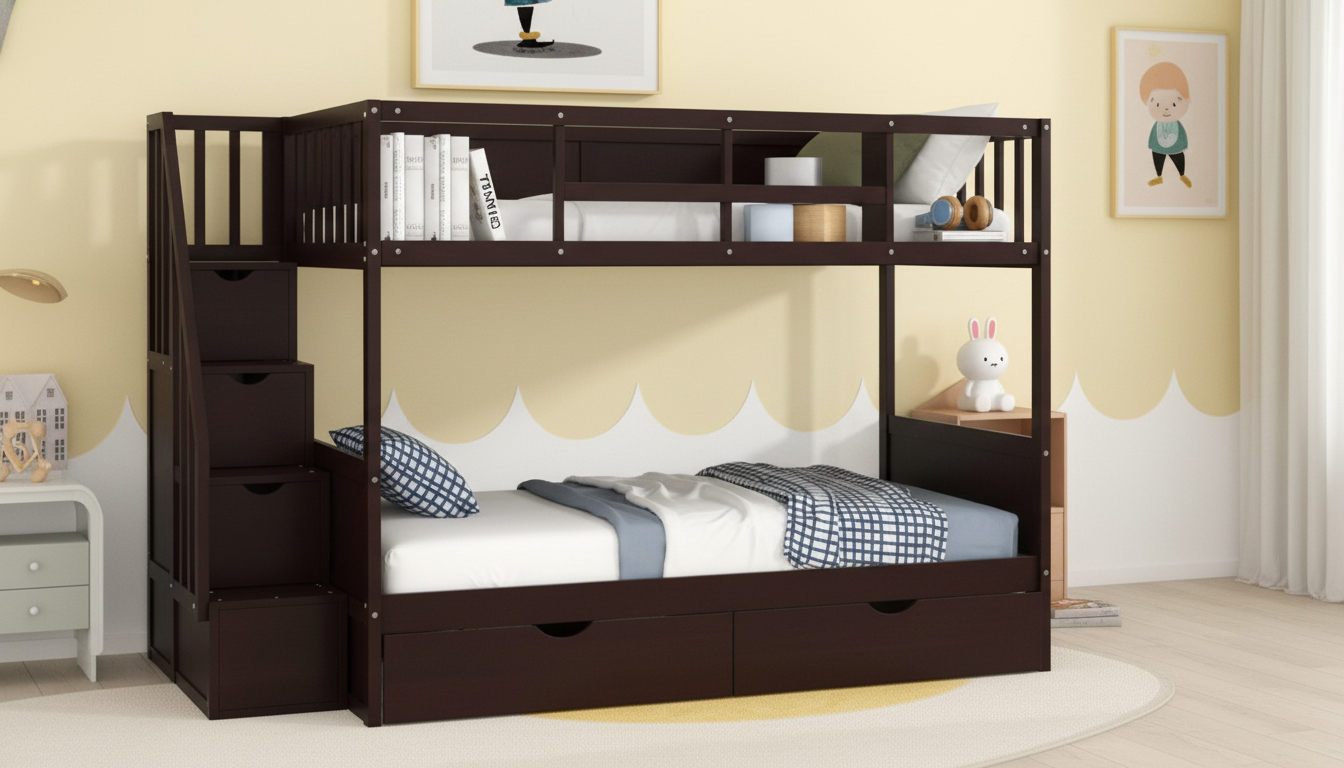
A twin-over-full bunk bed can open up floor space while giving siblings (or sleepover guests) different-sized sleeping areas. When it’s made of wood and adds a storage staircase, built-in shelves, and drawers, it also helps keep a kid’s room calmer and more organized. This guide breaks down what to look for, how to plan the layout, and how to use the storage features effectively.
What This Bunk Bed Layout Solves in a Kids’ Room
A wooden twin-over-full bunk bed is a practical compromise for shared rooms because it supports different sleep needs without doubling the footprint. The twin top bunk works well for an older child, a visiting cousin, or a sleepover guest, while the full bottom bunk gives a little more stretch-out space for a child who prefers it.
Compared with two separate beds, this layout frees up valuable floor area—often enough to fit a small desk, a toy shelf, or a cozy reading corner. The built-in storage (stair compartments, shelves, and drawers) also turns “random stuff” into organized zones, making daily pickup faster and less frustrating. With the staircase and storage concentrated on one side, the room tends to feel more navigable: sleep up and down, storage along the side, and open space for movement.
Storage Staircase vs. Ladder: Safety and Convenience
When kids use the top bunk every day, access matters. Many families prefer a staircase over a ladder because steps are typically easier to climb than narrow rungs—especially in the dark or when a child is half-awake. A staircase often provides more stable footing and a gentler angle for going up and down, which can reduce hesitant climbing and accidental slips.
Stairs also pull double duty: each step can hide a compartment for pajamas, board books, spare blankets, or the “must-have” stuffed animals. That can reduce the need for a separate dresser or cube organizer—an important win in smaller bedrooms.
One planning detail gets overlooked: clearance. If the stairs include drawers or hinged doors, make sure there’s enough space for them to open fully and for kids to pass safely without squeezing between the bed and a wall.
Staircase and Storage Feature Check
| Feature |
Why it matters |
What to measure/confirm |
| Stair width and tread depth |
Comfortable steps reduce slips and hesitant climbing |
Space beside the bed; room for feet on each step |
| Stair storage access |
Encourages daily use for toys, pajamas, and blankets |
Does each compartment open freely without hitting a wall? |
| Handhold points |
Adds confidence for younger kids |
Is there a safe grip area along the staircase side? |
| Top bunk guardrails |
Helps prevent rolling out during sleep |
Guardrail height above the mattress surface |
| Under-bed drawers |
Reduces clutter and protects items from dust |
Drawer pull clearance; smooth glide without snagging rugs |
Shelves and Drawers: How to Use the Built-In Storage Well
Built-in storage works best when it’s assigned on purpose. Shelves are ideal for bedtime basics: chapter books, a nightlight, a small speaker for lullabies, or a water bottle. Drawers are better for items that can look messy when visible—extra sheets, out-of-season clothes, or bulkier toys.
A simple habit that keeps shelves from turning into “miscellaneous stacks” is using labeled bins. One bin for small toys, one for art supplies, one for hair ties and accessories—then cleanup becomes a quick sort instead of a long hunt. Keep heavier items in lower drawers to reduce strain on little arms and to keep daily use comfortable. If a child tends to wake up at night, placing a flashlight and a favorite book on the shelf nearest their sleeping spot helps them settle without rummaging through drawers.
Materials and Build Details to Look For
Wood construction is popular for kids’ bunk beds because it can feel solid, dampen noise better than some all-metal frames, and blend with many room styles—from bright and playful to more classic. Look closely at how the bed is assembled: sturdy joinery, well-fitted parts, and reliable hardware all help the frame stay stable and quiet over time.
For safety guidance beyond the product manual, review information from the U.S. Consumer Product Safety Commission (CPSC), bunk bed safety tips from the American Academy of Pediatrics, and relevant standards from ASTM International.
Room Planning: Fit, Flow, and Placement
Quick Measurement Checklist
| Measure |
Why it matters |
Suggested approach |
| Ceiling height |
Top bunk comfort and safer sitting up |
Confirm headroom above the top mattress |
| Bed footprint |
Ensures the bed fits without blocking closets/doors |
Mark the outline with painter’s tape on the floor |
| Drawer clearance |
Prevents drawers from scraping walls or furniture |
Allow extra space beyond the drawer’s full extension |
| Staircase clearance |
Safe walking and no cramped turns |
Check path width beside the staircase |
How to Choose the Right Twin-Over-Full with Storage
Care, Setup, and Everyday Use Tips
FAQ
What age is appropriate for the top bunk?
Many safety guidelines recommend that children under 6 not sleep on the top bunk. Regardless of age, reinforce safe climbing habits, keep guardrails in place, and make sure the child can use the stairs confidently.
Do bunk beds require special mattresses?
Most twin-over-full bunk beds are designed for standard twin and full mattresses, but the top bunk typically has a maximum thickness limit. Staying within the manufacturer’s guidance helps ensure the guardrails remain effective.
How much space is needed to open the drawers and use the staircase comfortably?
Measure the full extension of every drawer and leave extra clearance so drawers don’t hit walls and kids can walk past safely. Mapping the bed footprint and drawer/stair zones with painter’s tape helps confirm the layout before you commit.
Recommended for you









Leave a comment