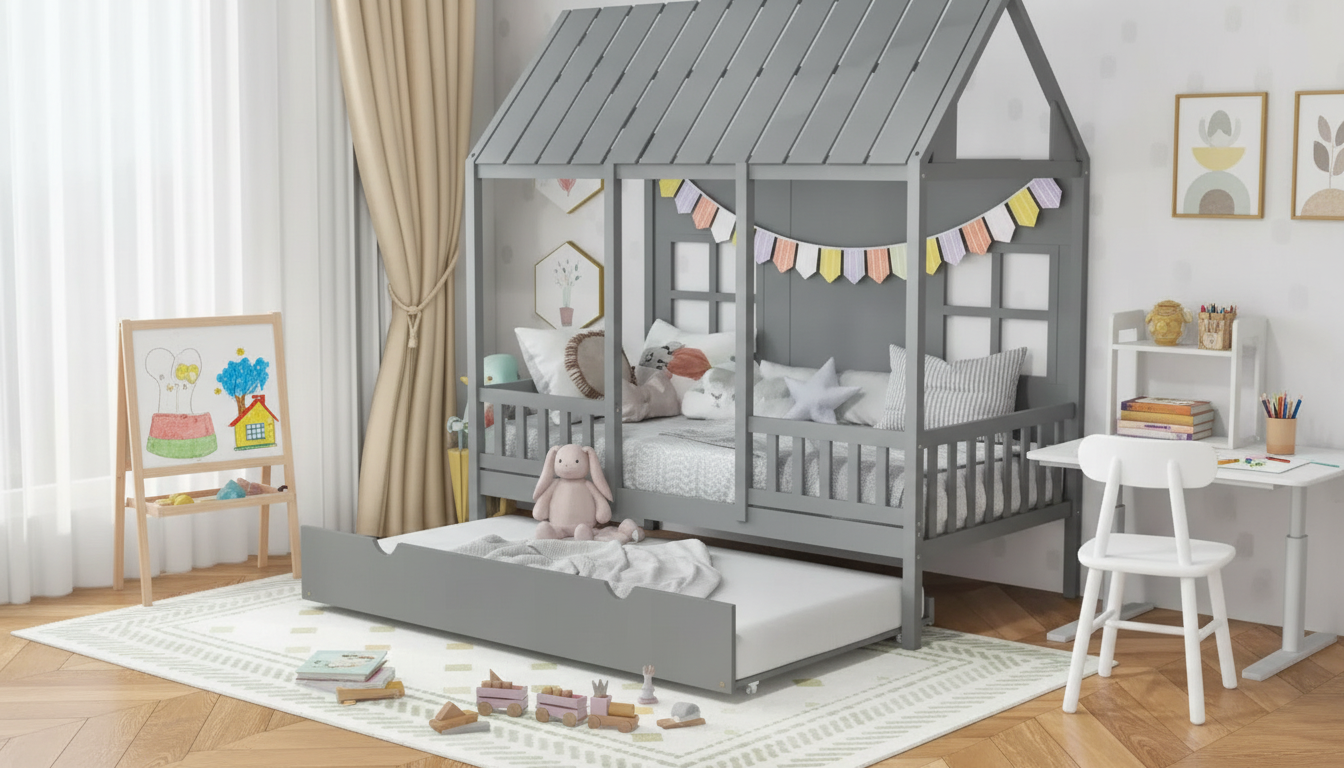
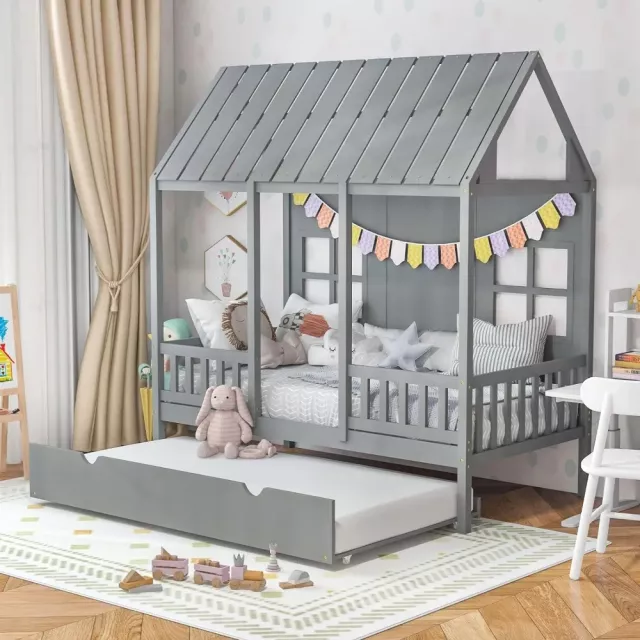
A house-shaped twin bed can make bedtime feel more inviting while still handling the practical realities of everyday family life. With a playful frame that outlines a simple “roof,” guardrails that add reassurance for restless sleepers, and a pull-out trundle for an extra guest, this style fits neatly into many kids’ rooms. Because the mattress sits on a slat support system, there’s no need to add a box spring—keeping the profile lower, the setup simpler, and the overall look clean and intentional.
What Makes a House Bed Feel Special
House beds stand out because they do more than hold a mattress—they shape the mood of the entire room. The frame’s silhouette naturally creates a focal point, so the space can feel styled even with minimal décor.
- House-frame design adds character and makes the sleeping area feel like its own “zone.”
- An open roofline keeps the room feeling light and airy compared to heavier canopy styles.
- Decor is optional: string lights, fabric panels, or bunting can be added for a themed look, or left bare for a minimalist vibe.
- Twin size is a smart fit for many bedrooms, leaving room for storage bins, a small desk, or a reading nook.
Trundle Benefits for Sleepovers and Shared Rooms
A trundle is one of those features that earns its keep quickly. It creates a second sleeping surface without permanently taking up floor space—especially helpful in smaller rooms where every foot matters.
- A pull-out trundle tucks away when not in use, keeping open space for play and daily routines.
- It’s useful for siblings sharing a room, visiting cousins, or the occasional parent who sits nearby at bedtime.
- Before choosing placement, think about the trundle’s path: rug thickness, nightstand clearance, and nearby closet doors can affect how smoothly it rolls out.
- Make a bedding plan early—an under-bed bin (separate from the trundle space) or a labeled closet shelf helps keep extra sheets and pillows easy to grab.
Guardrails and Everyday Safety Habits
Guardrails offer extra peace of mind, particularly for kids who move a lot at night or who are still adjusting to a “big kid” bed. Guardrails don’t replace supervision or good room setup, but they can reduce the likelihood of accidental tumbles.
- Guardrails can help reduce nighttime falls, especially for active sleepers transitioning from a toddler bed.
- Keep bulky blankets, large pillows, and piles of stuffed animals from crowding the sleeping edge if a child tends to scoot around.
- Place the bed away from windows, blind cords, or tall furniture that might tempt climbing.
- Use a nightlight and maintain a clear path to the door or bathroom to reduce trips and falls.
For general guidance on children’s sleep environments and household safety practices, it can be helpful to review resources from the American Academy of Pediatrics via HealthyChildren.org and safety information from the U.S. Consumer Product Safety Commission (CPSC).
No Box Spring Needed: Mattress Support and Feel
Slat support is a key reason this bed style can work so well in kids’ rooms. A properly designed slat system helps distribute weight across the frame and gives the mattress a stable base—without the extra height (and extra piece) of a box spring.
- Slats help reduce mattress shifting and provide consistent support across the sleep surface.
- Skipping the box spring lowers the overall bed height, which can feel easier and more confidence-building for kids climbing in and out.
- Mattress thickness matters: if the mattress sits too high, guardrails may be less protective than intended.
- Rotate the mattress periodically (following the mattress manufacturer’s guidance) to encourage even wear.
Quick Fit Checklist for a Twin House Bed with Trundle
| Decision Point |
What to Measure or Confirm |
Why It Matters |
| Room clearance |
Space to pull the trundle out fully; walking path around the bed |
Prevents daily frustration and blocked doors/drawers |
| Mattress thickness |
Twin mattress height; trundle mattress height if separate |
Affects guardrail effectiveness and trundle roll-out clearance |
| Support system |
Slats included and spacing; weight guidance if provided |
Helps maintain mattress support without a box spring |
| Bedding plan |
Where extra sheets/blankets will live |
Makes sleepovers smoother and reduces clutter |
| Child readiness |
Comfort with independent sleep; tendency to climb |
Guides placement, rules, and supervision choices |
How to Choose the Right Setup for Your Home
The best setup depends less on trends and more on how the bed will be used day to day. A few decisions upfront can prevent common pain points—like a trundle that can’t clear a rug edge or guardrails that end up too low once the mattress is in place.
If you like to check standards and terminology used across home products, ASTM International provides information on consumer product standards and categories.
Care, Cleaning, and Keeping It Looking New
FAQ
What kind of mattress works best when no box spring is needed?
A standard twin mattress designed to work with slat support is typically a good fit. Check the mattress thickness so the guardrails remain meaningfully protective, and choose a low-profile mattress for the trundle so it can roll and store easily.
Is a house bed with guardrails a good option for a child transitioning from a toddler bed?
It can be, since guardrails help reduce the chance of rolling out during sleep. Readiness varies by child, so place the bed away from climbing hazards, keep a clear floor path, and set simple rules about not climbing on the frame.
How much space should be left to use the trundle comfortably?
Measure for the trundle’s full extension plus enough room to walk around it without squeezing past furniture. Also account for rug thickness and nearby doors or drawers, and plan a dedicated spot for extra bedding so setup stays quick.
Recommended for you









Leave a comment