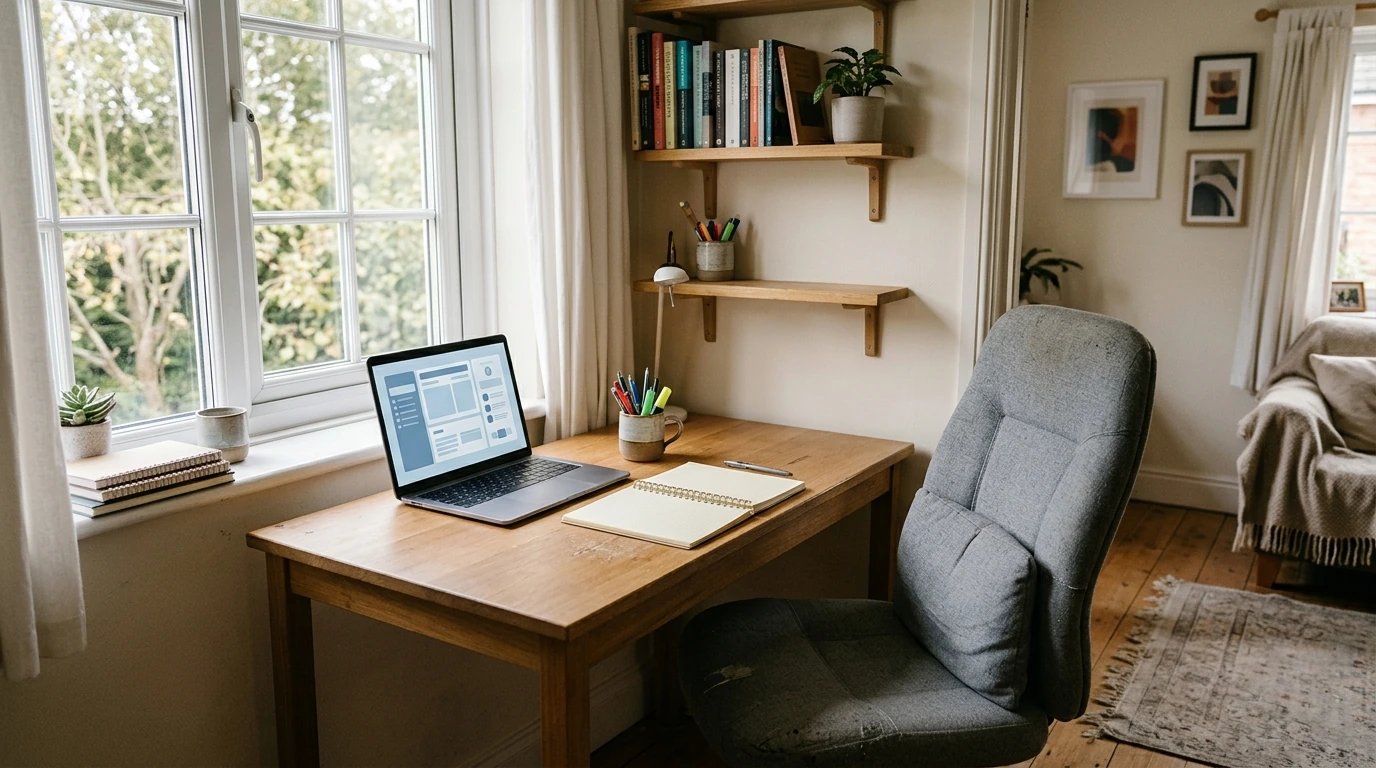
A useful study space doesn’t require a separate room or an expensive makeover. A cleared corner, a comfortable seat, and a few supplies within reach can be enough to help you settle into your next task.
Our digital eBook, Your Perfect Study Space Starts Here, offers a starting point for students and creatives who want to shape a study area around the way they work. Before you rearrange everything, take a little time to notice what you need from your space.
Start With How You Use Your Space
Think about the activities you return to most often. Reading may call for a comfortable place to hold a book and good light, while drawing might require more open surface area. If you switch between writing and laptop work, you may need room for both a notebook and your computer.
Next, look at what is available. Do you have a desk you can leave set up, or will you share a table with other people? Are there shelves nearby, or will your supplies need to travel with you? Make a short list of the tools you reach for most, such as pens, paper, chargers, or art supplies.
We designed our selection around practical starting points like these. Our Your Perfect Study Space Starts Here digital eBook guide is intended for students and creatives planning a study area that suits their routines.
Build a Setup That Fits Your Routine
Start with a clear work surface, a supportive seat, and lighting suited to what you’re doing. You don’t have to buy everything at once. Try the furniture you already have, then make small changes as you notice what helps or gets in the way.
Study Space Ideas by Setting
| Setting |
Starting point |
Simple adjustment |
| Dedicated desk |
Arrange materials around your main task |
Keep the center of the surface clear |
| Shared table |
Gather essentials in a portable caddy |
Pack them away between sessions |
| Small corner |
Choose a surface that fits the available area |
Use nearby vertical storage if available |
At a dedicated desk, give your most-used materials the easiest spots to reach. At a shared table, a basket or caddy can make setup and cleanup faster. In a small corner, a nearby shelf or wall-mounted storage can hold supplies without taking over your work surface.
For laptop work, connections can also affect how you arrange your area. Our USB-C Hub 6-in-1 offers HDMI, data, and power-delivery connections. If you use an external display or several devices, consider whether its connections and your laptop’s USB-C capabilities fit your setup.
Make the Space Comfortable to Use
Arrange your chair and work surface so you can sit comfortably without reaching awkwardly for your keyboard or supplies. If you use a screen, position it so you can see it without repeatedly bending or twisting your neck. An external keyboard and mouse may give you more flexibility when raising a laptop screen.
Pay attention to light throughout the day. Move your screen or adjust a shade if glare makes it difficult to see, and add task lighting when you need a clearer view of a page or project. The OSHA Computer Workstations eTool offers more guidance on arranging computer equipment and seating.
Comfort can change with the task and the length of your session. Take regular movement breaks, and adjust your setup when something feels awkward. You can also explore workstation resources from Cornell University Ergonomics Web.
Keep Distractions and Clutter Manageable
A short reset at the end of a session can make the next one easier. Put everyday supplies in a designated place, return shared materials, and clear away anything you no longer need. Keep frequently used tools close; store less-used items nearby rather than on the surface.
For interruptions, try silencing nonessential notifications or choosing a quieter time to work in a shared space. If you live with others, a simple agreement about when the table is available can help. Your setup doesn’t have to look picture-perfect to work well—it just needs to support what you want to do.
Explore the Digital Guide
Our team offers Your Perfect Study Space Starts Here as a digital eBook guide for students and creatives. The listed price is $17.99; visit the product page for current purchase details.
Whether you’re organizing a desk or claiming a small corner, explore the guide and start planning a study area that fits your routine.
Before choosing, compare the product details with your daily routine, available space, care needs, and preferred setup. The strongest option is usually the one that fits the intended use clearly and remains simple to clean, store, and check before repeat use.
FAQ
Can I create a study area without a separate room?
Yes. Use a shared table or a small corner, and keep essentials in portable storage so you can set up and pack away easily.
Who is this digital eBook guide for?
It is a study-area design guide for students and creatives.
What should I consider when arranging a study area?
Start with the tasks you do and the space available, then consider lighting, seating comfort, and access to essential supplies.
Recommended for you












Leave a comment