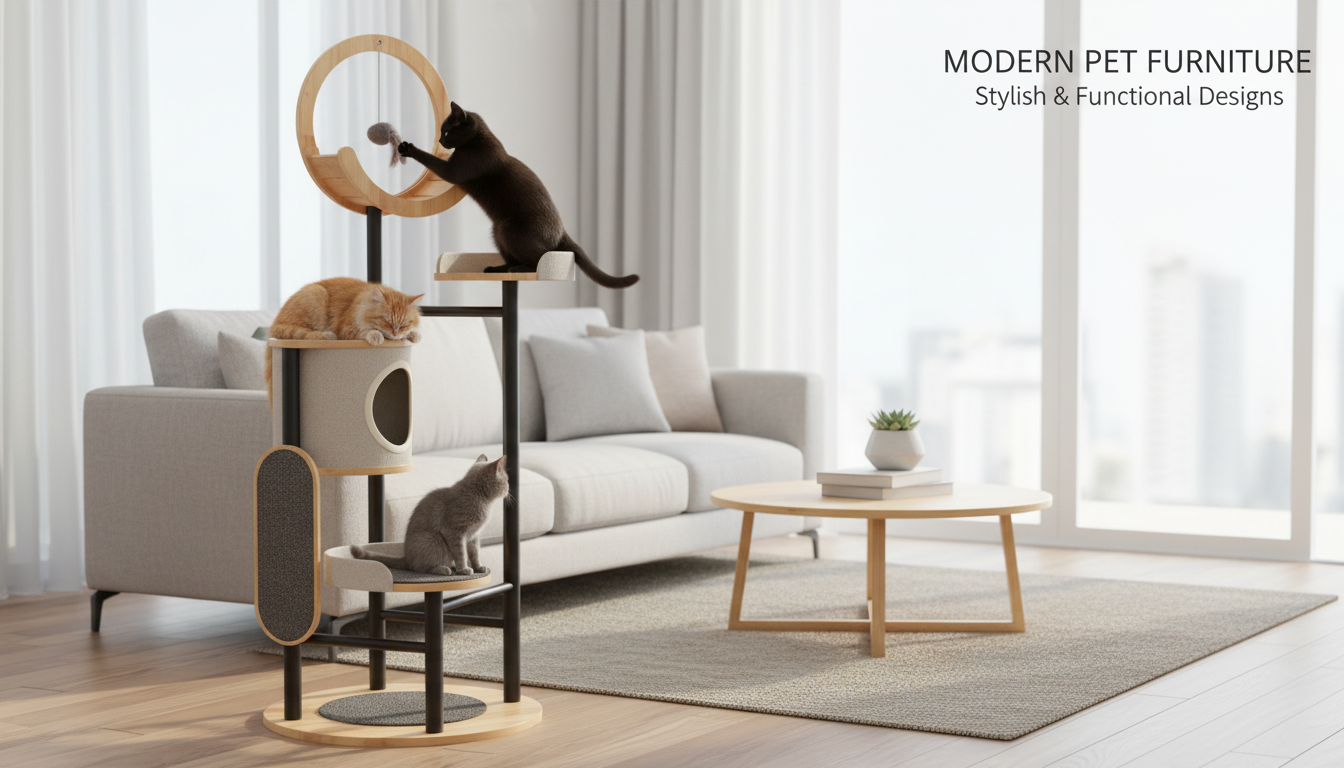
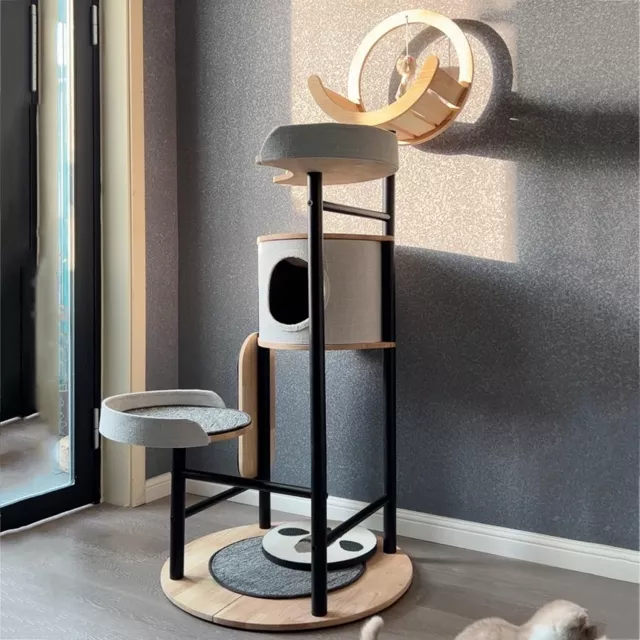
A well-built cat tree can turn unused vertical space into a daily destination for naps, stretching, scratching, and lookout time. A multi-level solid wood tower with a hammock and scratching posts is designed to support natural feline behaviors while keeping a home’s furniture and carpets under less pressure. By offering several height options and dedicated claw-friendly surfaces, it becomes a consistent “yes spot” for energy, rest, and routine. For more guidance, see Cat Tree Tower, 36″ Small Cat Tower for Indoor Cats with Scratching ….
What This Tower Adds to a Cat’s Daily Routine
Cats tend to cycle through short bursts of activity and longer periods of rest. A multi-level tower helps those transitions feel natural by giving them places to climb, pause, and settle without competing with household traffic.
- Vertical territory for climbing and confidence-building, especially in multi-pet homes.
- Rest zones at different heights to match energy levels throughout the day (low for quick breaks, higher for deeper naps).
- A hammock-style lounge that encourages longer naps and a relaxed, supported posture.
- Dedicated scratching areas that redirect claw maintenance away from upholstery.
- More enrichment that can reduce boredom behaviors like night zoomies and attention scratching.
For households looking to support healthy feline behavior with fewer “no” moments, adding an appropriate vertical resource aligns well with established guidance on meeting cats’ environmental needs from the American Association of Feline Practitioners (AAFP).
Key Parts and How Cats Use Them
The most-used towers are the ones that feel predictable underfoot and offer a mix of lounging styles. Each component has a job, and cats will often rotate between them depending on mood, temperature, and where people are in the home.
- Multi-level platforms: Support jumping, perching, and safe observation from above floor traffic. Many cats prefer resting where they can see entrances and movement.
- Hammock: A flexible cradle for curled sleeping and heat retention. It’s often favored by cats that like “hugged” edges rather than flat beds.
- Scratching posts: Help with nail shedding, full-body stretching (shoulders through the back), and stress release. For scratching behavior basics and prevention strategies, the ASPCA’s guide to scratching is a helpful reference.
- Solid wood frame: Aims for stability and longevity compared with lightweight composites, especially when cats launch upward or scratch with force.
- Spacing between levels: Should allow comfortable step-ups without forcing long leaps for older or smaller cats.
Sizing and Fit: Matching Height, Footprint, and Cat Weight
“Bigger” isn’t always better—fit is about how the tower works with your room and your cat’s body. A tower that’s too tall for the space (or too tight in a corner) may get less use, even if it looks appealing.
- Choose height based on available wall space and whether your cat prefers high perches or mid-level lounging.
- Check the footprint against walking paths; leave clearance so cats can jump down without bumping furniture.
- For larger cats, favor wider platforms and a sturdier base to reduce wobble.
- For multiple cats, prioritize more than one resting spot to reduce guarding behavior and “resource blocking.”
- Place near a window when possible to add “cat TV” without adding extra clutter.
Quick Fit Guide for Different Households
Quick Fit Guide for Different Households
| Household situation |
What to prioritize |
Placement tip |
| One adult cat |
A comfy hammock + at least one tall perch |
Near a window or quiet corner |
| Two cats |
More than one resting level + multiple scratch zones |
Give two approach paths (avoid tight corners) |
| Large-breed cat |
Wide platforms + stable base + sturdy posts |
Place on a non-slip surface or add a mat |
| Senior cat |
Lower step-up distances + easy-access levels |
Position near a favorite resting area |
How to Choose the Right Solid Wood Cat Tree for Your Space
With solid wood towers, the goal is a stable, comfortable structure that stays appealing after the novelty wears off. A few practical checks can prevent common issues like wobble, ignored hammocks, or scratch posts that go unused.
- Stability first: Look for a broad base and a frame that doesn’t sway during climbing or scratching. If the top perch moves when pushed lightly, a cat will notice too.
- Scratch material: Consider whether the posts use natural rope, fabric, or other coverings. Many cats prefer textured, grippy surfaces that “catch” the claws without snagging.
- Bed and hammock comfort: Choose breathable, supportive fabric and a shape that matches how your cat sleeps—some sprawl flat, others curl tight against edges.
- Maintenance: Removable or wipeable surfaces make it easier to manage shedding and dander, especially in high-traffic rooms.
- Room integration: Select a finish and silhouette that complements the space so the tower remains a permanent resource rather than being moved to a low-use corner.
Where to Place It for Maximum Use
Placement is often the difference between “decor” and a daily favorite. Cats choose resources that feel safe, predictable, and interesting.
Getting Cats to Use the Hammock and Posts
Care, Cleaning, and Longevity
FAQ
Is a solid wood cat tree better for large cats?
Often, yes—solid wood can improve stability when paired with a broad base, thick posts, and wide platforms. Material helps, but overall construction quality (weight distribution, platform size, and secure joints) matters just as much for preventing wobble.
How do cats learn to use the hammock on a cat tree?
Place the tower in a calm area, add a familiar scent (like a small blanket), and reward any voluntary investigation with treats. Let your cat discover the hammock on their own timeline rather than placing them into it.
How often should scratching posts be replaced or rewrapped?
Replace or rewrap when the surface becomes frayed, flattened, or slick—signs that scratching no longer feels satisfying. Heavy scratchers may need refreshes sooner, while lighter use can last much longer; restoring texture helps keep your cat engaged.
Recommended for you









Leave a comment