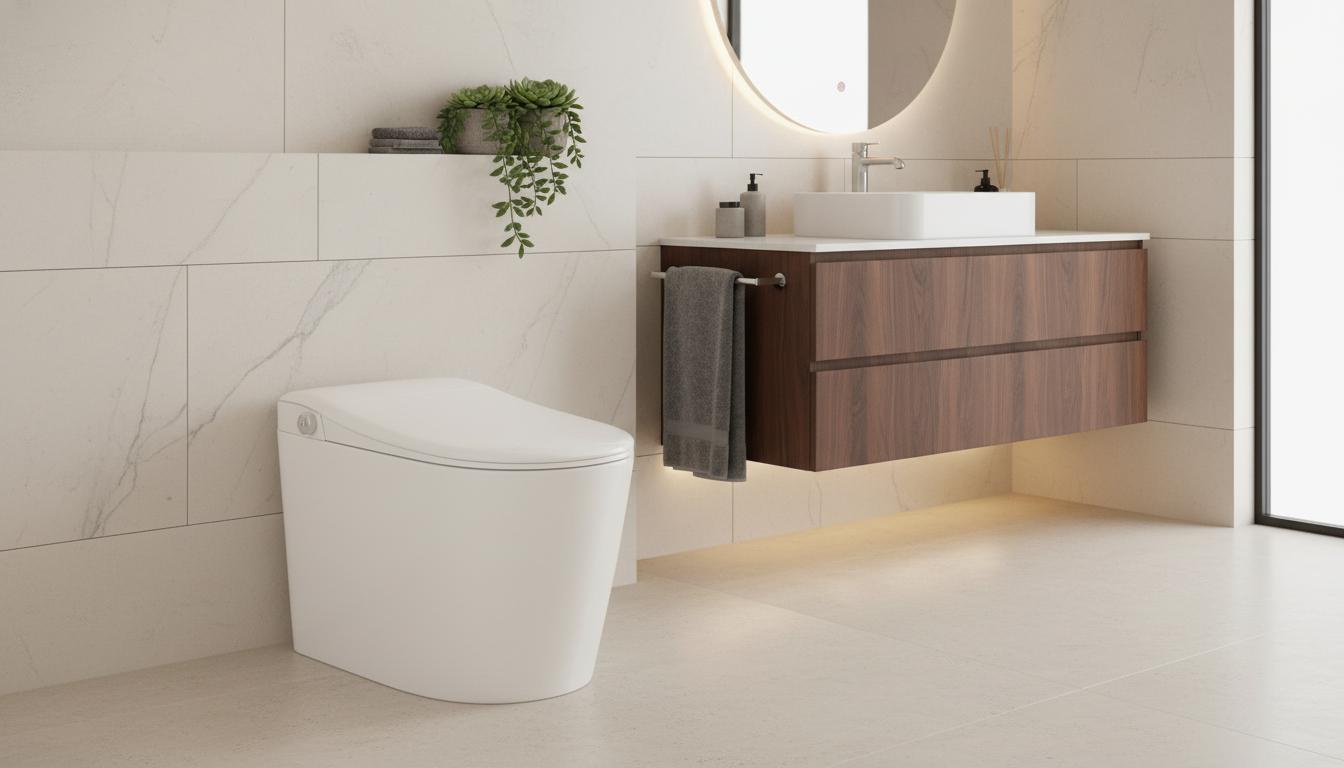
A smart toilet that combines hands-free flushing, a heated seat, and dual-flush control can upgrade daily comfort while reducing touch points and water use. The result is a bathroom fixture that feels more modern in everyday routines—especially in busy households or guest baths—while still focusing on practical performance. Below is a clear breakdown of how the core features work, what to verify before purchasing, what installation typically involves, and how to keep the toilet running smoothly for the long haul.
What Makes a Toilet “Smart” in Daily Use
Smart” in a bathroom context usually means the toilet reduces manual steps and adds comfort-oriented features that are consistent and easy to live with. While models vary, the most noticeable day-to-day upgrades typically include:
- Auto sensor flushing to reduce contact with handles and buttons, helping keep high-touch surfaces cleaner in shared bathrooms.
- A heated seat that improves comfort in colder seasons or in bathrooms that don’t stay warm overnight.
- Dual-flush operation that supports a lighter flush for liquid waste and a stronger flush for solid waste—balancing clearing power and water consumption.
- Convenience add-ons such as soft-close seats, night lighting, deodorization, or adjustable settings (availability depends on the model).
When these features are tuned well, they fade into the background—in a good way. You notice fewer cold-seat surprises, fewer “did it flush?” moments, and less water going down the drain than older single-flush setups.
Core Features Explained: Auto Sensor Flush, Heated Seat, Dual Flush
Understanding what’s happening behind the scenes helps set realistic expectations and makes it easier to compare models.
Auto sensor flush
Auto-flush systems typically use infrared or proximity sensing to detect use, then trigger a flush after you stand up and move away. Some units allow adjustments for sensitivity and timing, which can be helpful in smaller bathrooms where a sensor might otherwise trigger too easily.
Heated seat
A heated seat uses an internal element to maintain a target temperature. Better designs offer multiple heat levels, quick warm-up, and an energy-saving mode that lowers power use during predictable off-hours. For efficiency guidance, the U.S. Department of Energy’s Energy Saver resource is a useful reference point for household electricity habits.
Dual flush system
Dual-flush systems provide two flush volumes. Depending on the design, this may be controlled by separate buttons, a single control with two modes, or a settings-based approach. For water-efficiency context and common performance benchmarks, the EPA’s WaterSense toilet guidance is a widely cited standard.
Power needs, timing, and noise
Most sensor-and-heat combinations require power. Plan for a nearby outlet (often GFCI in bathrooms, depending on local code). Noise varies by flushing technology; many modern systems sound smoother than older high-volume gravity toilets, but the “when” of flushing matters just as much as the “how loud.” Look for settings that reduce false triggers and include a manual override for peace of mind.
Feature overview and what to look for
| Feature |
Benefit |
What to verify before buying |
| Auto sensor flush |
Hands-free hygiene and convenience |
Sensor range, false-trigger prevention, manual override option |
| Heated seat |
Comfort in cold bathrooms |
Temperature levels, warm-up time, energy-saving mode |
| Dual flush system |
Water savings with reliable clearing power |
Flush volumes, performance ratings, easy-to-reach controls |
| Soft-close seat/lid (if included) |
Less noise and reduced wear |
Hinge quality, replaceable parts availability |
| Built-in light/deodorization (if included) |
Night use comfort and odor control |
Brightness level, filter replacement cost/interval |
How to Choose the Right Model for the Bathroom
Choosing a smart toilet is less about chasing the most features and more about matching the unit to your bathroom’s physical constraints and your household’s routines.
Installation Planning and Compatibility Checks
- Shutoff and flange inspection: Replace aging shutoff valves and inspect the closet flange condition and height. A compromised flange is a common source of rocking and leaks.
- Floor and sealing: Confirm the floor is level and use the recommended seal type (wax ring or wax-free seal compatible with the toilet base). A stable base helps sensors and seating feel more “premium” over time.
- Electrical safety: Use a properly grounded outlet; many jurisdictions require GFCI-protected circuits in bathrooms. If you’re unsure, consult a licensed electrician.
- Water pressure and filtration: In areas with hard water or sediment, a simple supply-line filter can help protect valves and maintain consistent filling and flushing behavior.
- Professional help: If the job involves relocating outlets, moving plumbing, or correcting flange problems, a licensed plumber/electrician reduces risk. For code and best-practice context, organizations like IAPMO provide industry standards and training resources.
Daily Operation, Settings, and Accessibility
Cleaning and Long-Term Maintenance
Common Tradeoffs to Consider
FAQ
Does an auto sensor flush toilet still work if the power goes out?
It depends on the model. Many units include a manual flush backup, while others may have limited function until power returns; it’s also common for some settings to reset or require re-confirmation after an outage.
How much water can a dual-flush system save compared with a single-flush toilet?
Dual-flush toilets commonly use a lower-volume flush for liquids and a higher-volume flush for solids, which can reduce overall water use compared with older single-flush toilets that used significantly more water per flush. Real savings depend on how often the low-volume option is used and your local water rates.
What should be checked before installing a toilet with a heated seat?
Confirm the rough-in measurement, verify you have a safe nearby outlet (often GFCI), and check shutoff valve placement and clearance around the bowl. If electrical work is needed to add or relocate an outlet, using a licensed professional is typically the safest route.
Recommended for you











Leave a comment