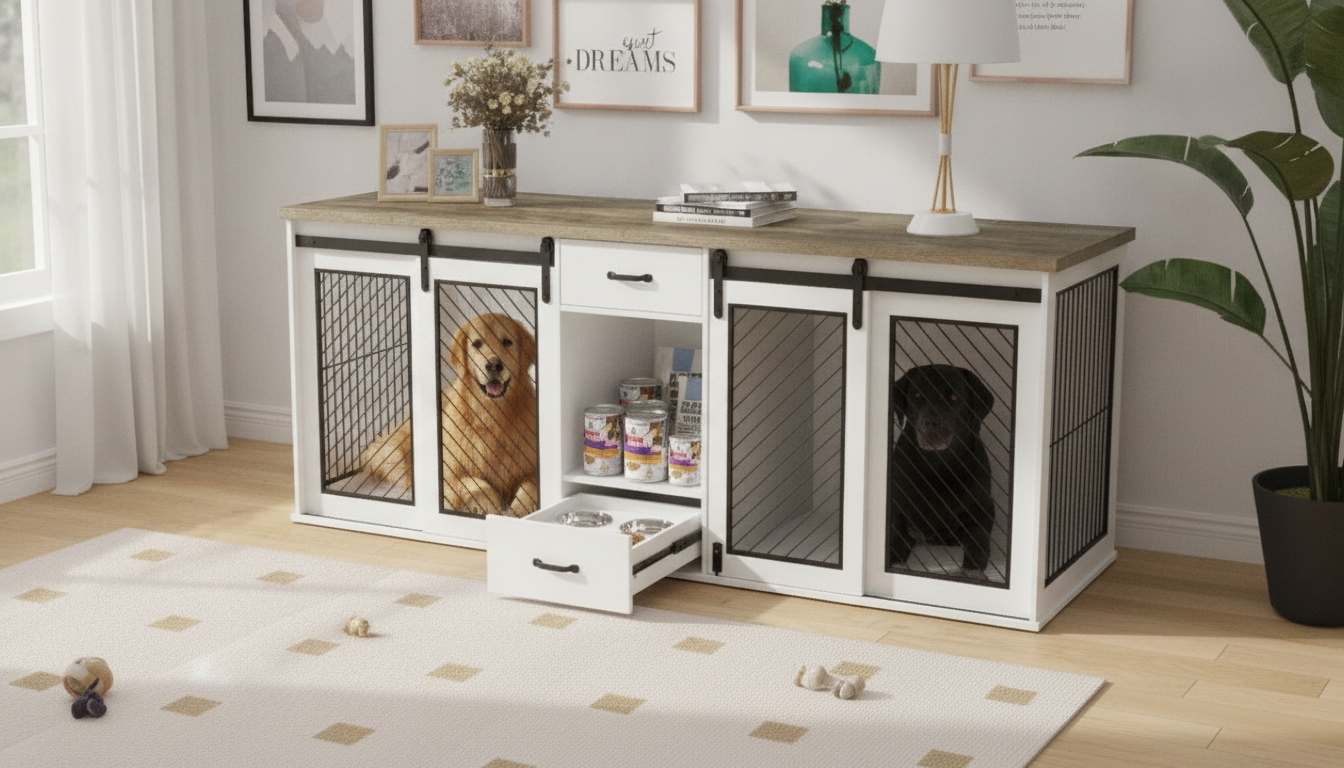
A double dog crate that also functions as furniture can keep two dogs comfortable while helping a room look tidy. This style combines separate resting spaces, smooth sliding doors, a built-in feeding area, and a drawer for everyday storage so essentials stay close without adding extra clutter. When it’s chosen and set up well, it can support calmer downtime, cleaner mealtimes, and more consistent routines—without a traditional kennel look.
What this furniture-style double crate is designed to do
- Provide two defined, den-like spaces that help reduce roaming and encourage calm downtime.
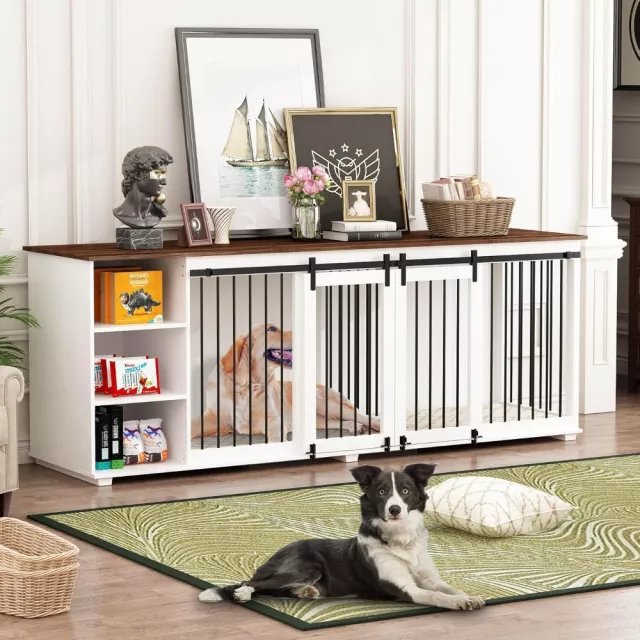
- Blend into living rooms, bedrooms, or entryways as a console-style piece rather than a standalone kennel.
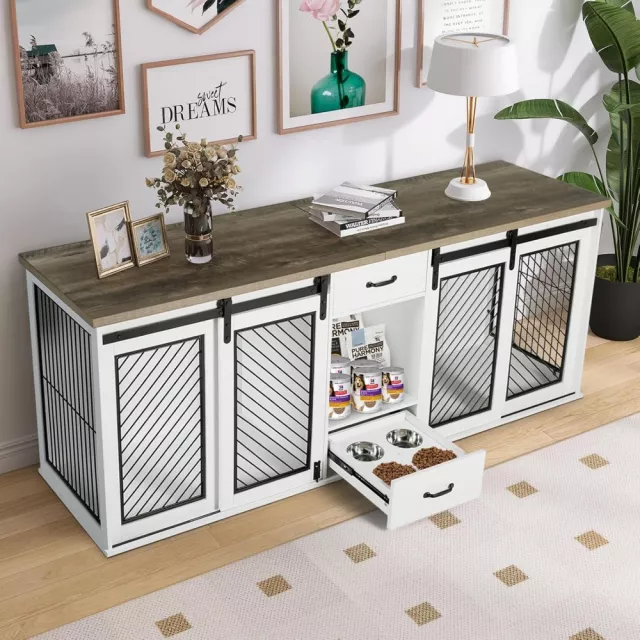
- Support daily routines with integrated bowls for quick mealtimes and a drawer for leashes, bags, wipes, or grooming tools.
- Offer easier access in tighter rooms where a swinging door might bump furniture or block walkways.
Key features to look for
- Sliding doors: Prioritize doors that glide smoothly and latch securely so dogs can’t nose them open. A stable track and minimal wobble help reduce noise and frustration.
- Center divider: Useful for separating dogs during meals, training, or rest. Look for a divider that fastens firmly and doesn’t flex or rattle when a dog shifts positions.
- Raised bowls: Built-in bowls can keep feeding in one predictable location and reduce spills spreading across the room. Confirm bowl material, capacity, and whether bowls lift out for quick washing.
- Drawer storage: A drawer is most helpful when it opens evenly and has enough depth for bulky items like harnesses, long leads, folded towels, or a treat pouch.
- Ventilation and visibility: Multiple sides with bars or openings support airflow and allow dogs to stay aware of the room without feeling overly exposed.
- Top surface function: Consider what will sit on top (lamp, baskets, framed photos) and whether the surface is easy to wipe clean after dusty paws or shedding season.
Sizing and comfort: getting the right fit for two dogs
With a double unit, “overall length” can be misleading—each dog needs enough usable space within their own compartment. Start by measuring each dog’s body length and standing height, then compare those measurements to each side’s interior dimensions (not just the exterior product size). The goal is a compartment that allows comfortable standing, turning, and settling without feeling cramped.
Also account for real-life use: collars and tags shouldn’t catch on bars, and thicker floor pads can reduce headroom. If one dog tends to guard food or reacts to the other dog’s movement, built-in bowls may still require separate feeding times or additional management to keep meals peaceful.
Quick sizing checklist for double-crate compartments
| What to measure |
How to measure |
Why it matters |
| Dog length |
Nose to base of tail |
Helps ensure the dog can stretch out without curling tightly |
| Dog height |
Floor to top of head/ears (whichever is higher) |
Prevents crouching and supports comfortable standing |
| Turnaround space |
Observe turning radius in a familiar crate or small room |
Confirms the compartment won’t feel restrictive |
| Bed thickness |
Measure preferred pad/mattress height |
Too-thick bedding can reduce headroom and airflow |
| Two-dog compatibility |
Assess co-resting vs. separation needs |
Helps decide whether a fixed divider is essential |
Placement and room planning
- Choose a low-traffic spot that still feels socially connected; many dogs rest better when they can see household activity.
- Allow clearance for sliding doors to fully open and for humans to reach bowls and the drawer without bumping nearby furniture.
- Keep away from heating vents, fireplaces, direct midday sun, and drafty exterior doors to prevent temperature stress.
- If using as a TV stand or console, confirm the top surface can handle the intended items without wobble and that cords can be routed safely out of chewing range.
Daily use: feeding, training, and two-dog routines
For broader guidance on humane, low-stress training and routines, consult established resources like the American Kennel Club’s crate training overview and the ASPCA training and behavior library.
Materials, durability, and safety checks
General pet care guidance and safety considerations can also be found through the American Veterinary Medical Association (AVMA) pet owner resources.
Cleaning and care that keeps it looking like furniture
How to choose the right double dog crate furniture setup
FAQ
Are sliding doors secure enough for strong or anxious dogs?
They can be, as long as the latch is sturdy and the doors can’t be lifted off the track. Check for rigid door construction and a latch that resists nose pushes and pawing; escape-prone dogs should still be supervised and trained gradually.
Can the built-in bowls be removed for cleaning or replaced with different bowls?
Removable bowls are preferred for hygiene, since they’re easier to wash and dry thoroughly. Before replacing them, confirm the bowl opening diameter and depth so alternatives fit securely; stainless steel is a common choice for durability and odor resistance.
Should two dogs share one double crate furniture unit or have separate crates?
Compatible dogs often do well in separate side-by-side compartments within one unit, especially when they already rest calmly near each other. Dogs with guarding behaviors, anxiety, or mismatched energy levels may be safer with separate locations or scheduled crate time to prevent stress and conflict.
Recommended for you









Leave a comment