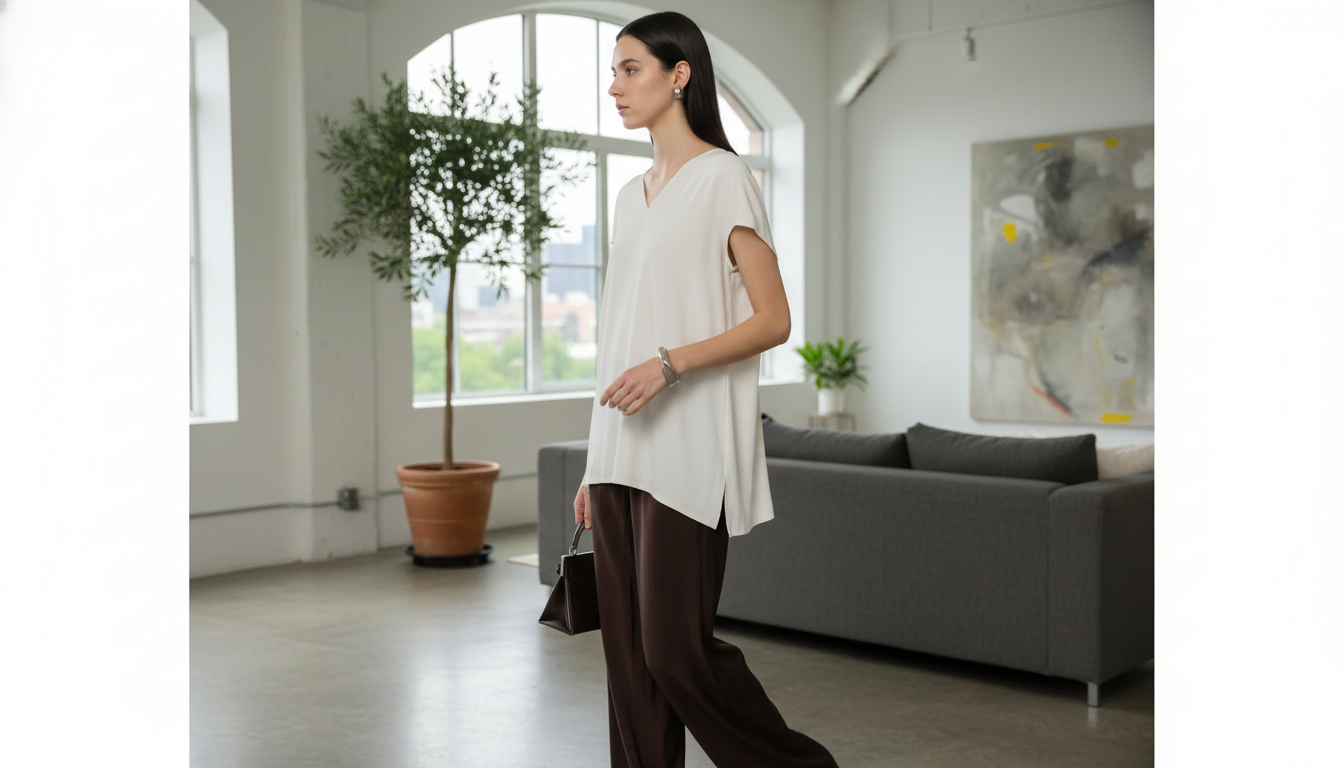
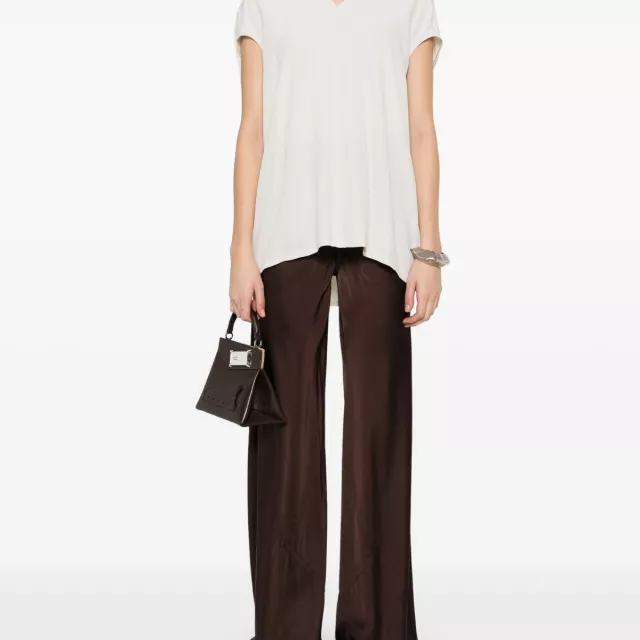
A V-neck silk top from Rick Owens balances fluid drape with the label’s distinctive, pared-back edge. The appeal is straightforward: silk brings movement and subtle shine, while the V neckline sharpens the line of the upper body and layers easily under tailoring. Below are practical notes on what defines this style, what to check before buying, how it tends to fit, and how to keep silk looking polished over time. For more guidance, see About Time: Fashion and Invisible Mount-Making.
What Defines a Rick Owens V-Neck Silk Top
Silk construction is the starting point. Compared with cotton jersey or viscose, silk typically looks lighter on the body, catches light in motion, and creates a clean drape that can feel dressy without relying on bold pattern or obvious logos. For further reading, see Food & Fashion – Fashion Institute of Technology.
The V-neckline is equally important to the overall effect. Even a modest V can visually elongate the neck and pull the eye vertically, which pairs well with Rick Owens’ preference for long, lean lines. A deeper V reads more relaxed and evening-leaning, while a shallower V is easier for daytime or office layering.
Styling-wise, these tops often work best in the situations where you want refinement without stiffness: elevated everyday wear, a sleek layer under tailoring, or a way to make denim and boots feel more intentional rather than casual.
Material and Construction: What to Check Before Buying
Silk can vary widely, and a few details make a noticeable difference in how a V-neck top wears and ages. First, consider silk type and weight. Lighter silks (often used for a more fluid drape) may run slightly sheer and feel cooler against the skin; midweight options tend to feel more substantial and may hold their line better across the shoulders and neckline.
Next, look at surface finish. A high-luster silk reads more formal and highlights movement; a more matte silk can feel understated and slightly more utilitarian, which can suit a monochrome, minimal wardrobe. If possible, inspect seam quality around the V: clean binding or a neat facing should lie flat so the neckline doesn’t ripple or gape.
Finally, anticipate real-life wear. Dark shades can show water spotting or deodorant residue more readily; very light silks can reveal underlayers. Planning for the right base layer (or choosing a slightly heavier fabric) helps the top look intentional instead of delicate.
Quick checklist for a silk V-neck top
| Detail |
What to look for |
Why it matters |
| V-neck finishing |
Smooth binding or clean facing; lies flat |
Prevents gaping and keeps the neckline sharp |
| Fabric weight |
Lightweight to midweight, consistent handfeel |
Affects drape, opacity, and seasonality |
| Hem and cuffs |
Even stitching; no puckering |
Improves longevity and appearance after cleaning |
| Fit through shoulders |
Seams align; no pulling at upper back |
Ensures comfort and clean lines under layers |
| Care label |
Clear guidance (dry clean/hand wash) |
Avoids shrinkage, shine loss, or distortion |
Fit and Silhouette: Getting the Proportions Right
Fit is where a silk V-neck top can shift from “simple” to “exact.” Start with neckline depth. If the V is deep, it tends to look best either with a deliberate underlayer (a tonal camisole, a fitted tank) or with outerwear that frames it—like a blazer, leather jacket, or long coat. A shallower V is easier if you want the top to function like a refined tee replacement.
Length matters because silk drapes rather than clings. Longer hems often pair well with slim trousers or leggings, creating an elongated top line; shorter lengths can balance wide-leg pants and high-rise denim. When deciding between sizes, think about your end use: sizing up can create more fluidity (and can reduce any pulling across the bust or upper back), while sizing down can look sharper under a structured jacket.
Also check the shoulder line. A precise shoulder seam reads tailored and makes the silk feel “clean.” A slightly dropped shoulder looks more relaxed and directional, but it can change how a blazer sits on top. If layering is the goal, leave enough room to avoid bunching at the armhole and upper chest.
How to Choose the Right Silk V-Neck Top for Your Wardrobe
Outfit Ideas: Day, Night, and Layered Looks
Monochrome line
Contrast texture
Tailored layer
Evening minimal
Warm-weather ease
Care and Storage: Keeping Silk Looking New
Always follow the care label first; many silk garments are safest with professional dry cleaning. For general fabric context and why silk behaves the way it does, Britannica’s overview of silk is a helpful reference.
If hand washing is permitted, keep it gentle: use cool water and a silk-safe detergent, minimize agitation, and never wring. Instead, press water out with a towel, reshape the garment, and dry flat or hang carefully away from direct sun to reduce fading and water marks. For step-by-step care basics, see The Laundress guide to washing silk.
FAQ
Is a silk V-neck top suitable for year-round wear?
Yes—lightweight silk is breathable in warm weather, while midweight silk layers well under coats and blazers when it’s cool. The key is choosing a fabric weight that matches your climate and how much you plan to layer.
How can a silk top be prevented from showing sweat marks or deodorant residue?
Let deodorant dry completely before dressing and consider a thin camisole or base layer to reduce direct contact. If residue appears, address it promptly using the care method allowed on the label rather than rubbing aggressively, which can stress the fibers.
What is the safest way to remove wrinkles from silk?
Steaming is usually the safest option because it relaxes wrinkles with minimal direct heat. If ironing is needed, use low heat and a pressing cloth, and always confirm the garment’s care label first.
Recommended for you










Leave a comment