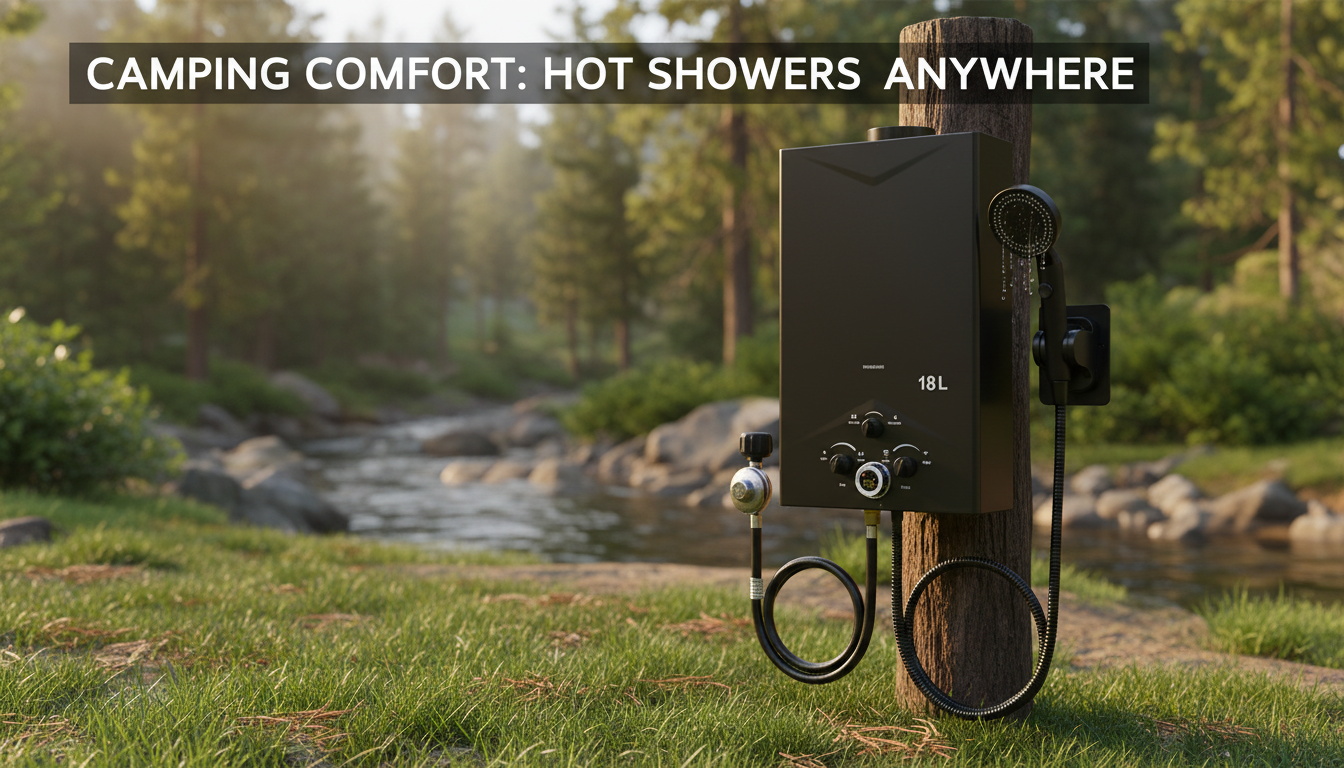
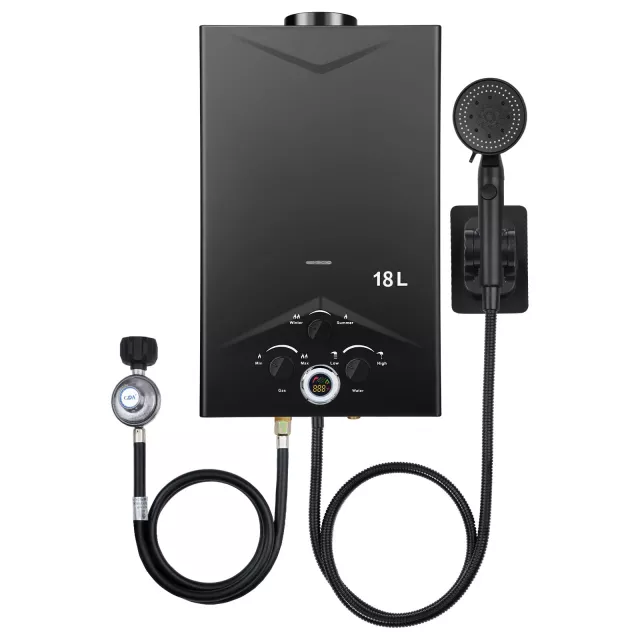
A portable tankless propane water heater with a digital display is built for on-demand hot water where a traditional water heater isn’t practical—camp setups, cabins, workshops, outdoor showers, and utility sinks. The digital readout helps take the guesswork out of dialing in temperature, while propane fuel supports off-grid use when electricity is limited. For more guidance, see Tankless Water Heaters for RVs Reviews – TanklessHeat.org.
What It Is and When It Makes Sense
A portable tankless propane water heater heats water only while you’re actually using it. Instead of keeping a reservoir hot (like a tank-style heater), it ignites when flow is detected and transfers heat through a heat exchanger as water passes through. For further reading, see The Home Appliances Recalls Camplux Brand Portable Tankless ….
- Provides hot water only when a faucet or shower is running, rather than storing heated water in a tank.
- Common use cases: outdoor rinsing, remote cabins, RV-style setups (where permitted), workshops, poolside cleanup, and job sites.
- Digital display is typically used to show water temperature (and sometimes error codes), making adjustments faster and more consistent.
- Best for intermittent, point-of-use hot water rather than supplying an entire large home.
If the goal is a consistent, comfortable rinse after a dusty trail ride or a reliable hand-washing station at a worksite, a portable tankless unit is often more practical than hauling heated water—or depending on limited campground facilities.
How the Digital Display Improves Day-to-Day Use
Portable propane heaters are often used in changing conditions: different inlet water temperatures, varying hose lengths, and fluctuating flow. A digital display helps bring some consistency back to the experience.
- Temperature awareness: seeing the output temperature reduces trial-and-error when changing seasons or inlet water temperature.
- Quicker setup: helps match water temperature to task (hand washing vs. showering vs. cleaning gear).
- Troubleshooting support: many units use display codes or indicators to flag ignition, airflow, or flame-sensing issues.
- More repeatable comfort: easier to return to a preferred setting after transport or storage.
Even when conditions are unpredictable, having a number to reference makes it easier to make small adjustments instead of over-correcting and ending up with sudden hot-and-cold swings.
Key Components and What to Check
Portable tankless heaters can live a tougher life than fixed indoor units. Before choosing one, it helps to know which parts do the heavy lifting and which details affect reliability in the field.
- Burner and heat exchanger: the core of the unit; look for corrosion resistance and solid build quality for frequent transport.
- Ignition and power needs: many portable units use battery ignition or low-voltage power; confirm what’s required before heading off-grid.
- Water connections: verify inlet/outlet sizes, hose compatibility, and whether quick-connect accessories are supported.
- Control knobs/buttons: confirm the adjustment range and whether the display shows real-time output temperature.
- Mounting/handling: check handle, mounting points, and overall portability for the intended environment.
Also consider how exposed the controls are. If a unit will be carried in a truck bed with other gear, protected knobs and a recessed display window can help prevent accidental damage.
Safety Features and Installation Basics
Any propane-fired water heater needs careful setup. Combustion appliances create hot surfaces and combustion gases, and portable use adds extra variables such as wind, uneven mounting, and wet environments.
- Ventilation: propane water heaters produce combustion gases; use only in well-ventilated outdoor settings or according to manufacturer instructions.
- Flame failure protection: shuts off gas if flame is not detected; important for windy outdoor conditions.
- Overheat protection: helps prevent excessive outlet temperatures if flow changes suddenly.
- Tip-over and freeze considerations: portable use increases risk; follow the manual for stable mounting and cold-weather draining.
- Propane handling: use the correct regulator and hose rated for propane; leak-check all connections before operation.
How to Choose the Right Portable Tankless Propane Water Heater
Selection Checklist: What to Match to Your Setup
| Decision Factor |
Why It Matters |
What to Confirm Before Buying |
| Flow rate |
Determines whether showers feel steady and whether multiple uses can run at once |
Maximum flow and recommended use scenarios for the unit |
| Temperature rise capability |
Cold inlet water needs more heating power |
Performance notes for cold climates or cold water sources |
| Minimum activation pressure/flow |
Some systems won’t trigger ignition at low pressure |
Minimum required water pressure or flow to start heating |
| Power/ignition method |
Off-grid trips may limit electricity access |
Battery type or low-voltage requirement and runtime expectations |
| Safety protections |
Reduces risk during outdoor operation |
Flame failure shutoff, overheat protection, and clear usage guidance |
| Hose and regulator compatibility |
Incorrect fittings can cause leaks or poor performance |
Correct regulator type, propane hose rating, and connector sizes |
Setup Tips for Reliable Hot Water Outdoors
Care, Storage, and Long-Term Use
FAQ
Can a portable tankless propane water heater be used indoors?
Generally no, unless the specific model is explicitly rated for indoor installation with proper venting. Because propane combustion can create dangerous gases, follow the manufacturer’s instructions exactly and never operate an outdoor-only unit inside enclosed spaces.
Why does the water temperature change when someone turns on another faucet?
Tankless heaters respond to changes in water flow and inlet temperature, so adding another outlet can reduce flow through the heater or exceed its heating capacity. Keeping flow steady, making gas/water adjustments gradually, and avoiding simultaneous high-demand uses can help stabilize temperature.
What power source does the digital display and ignition need?
Many portable units use batteries or low-voltage power to run ignition and the digital display. Check the required battery type or adapter before heading off-grid, and bring spares if your trips are remote.
Recommended for you










Leave a comment