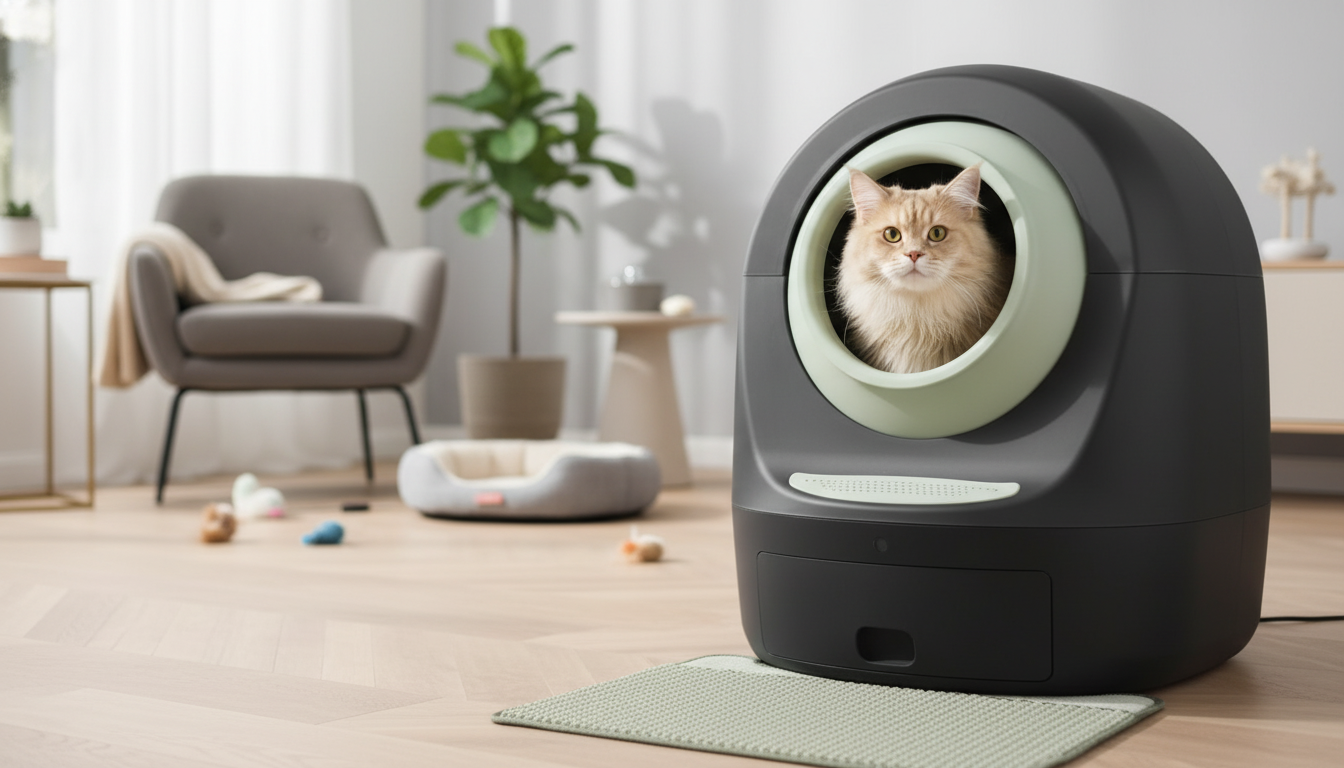
An oversized self-cleaning litter box can make day-to-day life easier in two ways: it gives larger cats enough room to turn, squat, and cover comfortably, and it removes waste on a schedule so odors don’t linger. The best option depends less on marketing labels like “XL” and more on measurable space, reliable safety sensors, secure waste storage, and compatibility with the litter you actually want to use—especially if more than one cat shares the box.
What “oversized” and “self-cleaning” should mean in daily use
“Oversized” should translate to real breathing room inside the chamber. Big-bodied cats and long-haired breeds often need extra turning radius so they aren’t forced to perch on the edge or press against a wall, both of which can lead to messes outside the box. For senior cats, “oversized” also matters at the entry: a wider opening and an easier step-in reduces hesitation and awkward posture.
“Self-cleaning” should mean the box separates waste from clean litter after a timed delay, not while a cat is still near it. A well-designed cycle keeps litter fresher between full changes and can reduce tracking because clumps are removed before they break apart. The waste compartment is just as important as the cleaning mechanism: a covered, sealed bin with a secure bag/liner fit does more for odor control than any perfume or deodorizing add-on.
Auto-cleaning also comes with real-world tradeoffs. Even the best unit still needs periodic deep cleaning, parts inspection, and a plan for consumables (liners, filters, or specialty trays). The goal is less daily scooping—not zero maintenance.
Who benefits most from an oversized automatic box
- Large cats: More interior space helps prevent “half in, half out” posture that can send urine or stool over the edge.
- Multi-cat households: Faster waste removal can reduce box guarding and “protest” behaviors tied to a dirty box.
- Busy schedules: Instead of multiple scoop sessions, you get predictable routines—check the bin, top off litter, and empty on a cadence.
- Odor-sensitive homes: Apartments and smaller spaces benefit from a sealed waste compartment that contains smell close to the source.
- People with limited mobility: Fewer deep bends and less manual scooping can be a meaningful comfort upgrade.
How to choose the right automatic oversized litter box
When labels aren’t consistent across brands, choosing well comes down to a short set of practical checks.
1) Confirm size in three ways
Look for interior chamber dimensions (not just exterior footprint), entry height, and whether your cat can turn around without shoulders or hips brushing the sides. A roomy opening matters, too—some boxes have a large internal chamber but a narrow doorway that discourages confident entry.
2) Prioritize safety sensors
Reliable sensors are non-negotiable. Look for motion/weight detection, anti-pinch design, and an automatic pause feature if a cat approaches during a cycle. If a unit can restart unexpectedly after being bumped or after a power interruption, it’s not a great fit for cautious cats.
3) Evaluate waste handling and odor control
4) Match the cleaning mechanism to your litter
5) Consider noise, cycle timing, and placement
Quick checklist for comparing oversized automatic litter boxes
| What to compare |
Why it matters |
What to look for |
| Interior space |
Comfort and proper posture, fewer accidents |
Cats can turn around fully; wide opening |
| Entry height |
Senior/short-legged accessibility |
Low threshold or step option |
| Safety sensors |
Prevents movement while cat is inside/nearby |
Auto-stop, anti-pinch, approach detection |
| Waste bin seal |
Odor control and hygiene |
Covered compartment, secure lid, tight bag fit |
| Litter compatibility |
Prevents clumping, sticking, and jams |
Recommended litter type clearly stated |
| Maintenance effort |
Long-term satisfaction |
Easy disassembly, washable surfaces, smooth corners |
| Noise level |
Cat acceptance |
Quiet motor, adjustable cleaning delay |
Setup and transition tips for picky or cautious cats
If litter box avoidance persists, it’s worth reviewing common behavioral triggers and health considerations with reputable guidance such as the ASPCA’s litter box problem resources.
Maintenance, odor control, and hygiene routines
Odor control basics still apply: keep litter dry, ensure the bag/liner fits snugly, and ventilate the room. Avoid harsh chemicals or heavy fragrances—strong scents can trigger avoidance. General cat care best practices are also covered by the American Veterinary Medical Association (AVMA).
Finally, watch for behavior changes. Straining, frequent small trips, or sudden avoidance can signal discomfort or medical issues. If urinary signs appear, prompt veterinary attention is important; Cornell’s overview of feline lower urinary tract disease (FLUTD) is a helpful reference.
Common issues and simple troubleshooting
FAQ
Will a large cat actually fit comfortably in an automatic self-cleaning box?
Yes, if the interior chamber truly allows a full turn-around and a natural squat without your cat’s body pressing the sides. Measure your cat (nose-to-base length and shoulder height) and compare those numbers to the box’s interior dimensions and entry height rather than relying on “XL” labels.
What litter works best with self-cleaning litter boxes?
Clumping clay is commonly the easiest match for raking or sifting systems because it forms firm clumps that separate cleanly. Avoid very dusty, very lightweight, or non-clumping litters unless the unit explicitly supports them, since incompatible litter can cause sticking and jams.
How often does an automatic litter box still need to be cleaned?
Plan on a daily quick check, a weekly wipe-down of interior surfaces and sensors, and a monthly deep clean of removable parts and the waste bin. Waste-bin emptying depends on capacity and how many cats use it, but staying ahead of “full” keeps odor under control.
Recommended for you









Leave a comment