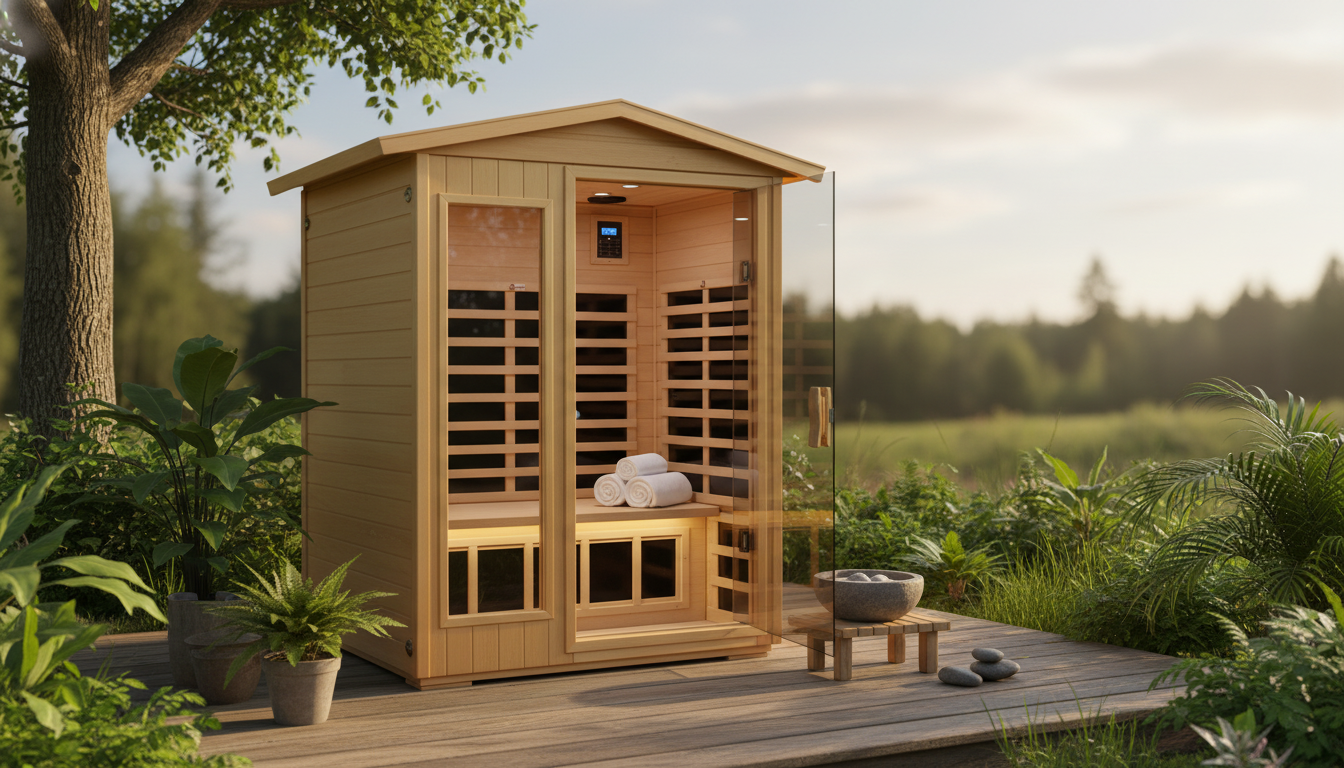
An outdoor-ready far infrared sauna can turn a patio, deck, or backyard corner into a reliable wellness space year-round. This guide covers what to expect from a 2-person basswood infrared cabin, how low-EMF heating panels affect comfort and placement, and what to check before installation outdoors.
What Makes an Outdoor Far Infrared Sauna Different
Far infrared saunas heat differently than traditional hot-rock or steam saunas. Instead of focusing on superheating the air, radiant panels deliver far infrared energy that warms the body more directly. Many people describe the experience as a deep, steady warmth that can feel comfortable at lower ambient cabin temperatures than a conventional sauna.
Outdoor placement adds variables that can affect day-to-day performance: wind that strips heat from the cabin, big swings in ambient temperature, moisture from rain or snow, and UV exposure that can dry or fade exterior finishes over time. For a 2-person cabin, that real-world environment matters because the enclosure is compact—small changes in airflow, sealing, and shelter can noticeably impact warm-up time and heat retention.
A 2-person footprint is a practical sweet spot for couples, or for solo sessions with a little extra room to shift positions and stretch. Outdoors, that size also tends to be easier to site on a prepared base without major construction.
For outdoor use, plan around the basics: a stable, level base; a location that drains well; and a placement strategy that avoids constant direct weather exposure when possible (such as a pergola, roof overhang, or a dedicated cover designed for outdoor sauna use).
Basswood: Comfort, Feel, and Long-Term Care
Basswood is often chosen for infrared cabins because it has a smooth, even texture and a low-resin profile. In practice, that can mean fewer sticky spots, less “sap” behavior during heated sessions, and an interior that feels clean and consistent against skin. Compared with more aromatic softwoods, basswood is also typically milder in scent, which can be a plus for anyone who prefers a neutral-smelling sauna environment.
Outdoor longevity comes down to moisture control and exterior protection. Even when the interior is protected by the cabin structure, outdoor humidity and rain splash can affect the exterior and base over time. Good ventilation, intact sealant, and keeping standing water away from the floor perimeter are the biggest factors in preventing swelling, warping, and door alignment issues.
Routine care is simple but important: wipe down benches, keep vents unobstructed, and periodically inspect seams, fasteners, and hinges. Catching small issues early—like a compromised exterior edge or a door that’s starting to drag—helps keep the cabin comfortable and easy to use in every season.
Basswood outdoors: quick care checklist
| Task |
How often |
Why it matters |
| Wipe interior surfaces after use |
Each session |
Reduces moisture buildup and odors |
| Air out with door slightly open (when safe) |
After sessions |
Helps the cabin dry evenly |
| Inspect exterior sealant and edges |
Seasonally |
Prevents water intrusion and swelling |
| Check base level and drainage |
Seasonally or after storms |
Avoids pooling water and door misalignment |
Low-EMF Heating Panels: What It Means in Daily Use
Low-EMF heating panels are designed to reduce electromagnetic field exposure near the heaters while still delivering consistent far infrared output. “Low-EMF” isn’t a single universal standard; it depends on how a manufacturer measures, at what distance from the panel, and under what operating conditions. For shoppers who prioritize this feature, the most useful details are published testing numbers and clear measurement methods.
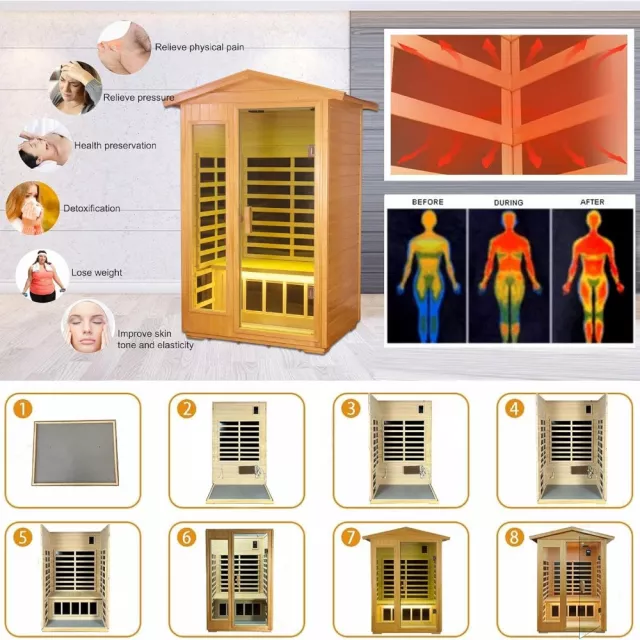
In daily use, comfort tends to be influenced more by panel placement and heat balance than by any spec label alone. Look for coverage that matches how you sit: panels behind the back, along the sides, and sometimes lower panels aimed toward calves can help create an even, wraparound feel. Uneven layouts can create hot spots on one side while leaving other areas feeling under-heated, especially in cooler outdoor air.
Outdoor Setup: Site Planning, Base, and Electrical
Outdoor readiness checklist
| Item |
What to confirm before delivery |
| Base and leveling |
Flat surface, drainage, and load capacity |
| Clearances |
Space for assembly, ventilation, and maintenance access |
| Electrical |
Proper circuit, outdoor-rated protection, and safe cable routing |
| Weather exposure |
Sun/rain protection strategy and wind conditions |
Using a 2-Person Cabin: Comfort, Session Ideas, and Safety Basics
Basic safety still applies outdoors: avoid alcohol before sessions, step out if dizzy or nauseated, and check with a clinician if pregnant or managing cardiovascular conditions. For general background on benefits and risks, see resources from the Cleveland Clinic and the Mayo Clinic. For a broader research view, PubMed Central (NIH) hosts reviews and studies, including far-infrared sauna literature at NIH (PubMed Central).
How to Choose the Right Outdoor Infrared Sauna
FAQ
Is a far infrared sauna suitable for outdoor use year-round?
Yes, year-round outdoor use is realistic when the sauna sits on a level, well-draining base and has a weather-conscious placement (such as partial shelter and good airflow). In colder weather, expect longer warm-up times, and wind exposure can reduce comfort and efficiency.
How should basswood be maintained in an outdoor sauna?
Wipe down the interior after sessions and let the cabin dry by airing it out to limit moisture buildup. Seasonally, inspect exterior sealant, edges, and the base area for signs of water intrusion, and follow the manufacturer’s guidance for sealing and placement to avoid standing water.
What does low-EMF mean for infrared heating panels?
EMF refers to electromagnetic fields that can be generated by electrical components, including heater panels and wiring. “Low-EMF” varies by brand and is affected by how and where measurements are taken, so it’s best to look for published test details and pair that with a safe, code-appropriate outdoor electrical installation.
Recommended for you









Leave a comment