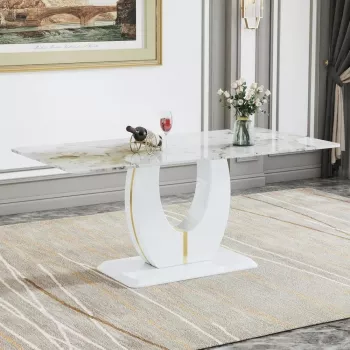
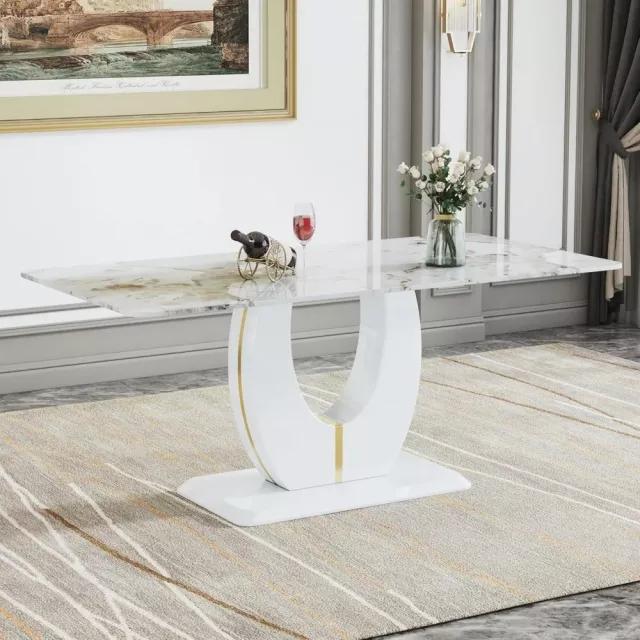
A marble top brings a crisp, sculptural look to a dining space, while a wooden pedestal base adds warmth and comfortable legroom. This combination suits modern interiors that still need everyday practicality—easy movement around the table, a stable footprint, and a surface that feels special for both weeknight meals and gatherings.
What Makes This Table Style Stand Out
A modern marble dining table with a wooden pedestal base succeeds because it blends two materials that naturally balance one another. The stone reads tailored and architectural, while the wood keeps the room feeling lived-in and inviting.
- Balanced contrast: cool stone veining paired with natural wood grain creates a refined, approachable centerpiece.
- Pedestal base benefits: fewer corner legs to bump into, simpler chair placement, and a more open feel around the perimeter.
- Visual weight: marble reads luxurious and substantial; a wood pedestal can soften that weight and keep the room from feeling overly formal.
- Works across looks: complements contemporary, transitional, Scandinavian, and modern organic spaces depending on surrounding finishes.
Materials and Construction Details to Look For
Not all “marble-top” tables are built the same. Before choosing a style, confirm what the top is made of and how the base is engineered—those two factors have the biggest impact on durability and day-to-day ease.
- Marble surface type: confirm whether the top is solid marble, marble veneer over a substrate, or engineered stone with a marble look—each affects weight, cost, and maintenance.
- Finish and sealing: a properly sealed surface helps resist staining from wine, citrus, coffee, and oils; plan on periodic resealing if required by the material.
- Edge profile: eased or beveled edges can reduce chipping risk and feel more comfortable for leaning elbows during meals.
- Pedestal joinery: look for tight seams, a stable mounting plate, and hardware designed to prevent wobble over time.
- Floor protection: integrated levelers or felt pads help prevent rocking on uneven floors and protect hardwood.
For deeper care and material-specific guidance, consult the Natural Stone Institute’s stone care resources. For practical, home-focused tips on living with marble, Architectural Digest frequently covers real-world do’s and don’ts.
Sizing the Table to the Room
Marble’s presence can visually “fill” a space faster than lighter materials, so proportion matters. The good news: a pedestal base can make a table feel less bulky, since chairs can slide in without navigating four corner legs.
- Clearance matters: leave enough space behind chairs so people can sit and pass comfortably; tighter rooms benefit from a pedestal base because chairs can tuck in more easily.
- Traffic flow: consider main walkways to kitchens, patios, or hallways—avoid placing the pedestal where it constricts the natural path.
- Seating comfort: allow adequate elbow room per person, and check whether the pedestal footprint interferes with chair legs when fully pushed in.
- Rug planning: ensure the rug extends beyond the table so chair legs stay on the rug when pulled out.
Quick Sizing and Spacing Guide
| Planning Item |
Comfortable Target |
Notes |
| Space from tabletop edge to wall/obstruction |
36 in (91 cm)+ |
Allows chair pull-out and pass-behind; more is better in high-traffic areas |
| Elbow room per diner |
24 in (61 cm) average |
Increase for larger chairs or armchairs |
| Chair seat height vs. tabletop |
10–12 in (25–30 cm) gap |
Helps ensure leg comfort and easy dining posture |
| Rug extension beyond table |
24 in (61 cm)+ |
Keeps chairs on the rug when pulled out |
Everyday Care for Marble and Wood
Marble and wood are both rewarding materials because they age with character—but a few routines keep them looking intentional rather than “worn out.” Think of care as small, consistent habits instead of occasional deep fixes.
- Use coasters and trivets: marble is sensitive to acids and heat; barriers reduce etching and discoloration risk.
- Clean promptly: wipe spills quickly with a soft cloth and a pH-neutral cleaner; avoid vinegar, bleach, or abrasive powders.
- Protect the base: dust wood regularly and avoid placing the pedestal where it is frequently kicked; felt pads under chairs help reduce scuffs.
- Plan for patina: natural stone can develop subtle marks over time; embracing gentle wear can be part of the look, but prevention keeps it crisp longer.
- Seasonal checks: re-tighten hardware as needed and confirm the table remains level, especially after moving or on thick rugs.
How to Choose the Right Marble-Top Pedestal Table
Choosing well comes down to matching finish, undertone, and shape to the way the room is used. The “right” option should feel comfortable on a random Tuesday, not only when the table is styled for guests.
Styling Ideas That Complement Marble and Wood
Delivery, Assembly, and Handling Considerations
FAQ
Does marble stain easily on a dining table?
Marble is porous, so it can stain, and it can also etch (a dull mark) when exposed to acids like lemon or vinegar. Sealing, wiping spills quickly, and using coasters and trivets greatly reduces problems, but some natural wear is still possible over time.
Is a pedestal base stable for everyday use?
It can be very stable when the pedestal is wide and properly weighted, the mounting plate is secure, and the table is leveled on the floor. Quality hardware and levelers are the main difference between a solid feel and a wobble.
How often should a marble tabletop be sealed?
It depends on the stone, the finish, and how heavily the table is used, so following the manufacturer’s guidance is best. A simple water-drop test can help: if water darkens the stone after sitting briefly, it may be time to reseal.
Recommended for you









Leave a comment