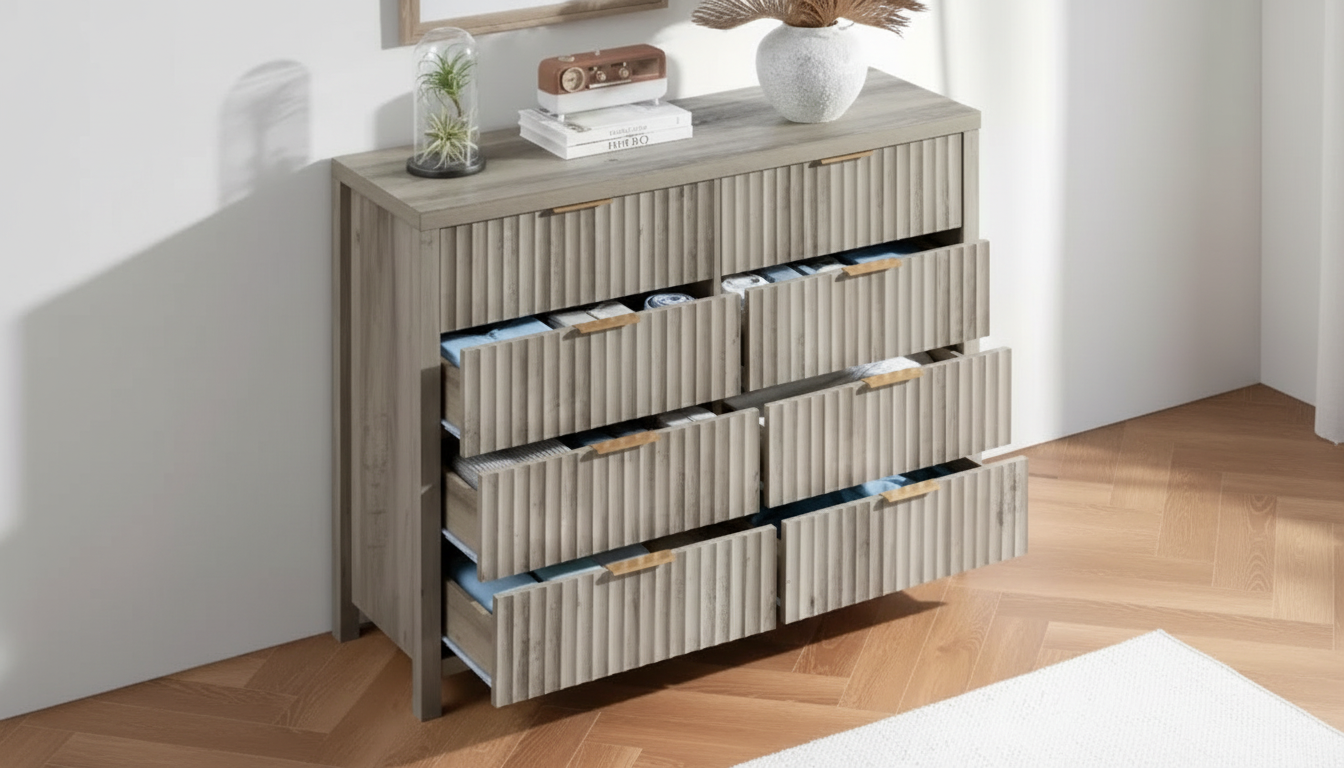
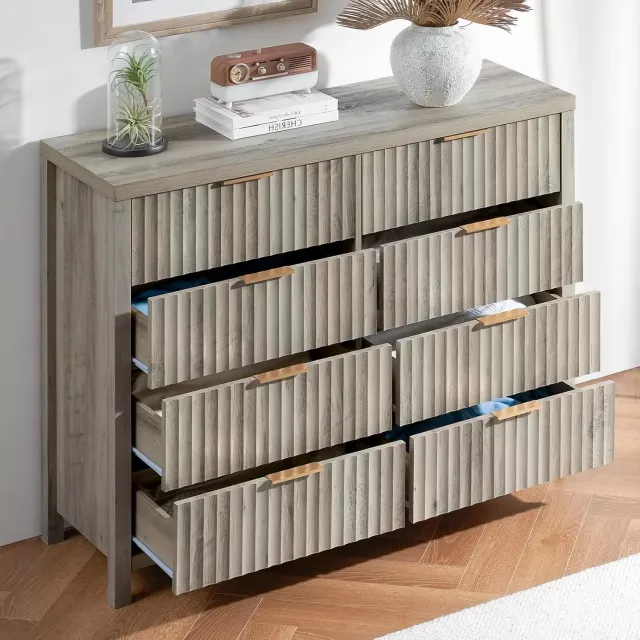
A fluted-front dresser adds texture, depth, and a tailored look while keeping everyday essentials neatly organized. This modern 7-drawer silhouette is designed to balance statement-making style with practical storage that works across bedrooms, guest rooms, and flexible living spaces. The result is a piece that feels elevated at first glance, but earns its spot through daily usability—easy sorting, smooth routines, and a calmer-looking room.
What Makes a Fluted Dresser Feel Modern
Fluting has a long design history, but the current look is distinctly modern: it’s more about quiet dimension than ornament. Instead of relying on bold patterns or heavy trim, fluted drawer fronts introduce subtle shadow lines that shift throughout the day, adding depth without visual clutter.
- Fluted drawer fronts add dimension: The grooves create soft highlights and lowlights, which makes the dresser feel more architectural than flat-front alternatives.
- Clean edges keep it contemporary: Streamlined profiles and crisp corners help the piece work with contemporary, transitional, and minimalist rooms.
- Consistent spacing reads as intentional: Even drawer gaps and a cohesive finish give a calm, built-in look that doesn’t fight other furniture.
- Simple hardware keeps it elegant: Pairing textured fronts with understated pulls (or integrated finger pulls) maintains a refined feel rather than an ornate one.
Storage Layout: Why 7 Drawers Can Be More Versatile
Seven drawers often hits a sweet spot: enough compartments to separate categories, but not so many that the piece feels fussy. When clothing and accessories are divided into smaller zones, stacks stay neater, and it’s easier to keep favorites in rotation.
- Clear category separation: Multiple drawers make it easier to split tops, bottoms, underlayers, and accessories—so everything has a home.
- Less overstuffing: Smaller drawers discourage cramming, which can reduce wrinkling and make drawers glide more smoothly over time.
- A useful top surface: A wider, stable top supports daily routines such as a getting-ready zone, a lamp, or a few decor pieces without feeling crowded.
- Great for shared spaces: In a guest room or shared bedroom, each person can claim a dedicated set of drawers for quick organization.
Example Drawer-Zoning Plan
| Drawer Group |
Best For |
Organization Tip |
| Top drawers |
Accessories, socks, undergarments |
Use small trays or dividers to prevent mixing |
| Middle drawers |
T-shirts, knitwear, pajamas |
File-fold to maximize visibility |
| Lower drawers |
Jeans, sweaters, bulkier items |
Store heavier items lower for stability |
Elegant Design Details That Elevate the Room
A fluted 7-drawer dresser can act as a focal point without demanding constant styling. The texture does some of the visual work for you, especially in rooms with simple bedding, solid-color rugs, or clean wall paint.
- Texture becomes the statement: Fluted fronts can reduce the need for extra wall decor because the surface itself provides interest.
- Finishes that layer easily: Neutral modern finishes tend to mix well with warm woods, soft whites, and matte blacks, helping the room feel cohesive rather than matchy.
- Balanced proportions: A well-proportioned dresser feels substantial without overpowering the space—important for smaller bedrooms and multipurpose rooms.
- A tidy top styling formula: Aim for one lamp, a tray for daily items, and one vertical element (a mirror or art) to create symmetry without clutter.
Where This Style Works Best
Because fluted dressers bridge modern and transitional aesthetics, they’re easy to place beyond the primary bedroom. The storage is flexible, and the texture reads “designed” even in simple layouts.
- Primary bedroom: Use it as an anchor under a mirror or alongside a wardrobe for everyday clothing and accessories.
- Guest room: Create a hotel-like feel while offering visitors real drawer space (not just a closet rod).
- Nursery or kid’s room: Drawers keep essentials out of sight; plan to anchor the piece for safety.
- Entry or flex room: Use it as concealed storage for linens, board games, craft supplies, or seasonal items.
How to Choose the Right Fluted Dresser for Your Space
- Measure the wall and clearance: Leave comfortable walking space and enough room for drawers to open fully without hitting a bed frame or nightstand.
- Match storage to habits: More drawers suit lots of smaller categories; fewer, deeper drawers suit bulky clothing and linens.
- Check stability and safety: Look for a sturdy build and plan to use anti-tip anchoring—especially in homes with kids or pets. Safety guidance is widely recommended by the U.S. Consumer Product Safety Commission’s Anchor It! program and the American Home Furnishings Alliance.
- Consider top usage: If placing a TV or mirror, confirm the surface size and plan cord management if needed.
- Align with room scale: In compact rooms, keep surrounding furniture visually lighter to avoid a crowded look.
Quick Fit Checklist
| What to Check |
Target |
Why It Matters |
| Wall width |
Dresser leaves breathing room on both sides |
Prevents the piece from feeling cramped |
| Drawer clearance |
Enough space to open drawers fully |
Improves daily usability |
| Storage type |
Drawer sizes match your clothing mix |
Reduces clutter and reshuffling |
| Safety plan |
Anti-tip anchoring available |
Helps prevent tip-over accidents |
| Finish harmony |
Coordinates with floors and major furniture |
Creates a cohesive, elegant look |
Care, Maintenance, and Long-Term Use
FAQ
Does a fluted drawer front collect more dust than a flat front?
It can, since the grooves provide more surface area where dust can settle. A quick weekly wipe with a microfiber cloth and an occasional pass with a soft brush or vacuum attachment keeps it clean.
Is a 7-drawer dresser better than a 6-drawer dresser?
Seven drawers typically offer more sorting flexibility and can help prevent overstuffing. The better choice depends on whether you store many smaller categories or prefer fewer drawers for bulkier items.
Should a dresser be anchored to the wall?
Yes—anti-tip anchoring is strongly recommended, especially in homes with children or pets. Anchoring also improves stability when drawers are open and reduces the risk of tip-over accidents.
Recommended for you









Leave a comment