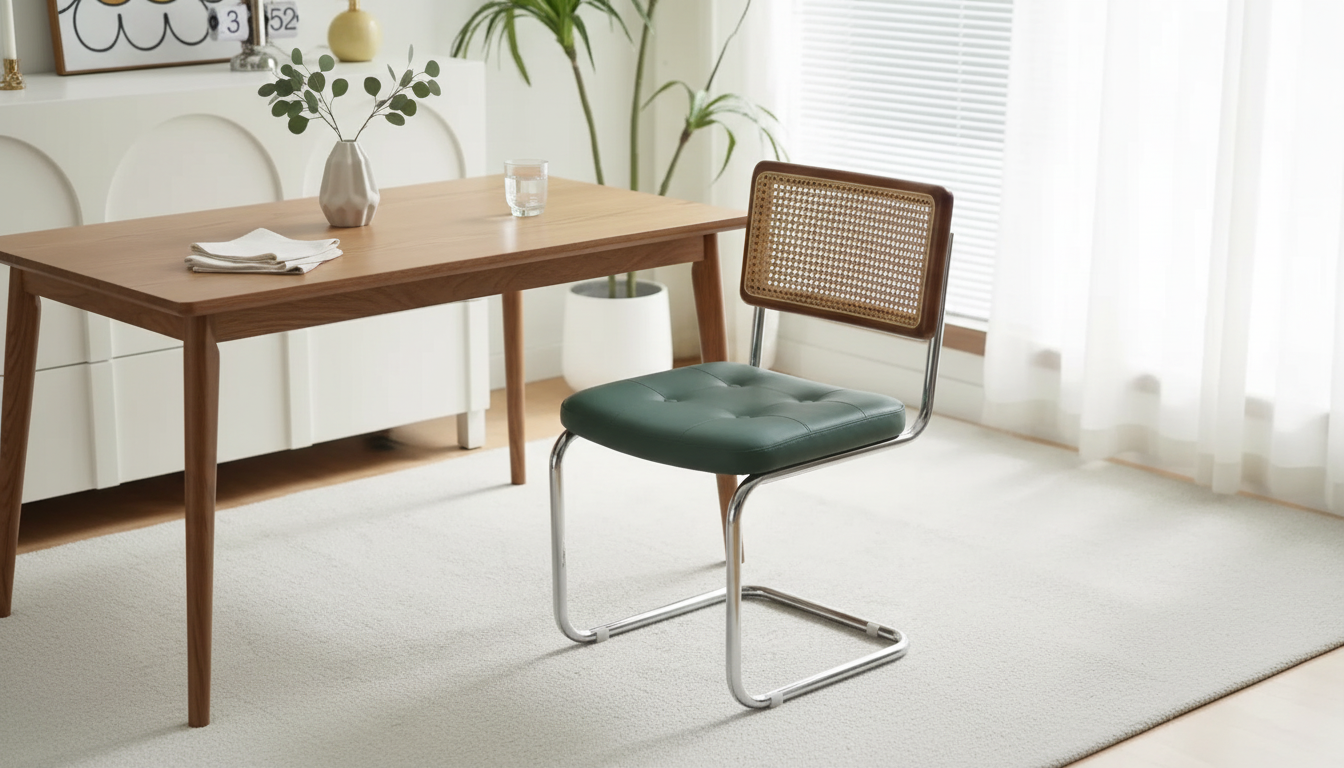
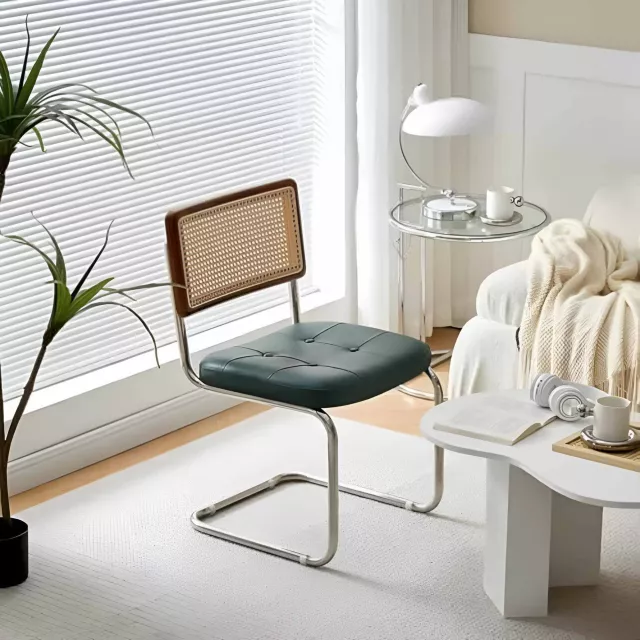
Warm rattan texture, clean mid-century lines, and wipeable PU leather make armless dining chairs a practical way to elevate everyday meals and entertaining. With the right proportions and materials, these chairs can feel light in the room, supportive at the table, and easy to live with when schedules (and spills) get real. For more guidance, see Set of vintage Italian Mid Century Walnut Dining Chairs. Leather ….
Why This Design Works in Real Dining Rooms
Mid-century modern armless dining chairs earn their popularity by solving common dining-room challenges without looking overly “utility.” The armless silhouette helps chairs slide neatly under most tables, which can make smaller dining areas feel more open and less crowded. Because there are no arms to catch on the table edge, it’s also easier to add an extra seat when guests arrive.
Rattan backrests contribute visual lightness. Compared with fully upholstered backs, cane-style weaving reads airy and helps balance heavier dining tables, hutches, or buffets. That open weave can also feel more breathable during long dinners, especially in warmer climates.
On the seat, PU leather (a synthetic leather) is typically easier to wipe clean than woven or textured fabrics. For households with kids, frequent hosting, or daily use at the kitchen-dining table, fast cleanup is often the difference between “nice chairs” and chairs that stay nice.
Finally, the mid-century profile plays well with both vintage and contemporary interiors. It can sit comfortably next to a classic pedestal table, a modern rectangular top, or even an industrial-style base without feeling out of place. For a quick background on the movement’s emphasis on clean lines and functional forms, see Britannica’s overview of Midcentury Modern.
Materials Breakdown: Rattan Backrest + PU Leather Seat
Material quality is what turns the look into long-term performance. Rattan (often cane weaving) brings organic variation, but it should still look consistent and well-finished. Look for even tension, tidy edges, and weave spacing that’s uniform across the panel. A supportive back frame matters just as much: rattan should be anchored securely so it doesn’t loosen with daily leaning.
PU leather should have a smooth, even finish that cleans easily. Pay attention to stitching: seams should sit flat with no puckering, and corners should look neat rather than stressed. If the chair includes wood elements, consistent grain and sealed surfaces help reduce staining and moisture absorption over time.
Quick material check before buying
| Area |
What to look for |
Why it matters |
| Rattan panel |
Uniform weave, tight corners, no fraying |
Helps prevent sagging and premature wear |
| Back frame |
Firm joinery, no wobble |
Stability improves comfort and longevity |
| PU leather |
Even color, smooth surface, straight seams |
Easier cleaning; fewer weak points at seams |
| Seat padding |
Balanced firmness, returns to shape |
Comfort for longer meals and gatherings |
| Legs/base |
Level feet, solid hardware |
Reduces rocking and floor scratches |
Comfort and Ergonomics for Everyday Use
Dining comfort is less about “sink-in” softness and more about stable support at the right height. Aim for a seat height that pairs well with your table so knees fit comfortably under the apron and shoulders can relax while hands rest naturally on the tabletop. If the chair sits too low, posture tends to slump; too high, and legs can feel cramped.
Back support matters more than deep cushioning for dining. A gently angled back paired with supportive seat foam typically feels better over time than a plush seat that compresses quickly. With rattan backs, look for a firm frame that keeps the angle consistent and a woven panel that feels supportive rather than bowed out.
Armless chairs are also easier to shift and pull in, which helps in mixed-age households and during frequent entertaining. If the dining space doubles as a work or study spot, prioritize a stable base and a supportive backrest that encourages upright posture during longer sits.
How to Choose the Right Set for the Table and Room
Sizing and layout planning
| Planning step |
What to do |
Practical tip |
| Table clearance |
Confirm comfortable legroom and tuck-in space |
Avoid chairs that catch on table aprons or supports |
| Spacing |
Plan seat width and gaps between chairs |
Leave enough space to sit without shoulder contact |
| Traffic flow |
Check pathways around the table |
Maintain easy movement behind seated diners |
| Visual scale |
Match chair height to the room’s proportions |
Lower-profile chairs can make ceilings feel taller |
Styling Ideas: From Warm Minimal to Retro Eclectic
Care and Maintenance for Rattan and PU Leather
Rattan stays attractive with light, regular care. Dust it often with a soft brush or a vacuum brush attachment, and avoid soaking the weave. Because natural materials react to environmental shifts, keep chairs away from prolonged direct sunlight and big humidity swings to reduce brittleness or loosening over time. For more detailed cleaning guidance, refer to The Spruce’s tips on caring for cane and wicker furniture.
FAQ
Are rattan backrests comfortable for long dinners?
They can be, because rattan is breathable and offers flexible support, but comfort depends on the back angle, seat padding, and how stable the frame feels. If you want extra support without changing the look too much, a thin lumbar cushion can help.
How do PU leather dining seats hold up to kids and spills?
PU leather is typically a good choice for quick cleanup since most messes wipe off easily when handled promptly. To keep it looking its best, avoid harsh cleaners and pay attention to seam quality, since seams are the most common wear points.
Do armless dining chairs work in small spaces?
Yes—armless designs tuck in neatly, move easily, and help the room feel visually open. Measure chair width and plan spacing so walkways stay clear and guests can slide in and out comfortably.
Recommended for you









Leave a comment