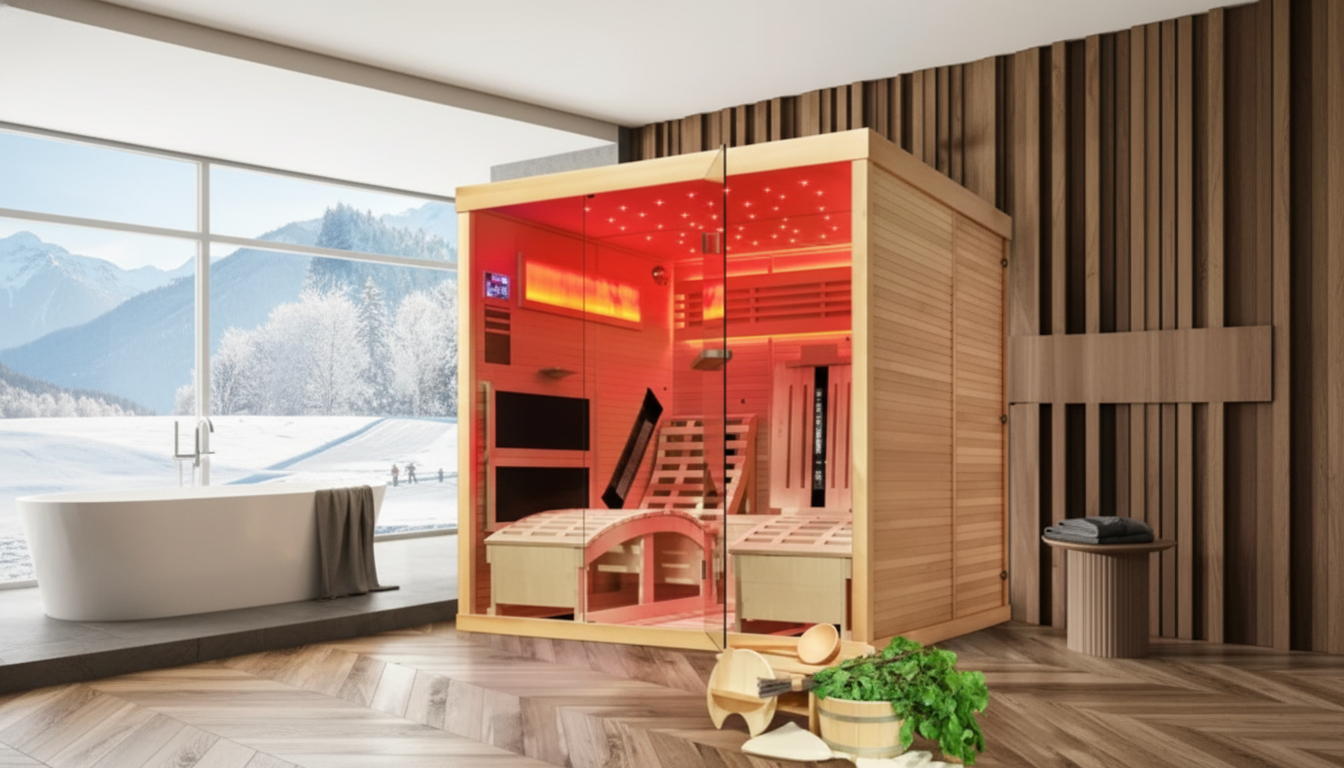
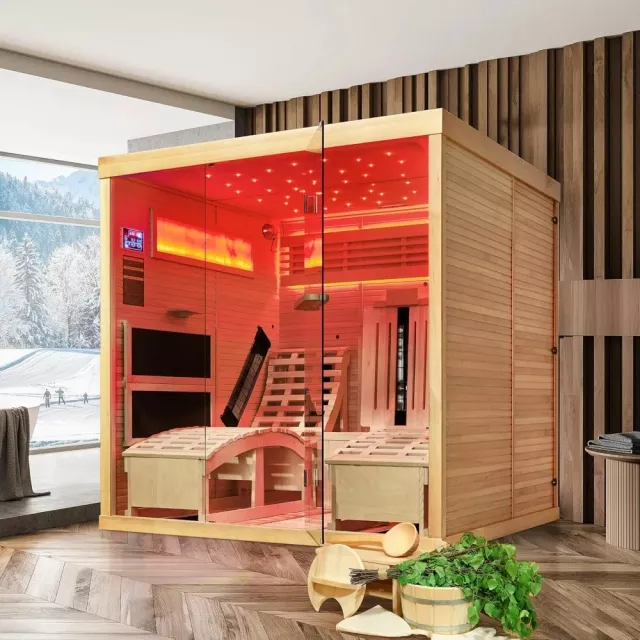
A two-person infrared sauna designed with recliners and a starry-ceiling lighting effect blends deep heat therapy with a lounge-style experience. The best models don’t just add “extras”—they refine comfort, usability, and consistency so sessions feel effortless day after day. Below is what typically separates a premium build from a basic cabin, what to verify before buying, how setup usually works, and how to keep the interior looking (and smelling) fresh over time.
What makes a recliner-style infrared sauna feel truly luxurious
Reclined seating is the headline feature for a reason: it changes the entire heat experience. A supportive recline reduces pressure on the lower back and hips, making longer sessions feel more natural—especially for people who find upright bench seating fatiguing or who prefer gentler heat exposure over time.
The starry-ceiling effect is less about “tech” and more about mood. Done well, it creates a calm, spa-like atmosphere for evening sessions without altering heat output. In premium models, lighting looks evenly dispersed rather than “spotty,” and controls feel smooth and predictable.
True luxury also shows up in the details that are easy to miss online: shoulder clearance so two adults can relax without bumping arms, headrest placement that supports the neck in a reclined posture, and armroom that prevents a cramped feeling. Quiet operation matters, too—high-end units tend to minimize rattles, fan noise (if present), and the clicky feel of cheap controls.
Infrared heat basics: how it differs from traditional saunas
Infrared systems are designed to warm the body more directly, which often makes sessions feel effective at lower air temperatures than many traditional Finnish or steam setups. People commonly use infrared saunas for relaxation, post-workout recovery routines, and general wellness habits, though results vary based on the individual and how consistently sessions are used.
When comparing models, look past vague labels and focus on measurable specs: heater type, total wattage, placement strategy, and safety certifications. Balanced heater placement (front, side, and/or lower-body zones) helps reduce hot spots—an important point for recliner layouts where the body may sit farther from wall-mounted panels.
Infrared vs. traditional sauna: practical differences
| Feature |
Infrared sauna |
Traditional (steam/Finnish) sauna |
| Typical feel |
Gentler air heat with deep warmth on skin |
Hotter air and intense ambient heat |
| Warm-up time |
Often faster to feel heat; depends on wattage and insulation |
Can take longer to heat the room fully |
| Humidity |
Low humidity |
Dry (Finnish) to high humidity (steam), depending on setup |
| Session comfort |
Often easier for heat-sensitive users |
Can be intense for beginners |
| Maintenance considerations |
Wipe-down, ventilation, panel care |
More humidity management; steam units add descaling needs |
For additional perspective on sauna use and safety considerations, see guidance from the Mayo Clinic and heat illness prevention resources from the CDC.
Core features to verify before buying a 2-person model with recliners
Recliners change your distance and angle relative to the heaters, so the “best” spec sheet is the one that matches how you’ll actually sit.
- Interior dimensions and recline angle: Make sure the recliners support legs and shoulders without forcing an awkward posture or bent neck.
- Heater layout: Confirm coverage for back, sides, and lower body (calves/feet). Lounge seating can shift you away from wall panels, so lower-zone heat matters.
- Controls and programmability: Check timer range, temperature range, and whether controls are reachable while reclined.
- Starry-ceiling lighting details: Look for brightness control and the ability to turn it off independently of the heater system.
- Audio/entertainment: Treat these as optional; comfort, heat performance, and build quality come first.
- Materials and finish: Low-odor interior surfaces, smooth edges, and easy-clean panels make ownership simpler and more pleasant.
How to choose the right luxury 2-person infrared sauna for your space (no-stock planning guide)
When inventory is limited or you’re planning ahead, the goal is to eliminate surprises: room fit, electrical needs, and delivery logistics. A luxury sauna is only “luxury” if it installs cleanly and runs reliably.
Pre-purchase checklist for a recliner-style 2-person infrared sauna
| Item to confirm |
Why it matters |
What to measure/ask |
| Room fit |
Avoids tight installation and poor airflow |
Installed footprint + clearance on all sides |
| Door swing & access path |
Prevents delivery surprises |
Hallway width, stair turns, doorway height |
| Electrical capacity |
Ensures safe, stable power |
Circuit rating, outlet type, dedicated line requirements |
| Recliner comfort |
Determines session length and enjoyment |
Seat length, back angle, headrest position |
| Heater coverage |
Improves consistent warmth |
Panel placement for back/legs/feet |
| Warranty & support |
Reduces long-term risk |
Coverage length, parts availability, service process |
Setup and placement: creating a spa-like corner at home
Daily use, comfort tips, and realistic expectations
Stop immediately if dizziness, nausea, chest pain, or unusual symptoms occur, and seek medical guidance when needed. General safety information on radiation-emitting products is available from the U.S. FDA.
Care and maintenance to keep the interior pristine
FAQ
What size room is needed for a 2-person infrared sauna with recliners?
Plan for the sauna’s installed footprint plus clearance for ventilation and a full door swing. Also measure the delivery path (doorways, hallways, stair turns) and confirm ceiling height so the unit fits without tight overhead clearance.
Do starry-ceiling lights affect sauna temperature or performance?
Typically, no—lighting is separate from the heating system and has minimal impact on cabin temperature. Look for independent controls and dimming so the ambiance can change without changing your heat settings.
How often should an infrared sauna be cleaned?
Wipe down sweat-contact surfaces after each use and briefly air out the cabin with the door open. Do a deeper clean periodically (often monthly for frequent users) and follow the manufacturer’s care instructions to avoid damaging interior finishes.
Recommended for you










Leave a comment