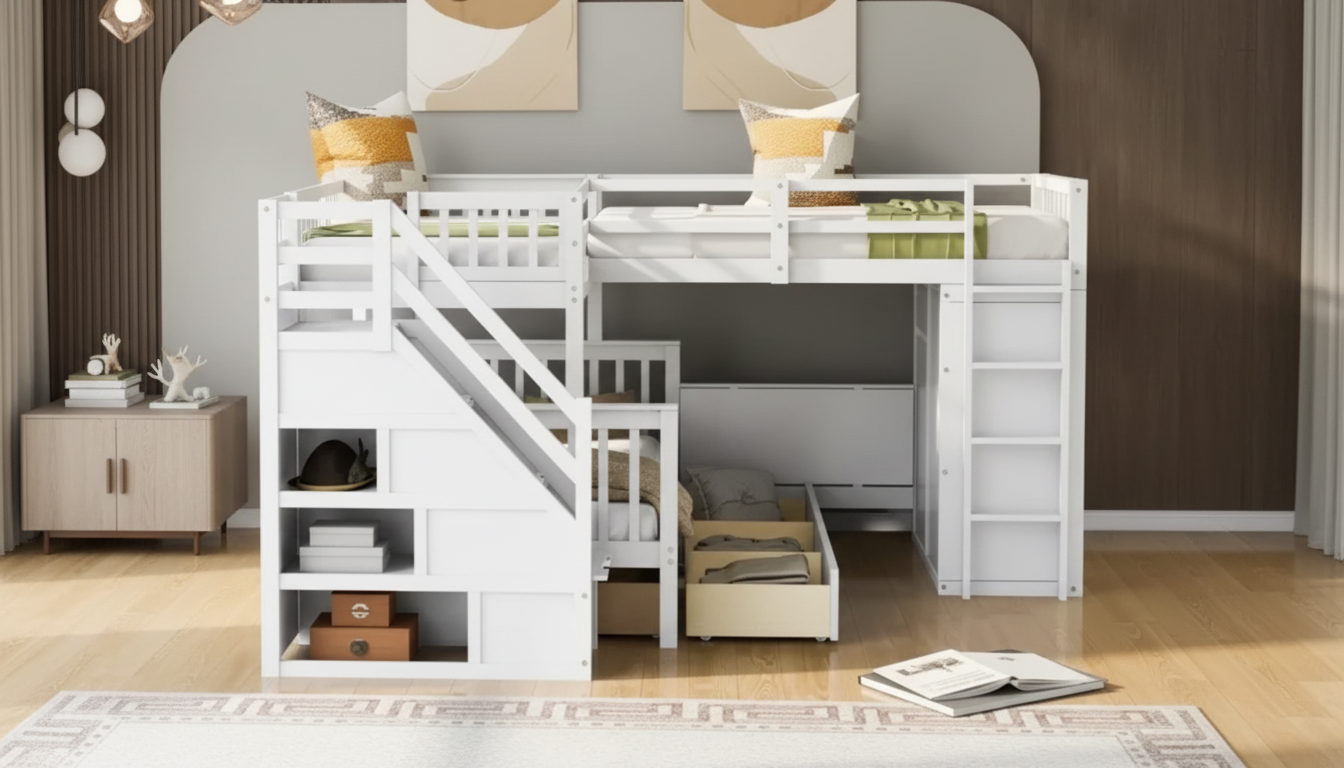
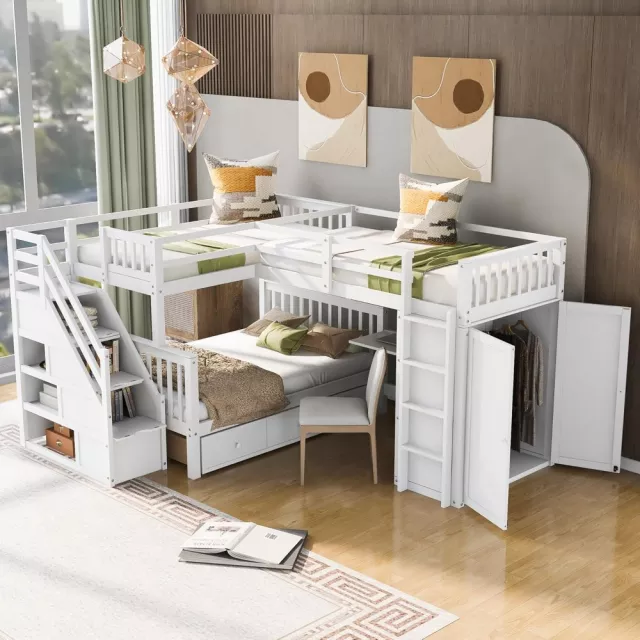
An L-shaped triple bunk that combines sleep, study, and storage can turn a tight bedroom into a functional shared space. With three beds, an integrated desk, stair access, and built-in wardrobe and cubbies, this layout is designed to reduce clutter, improve daily routines, and keep essentials within easy reach.
What Makes an L-Shaped Triple Bunk Layout Work
The “L” footprint is the main advantage: it tucks neatly into a corner so the room’s center stays open for play, dressing, and passing through without constant sidestepping. Instead of stacking every sleeper in one vertical tower, the two-direction arrangement spreads the visual weight across the walls, which often feels less crowded—especially in smaller rooms.
This style also creates natural zones. The bunks signal a sleep area, the built-in desk establishes a homework/creative station, and the wardrobe plus cubbies act as the room’s organization hub. In shared bedrooms, predictable zones matter: when each child has an assigned place for pajamas, school supplies, and “treasures,” daily routines tend to run smoother and cleanup becomes more automatic.
Everyday Features: Desk, Stairs, Wardrobe, and Storage
Desk zone
A built-in desk saves floor space, but it still needs “working room” to be truly useful. Plan for task lighting, nearby outlet access, and enough legroom for a chair that can tuck in cleanly. Cable management is worth thinking through early—keeping cords pinned to the back edge helps prevent tangles near feet and rolling chair legs.
Stairs vs. ladder
Stairs typically offer more confident footing than a ladder, which can be especially helpful for younger kids and sleepy midnight climbs. If the design includes a handhold, side panel grip, or a rail option, that’s a meaningful comfort upgrade. Always verify weight ratings for both the bed levels and the stair unit itself.
Stair storage and clearance
Many stair bunks double as storage towers with drawers or open cubbies. Before committing, confirm whether drawers fully extend and how far the pull-out clearance reaches into the room. A beautiful storage stair can become frustrating if the drawer blocks a doorway or pinches a walkway every day.
Wardrobe and cubbies
An integrated wardrobe can reduce the need for a separate dresser, but capacity varies a lot by design. Check the hanging height (for jackets and longer items), shelf spacing, and whether shelves are adjustable for changing needs as kids grow. If side cubbies are included, enclosed options (doors or drawers) typically create a calmer look and keep dust off folded clothes and school items.
Simple organization system that sticks
To prevent mix-ups, assign each child a dedicated shelf/cubby and pair it with labeled bins (one for socks/undies, one for after-school gear, one for books). The built-in zones do most of the work—kids just need a consistent “home” for their stuff.
Safety and Comfort Considerations for Three Sleepers
Triple bunks demand a little extra attention to safety because more sleepers means more daily climbing and more movement over time.
- Guardrails: Upper levels should have full-length guardrails with secure attachment points. A sturdy rail is only effective if it stays tight and properly positioned.
- Weight limits: Verify weight limits per sleeping surface and for combined components like stairs and the desk area. Choose limits that make sense not just for today, but for the next few years.
- Headroom: Confirm clearance for the middle and top sleepers to sit up without bumping the ceiling or slats above. Better headroom improves comfort and airflow.
- Mattress fit: Use the recommended mattress thickness so the guardrails remain protective; overly thick mattresses can reduce rail effectiveness on upper bunks.
- Stability: Look for reinforced joints, strong slats/supports, and follow anti-tip guidance for tall wardrobe sections.
- House rules: Keep climb paths free of toys and cords, and set expectations for which child uses which level to reduce nighttime swapping.
For additional safety context, review the U.S. Consumer Product Safety Commission (CPSC) bunk bed safety standard overview. General fall-prevention guidance can also be found through the American Academy of Pediatrics (HealthyChildren.org).
How to Choose the Right Configuration for the Room
Choosing the right orientation is less about style and more about daily flow—how kids enter, where backpacks land, and whether drawers can open without blocking pathways.
Measure the corner carefully
Confirm handedness (left/right build)
Map door and drawer swing
Plan for light and outlets
Think a few years ahead
Quick Room Fit Checklist
| Checkpoint |
Why it matters |
What to verify |
| Ceiling height |
Prevents cramped top bunk and improves airflow |
Top mattress height + guardrail + sitter headroom |
| Corner footprint |
Ensures the L shape fits without blocking doors |
Two-wall measurements and door swing arcs |
| Stair/drawer clearance |
Avoids daily frustration and blocked paths |
Drawer pull-out distance and walkway width |
| Desk placement |
Improves studying and cable management |
Outlet location, lighting, and chair space |
| Wardrobe capacity |
Reduces the need for extra dressers |
Hanging length, shelf count, door clearance |
Materials, Finish, and Build Details That Affect Longevity
Assembly, Moving, and Day-to-Day Maintenance
FAQ
What mattress thickness is best for the upper bunks?
Follow the manufacturer’s maximum mattress thickness for upper levels so the guardrails remain protective. Many designs fall in a common range, but safety matters more than extra plushness on top bunks.
Are stairs safer than a ladder for a triple bunk?
Stairs are often easier to use because the steps are wider and may allow better hand support, which can help younger kids. Confirm tread grip, any railing/handhold options, and the stated weight ratings for the stair unit.
Can the desk and wardrobe be assembled on either side?
Some L-shaped systems are reversible, while others are fixed to one orientation. Check left/right configuration details and compare them to your room’s doors, windows, and drawer/door clearance before buying.
Recommended for you










Leave a comment