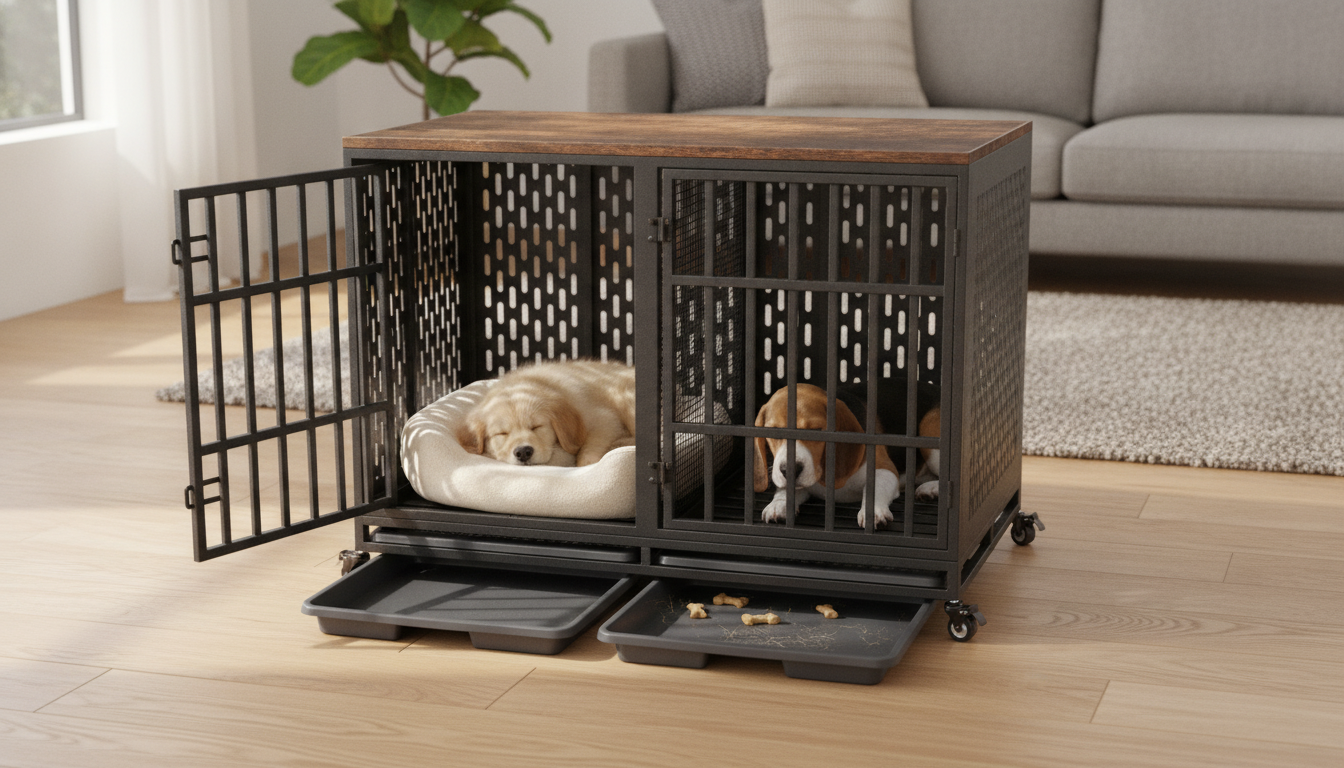
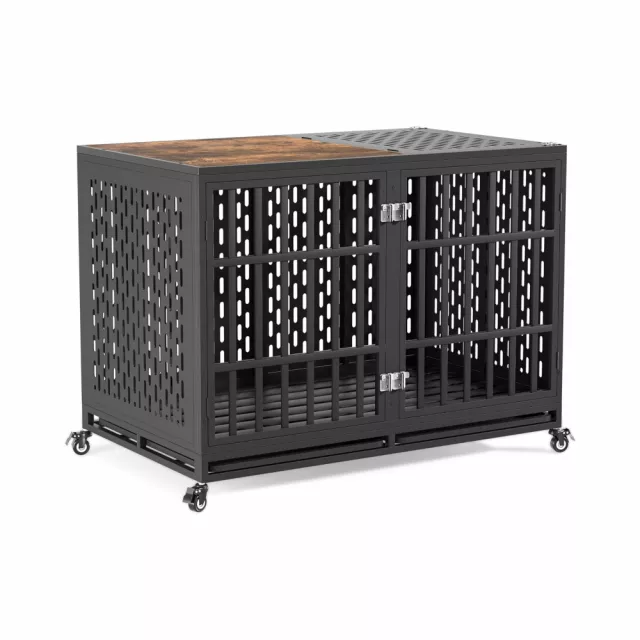
A sturdy crate can make daily routines easier, from house training and travel prep to creating a calm, consistent resting space. This style of heavy-duty crate focuses on secure containment, flexible space management with a divider, and faster cleanup with removable trays—features that matter most for strong, growing, or mess-prone dogs. For more guidance, see What Is The Best Dog Crate For Your Puppy.
What This Crate Is Built For
- Secure, stable confinement for strong dogs that push, paw, or attempt to escape
- A predictable “quiet zone” that supports rest and decompression during busy household moments
- Flexible interior space for puppies or multi-stage training with an optional divider
- Simplified cleanup for accidents, shedding, and muddy paws using removable trays
- A more durable alternative to lightweight wire crates for frequent daily use
Key Features That Change Day-to-Day Use
- Heavy-duty frame and reinforced panels: Built to reduce flexing and rattling when a dog leans, paws, or shifts weight against the sides.
- Secure door latching: Designed to resist nudging, pawing, and pushing, which matters for dogs that test boundaries or get restless during transitions.
- Optional divider: Helps you reduce usable space for potty training or create a den-like area that can feel more settling for some dogs.
- Removable trays: Pull out for faster cleaning after accidents, spilled water, drool, or messy chews.
- Smoother interior surfaces and protected edges: Helps reduce snagging on paws and minimizes sharp contact points during repositioning.
- Ventilation through panel spacing: Keeps air moving while maintaining the strength expected from heavier construction.
How to Choose a Heavy Duty Dog Crate
1) Get the measurements right (before picking a size)
- Length: Measure from nose tip to base of tail; add about 2–4 inches so your dog can lie down comfortably.
- Height: Measure from floor to the top of the head/ears while standing; add about 2–4 inches.
- Training fit vs. lounging fit: Aim for enough room to stand, turn around, and lie flat—without excess space during potty training.
2) Decide how you’ll use the divider
- If you’re potty training, start with a smaller area and expand gradually as control improves.
- If your dog already has calm crate habits, you may not need a divider at all.
- For strong or escape-prone dogs, avoid oversized space that provides corners and leverage for pushing.
3) Plan placement and daily flow
- Use a level surface and avoid direct heat vents, drafts, or tight hallway pinch points.
- Place the crate where your dog can see the household without being overwhelmed by constant foot traffic.
- For some dogs, covering part of the crate (without blocking airflow) can reduce visual stimulation and help settling.
| Dog stage or need |
Target interior space |
Divider approach |
Notes |
| Puppy in house training |
Just enough to stand, turn, and lie down |
Install divider to limit space |
Too much room can encourage accidents in one corner |
| Adult dog, calm crate habits |
Comfortable stretch-out room |
Remove divider or expand fully |
Add a crate mat if the dog doesn’t chew bedding |
| Senior dog or limited mobility |
Easy turn-around space, minimal obstacles |
Use divider only if needed for stability |
Consider lower-impact bedding and easier entry positioning |
| Strong/escape-prone dog |
Adequate room without extra corners to leverage |
Start smaller, expand carefully |
Pair with training and enrichment to reduce frustration |
Using the Optional Divider Effectively
- Start den-sized: A smaller area can support potty training and reduce pacing.
- Adjust gradually: Expand a few inches at a time after accidents stop and settling improves.
- Keep water access practical: Match water availability to time in-crate; if you use a bowl, secure it to prevent flipping and splashing.
- Avoid over-tight space: Your dog should still be able to lie down comfortably and reposition without scraping sides.
- Watch stress signals: Excessive drooling, frantic scratching, or self-injury are cues to reassess duration, enrichment, and your training plan.
Removable Trays: Cleaner Routines With Less Fuss
Safety, Comfort, and Placement Tips
Training and Routine Ideas That Pair Well With a Heavy-Duty Crate
- Make it a reward zone: Feed meals near or inside the crate with the door open at first.
- Start with short sessions: Increase time only when your dog settles quietly, not while vocalizing or pawing.
- Pre-crate enrichment helps: A sniff walk, brief training session, or puzzle feeder can reduce restless energy.
- Use a consistent cue: Say a word like “kennel,” then reward the moment your dog steps in.
- Get help when needed: If separation-related behaviors are present, a qualified trainer or veterinary professional can help tailor a safe plan (see AVMA guidance on separation anxiety).
Care and Maintenance Checklist
For additional training fundamentals and humane setup tips, see the American Kennel Club’s guide to crate training your dog and puppy and the Humane Society’s Crate Training 101. For further reading, see MidWest Homes for Pets Solutions Series XXL Double Door 54-Inch ….
FAQ
Is a divider necessary for an adult dog?
Not always. Many adult dogs do fine with the divider removed once they’re reliably trained, but it can still help create a cozier space for better settling or manage extra room if your dog tends to pace.
How should the removable trays be cleaned after an accident?
Remove solids first, then wash the tray with a pet-safe cleaner. For urine, use an enzymatic cleaner to reduce lingering odor, rinse thoroughly, dry completely, and reseat the tray so it sits securely without shifting.
What if a dog tries to escape a heavy-duty crate?
Confirm the crate is the right size, the latch is fully engaged, and your dog is getting enough exercise and enrichment. Build a positive crate routine (not punishment-based), and seek professional help if anxiety is suspected or the behavior escalates.
Recommended for you









Leave a comment