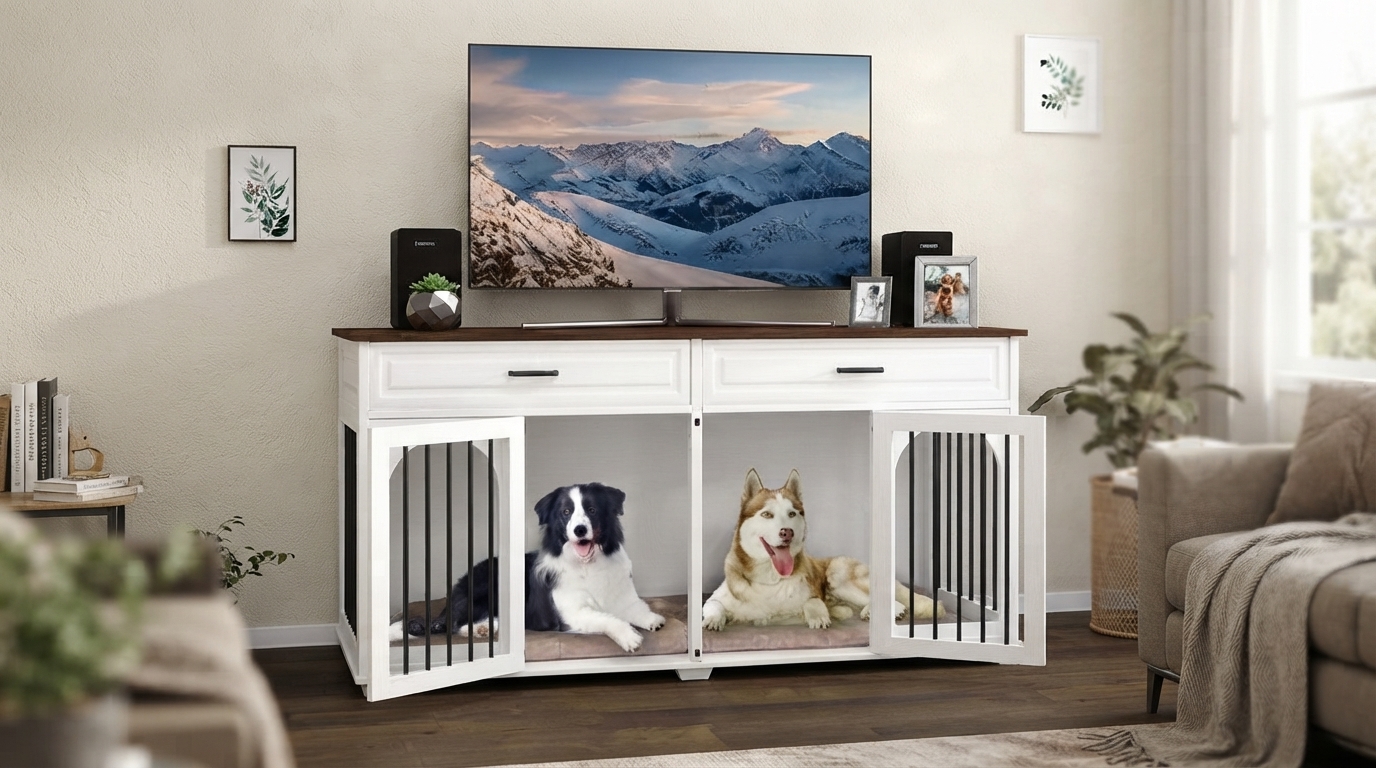
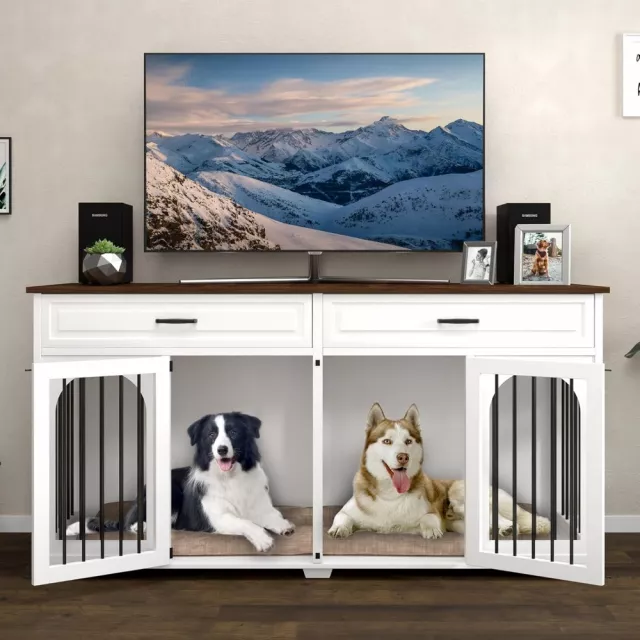
A furniture-style dog crate can create a calm, defined space for a dog while also functioning as a practical piece of home furniture. This design combines an enclosed resting area with a removable divider, built-in drawers for storage, and a sturdy top that can serve as a TV stand or display surface—helping reduce clutter without sacrificing comfort or style. For more guidance, see [XLS] Business Opportunity-Personal Property List – Oregon.gov.
What Makes This Crate Different
Unlike traditional wire crates that look temporary, a furniture-style crate is made to live out in the open. The goal is a piece that feels intentional in a living room, bedroom, or open-concept layout while still giving a dog a consistent place to settle. For further reading, see Dog Counter Surfing: Prevention and Deterrents.
- Furniture-grade look: Designed to blend with common home finishes so it feels like a console, credenza, or end-of-bed bench.
- Built-in divider panel: Helps adjust the interior footprint for training, for a growing dog, or for situations where a smaller resting zone is preferred.
- Integrated drawers: Keeps everyday dog essentials in one spot, reducing the “where did I put the leash?” scramble.
- Wide, flat top surface: Can function like a console table or TV stand top when used within safe weight limits and placed on a stable floor.
- Visually discreet: Creates a defined resting area without the “crate in the corner” look.
Size, Fit, and Divider Use
Fit is the foundation of a crate your dog will actually use willingly. Before committing, measure your dog’s length (nose to base of tail) and height (floor to top of head/ears) so the interior allows comfortable turning around and natural sitting posture.
The divider is most useful when you want to limit excess space—often during training—then expand the usable area over time. In some homes, a divider can also help create separate resting zones for multiple dogs, but only if the crate is designed for safe separation and each side provides adequate room and airflow.
Also plan the footprint in your room. Leave enough clearance around the crate for ventilation and for doors and drawers to open fully without bumping walls, baseboards, or nearby furniture.
Quick fit checklist
| What to check |
Why it matters |
What to aim for |
| Interior length |
Prevents cramped lounging |
Dog can lie stretched and turn comfortably |
| Interior height |
Avoids head/ear rubbing and stress |
Dog can sit upright naturally |
| Divider flexibility |
Helps with training and growth |
Adjustable/removable without sharp edges |
| Door swing and drawer clearance |
Prevents daily-use frustration |
Opens fully without hitting walls or furniture |
| Top surface stability |
Protects electronics and reduces tipping risk |
Level placement and cable management space |
Drawers and Daily Organization
The best part of integrated drawers is how quickly they turn dog care into a smoother routine. Instead of stacking supplies on top of the crate (or scattering them across the house), drawers keep key items within reach while staying out of sight.
- Split by routine: Use one drawer for feeding supplies (measuring cup, supplements, food toppers) and the other for walking gear (leash, harness, flashlight, spare waste bags).
- Control odors: Store high-value treats in an airtight container so the drawer stays fresh and tempting smells don’t linger.
- Stop the rattle: Add simple drawer organizers so small items don’t shift and clatter every time the drawer slides.
- Create an “arrival station”: Keep grooming wipes or a paw towel handy to make coming in from outside faster and cleaner—especially near an entryway.
Using the TV Stand Top Safely
A flat, furniture-style top can be a major space-saver, but it needs to be used thoughtfully—especially if it will support a TV or other electronics.
- Start with the floor: Place the crate on a stable, flat surface so the top stays level and the unit doesn’t rock.
- Confirm weight limits: Follow the manufacturer’s guidance and keep the load centered, not perched near edges.
- Manage cords: Route cables away from doors and vents and keep dangling cords out of reach.
- Reduce vibration: If your floor transmits movement, a TV pad or rubber feet can help minimize noise and shifting.
- Protect ventilation: Leave breathing room for electronics and avoid placing heat-generating devices directly above the crate interior.
How to Choose the Right Furniture-Style Crate for Your Home
Not all furniture-style crates are built the same. A good choice should look polished, feel solid in daily use, and support calm crating habits without adding maintenance headaches.
Setup, Training, and Comfort Tips
A furniture-style crate works best when it’s introduced as a predictable, positive space. For training fundamentals and humane best practices, review guidance from the American Kennel Club and Humane World for Animals.
Care, Cleaning, and Longevity
FAQ
Can the divider be removed when it’s no longer needed?
Many divider panels are designed to be repositioned or removed as your needs change. Follow the manufacturer’s instructions, and confirm there’s no exposed hardware or sharp edges left inside after removal.
Is it safe to place a TV on top of a dog crate like this?
It can be safe if the crate is on a level, stable floor, the top is rated for the load, and the weight is kept centered. Manage cords to keep them out of reach, and maintain ventilation space so electronics don’t overheat and heat doesn’t build up over the crate interior.
How do the drawers help with everyday use?
Drawers keep routine items—like leashes, treats, grooming supplies, and waste bags—organized and close by. That reduces clutter in living spaces and makes daily departures, arrivals, and feeding tasks faster.
Recommended for you









Leave a comment