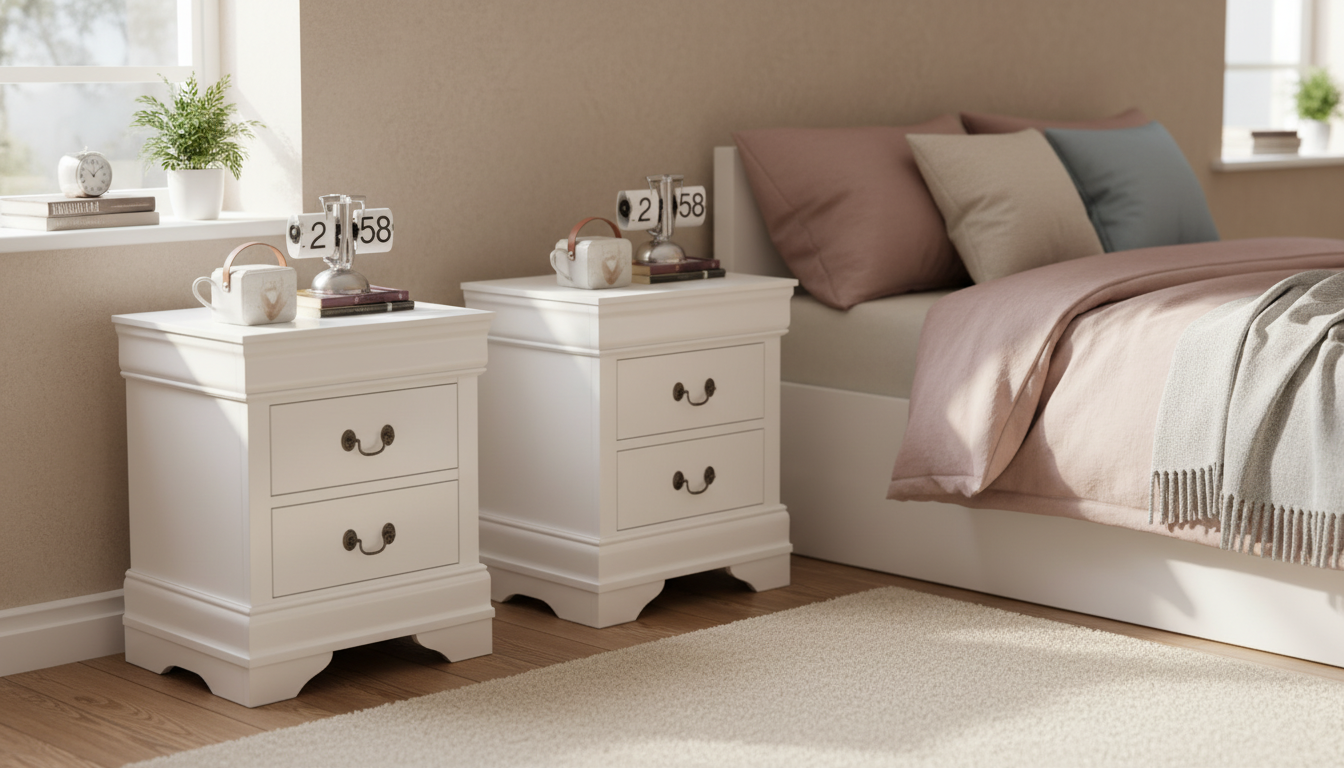
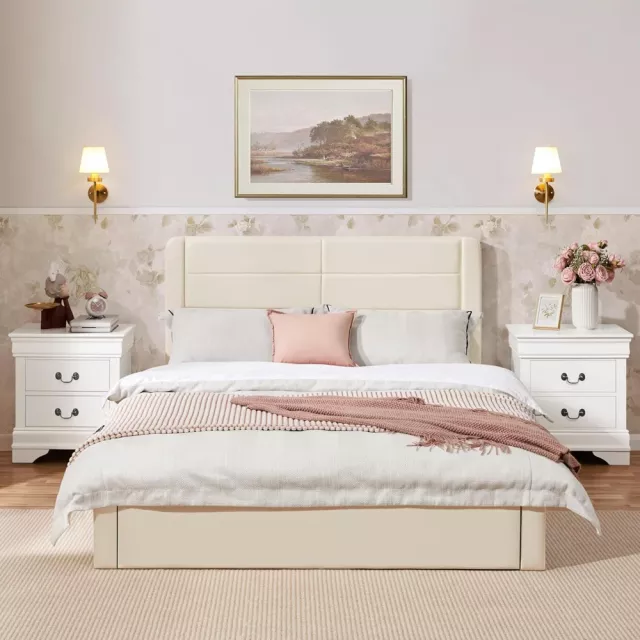
A matching pair of wooden nightstands with two drawers each can simplify bedside storage while keeping a bedroom coordinated. With fully assembled construction, the focus shifts from setup to fit: sizing, drawer capacity, finish durability, and how the set complements the bed frame, lighting, and daily routines. When both sides of the bed function the same way, it’s easier to keep surfaces clear, cords controlled, and nighttime essentials right where they belong.
What a 2-drawer nightstand set adds to a bedroom
A two-piece set creates an instant sense of balance. Even in a relaxed, layered bedroom, symmetry helps the space look finished—especially when the bed is centered on a wall.
- Symmetry on both sides of the bed for a balanced, complete look
- Two tiers of concealed storage for chargers, books, glasses, and small essentials
- A consistent surface height for lamps and alarm clocks, reducing visual clutter
- Wood construction that blends easily with modern, farmhouse, transitional, or classic rooms
Fully assembled: what that typically means for delivery and placement
Fully assembled nightstands arrive ready to use, which is a major win if you’d rather skip instructions, tools, and leftover parts. The tradeoff is that you need to think about clearances ahead of time because the pieces can’t be “flattened” to fit through tight turns.
- Arrives ready to use, reducing time spent on assembly and eliminating missing-hardware issues
- Requires checking entryway, stairwell, and bedroom doorway clearance before delivery day
- Plan for immediate placement: protect floors during moving and confirm there’s room to open drawers fully
- Do a quick once-over after unpacking: verify drawer glide movement, level stance, and surface condition
Tip for day-one setup: place felt pads under the feet before sliding the nightstands into final position, especially on hardwood or laminate. If the room is carpeted, make sure both pieces sit evenly and don’t rock—small shims can help if the floor is uneven.
Design and build details that matter day to day
Nightstands get used constantly: drawers opened with one hand, lamps nudged, water glasses set down half-asleep. Small construction details become big quality-of-life factors.
- Drawer operation: smooth slides, consistent gaps, and a firm stop that prevents over-pulling
- Handle/knob comfort: easy grip, no sharp edges, and adequate finger clearance
- Top surface usability: enough room for a lamp base plus a phone, coaster, or book
- Stability: wide stance and solid joinery help reduce wobble, especially on carpet
- Finish durability: a sealed surface helps resist water rings and routine wipe-downs
If your set uses any composite wood components, it’s also reasonable to look for low-emissions compliance; California’s formaldehyde emissions standards (often referenced as CARB compliance) are a common benchmark. See the California Air Resources Board overview for more on the regulation: CARB — Airborne Toxic Control Measure to Reduce Formaldehyde Emissions.
Storage planning: make the two drawers work harder
Simple bedside storage map
| Area |
Best for |
Tip to keep it tidy |
| Top surface |
Lamp, phone, water glass, book |
Use a tray to group small items and protect the finish |
| Top drawer |
Glasses, remote, charger, hand cream |
Add a felt-lined organizer to stop sliding |
| Bottom drawer |
Spare cables, notebooks, sleep mask |
Store in pouches to avoid clutter creep |
| Back/side space |
Power strip, cable slack |
Use adhesive cable clips to keep cords off the floor |
How to choose the right size and height (especially for a matching set)
Measuring checklist before buying fully assembled nightstands
| Measure |
How to measure |
Why it matters |
| Bedside height target |
Floor to top of mattress |
Comfortable reach for lamp/phone |
| Available width |
Wall to bed edge (or between bed and closet) |
Prevents a cramped look and bump hazards |
| Available depth |
From wall/baseboard forward |
Avoids blocking drawers and walking space |
| Doorway clearance |
Narrowest door and hallway turns |
Ensures the piece can be brought in fully assembled |
| Drawer opening space |
Front clearance needed for full drawer extension |
Prevents daily frustration and scuffs |
How to Choose (when you’re comparing fully assembled sets)
- Confirm “fully assembled” details: check whether drawers are already installed and aligned, and whether only minor steps (like attaching knobs) are required.
- Prioritize drawer feel: consistent reveal gaps and smooth, quiet glides matter more than decorative trim that’s rarely noticed day to day.
- Match undertones, not just color names: “walnut” and “espresso” can read warm, neutral, or cool depending on stain and lighting; compare against your flooring and bed frame.
- Think about sustainability preferences: if certified wood sourcing is important, look for clear chain-of-custody language (for example, FSC certification). Learn more at Forest Stewardship Council (FSC) — Forest Management Certification.
- Plan cable management: if you charge multiple devices nightly, choose a back profile that allows cords to route cleanly without pinching against the wall.
Styling ideas: keep the set cohesive without feeling matchy-matchy
Care and upkeep for wooden nightstands
FAQ
How close should a nightstand be to the bed?
Leaving a small gap—often about 1–3 inches—gives bedding space to drape and makes cleaning easier, while keeping the surface within comfortable reach. Adjust as needed so drawers open freely and you’re not bumping the nightstand when getting in and out of bed.
Should the nightstand be taller than the mattress?
The most comfortable reference is the top of the mattress: level with it or within a couple inches usually feels best. Slightly taller can work with very thick mattresses, but too tall can look off and make lamp light hit at an awkward angle.
What should go in the top drawer versus the bottom drawer?
Use the top drawer for nightly essentials you reach for in the dark (glasses, hand cream, remote, charger), and the bottom drawer for backups and less-used items (spare cables, journals, sleep accessories). Low-profile organizers help prevent clutter and keep drawers closing smoothly.
Recommended for you









Leave a comment