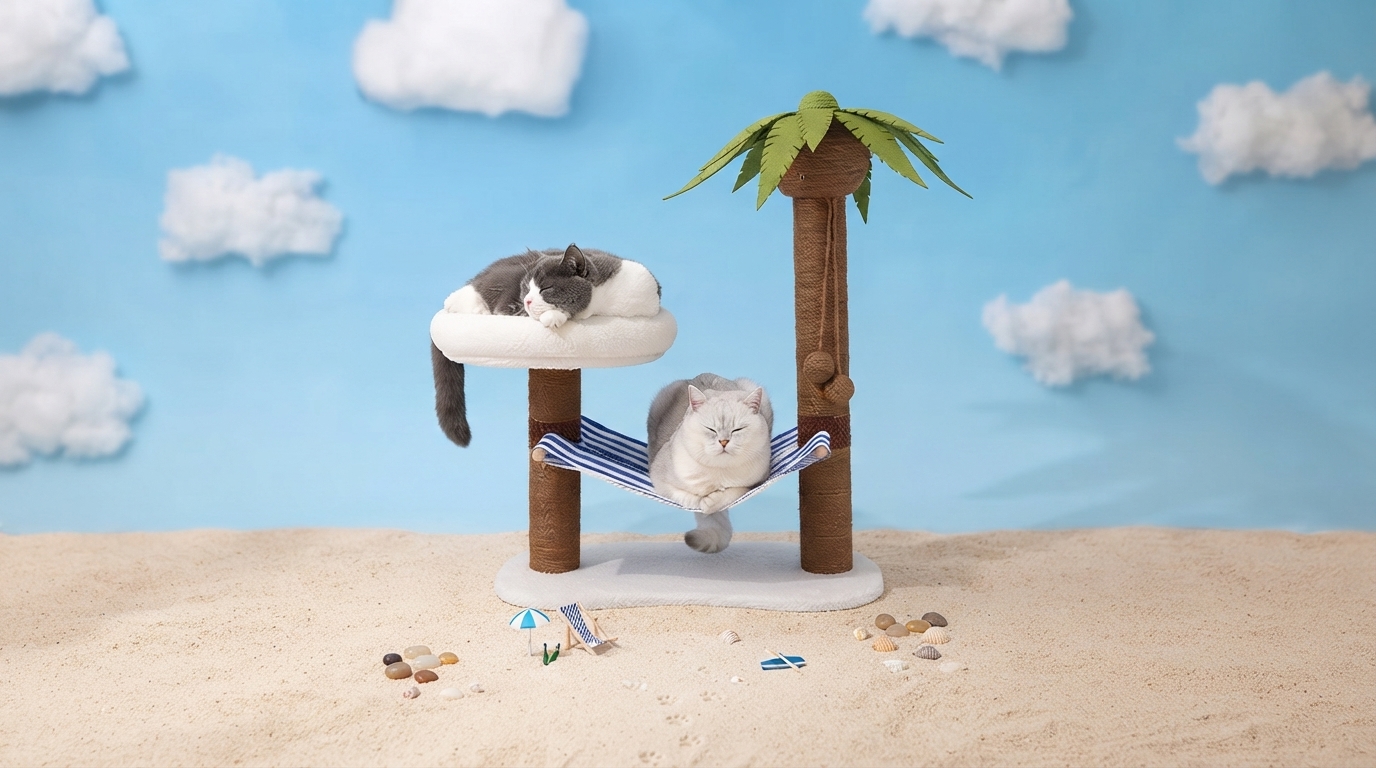
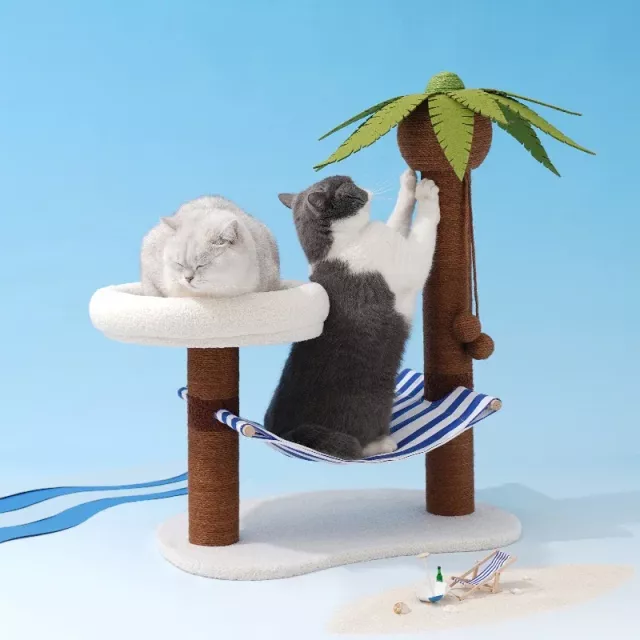
A coconut tree–themed scratching tower can do more than look playful: it can channel scratching into the right surface, add vertical territory in a small footprint, and provide an elevated lounge spot. This guide breaks down what to look for in a dual-level tower with a hammock, how to place it for daily use, and how to keep it stable and inviting for cats of different ages and sizes.
What Makes This Style of Tower Different
The “coconut tree” silhouette acts like a vertical landmark in your home. Many cats gravitate toward tall, obvious structures for scratching, scent marking, and quick climbs—especially when the scratching surface is easy to find and consistently available.
- Natural-looking vertical landmark: The palm-like shape stands out, which can make it more enticing than a low scratch pad tucked away.
- Dual levels without the bulk: Two tiers typically cover the basics—climb, scratch, perch—without the footprint of a full multi-post cat tree.
- Hammock adds a second resting zone: A sling-style hammock often becomes a favorite nap spot and can reduce competition when more than one cat wants the “best seat.”
- Predictable scratch zone: A dedicated scratch area helps redirect claws from furniture by offering a consistent texture in a consistent location.
Best Uses at Home
- Apartment living: Adds vertical space while staying compact, which is useful when floor space is limited.
- Kittens and young adults: Supports short bursts of climbing and hopping between levels—great for energy “zoom” moments.
- Single-cat households: Can become a reliable scratch-and-nap station when placed near daily household activity.
- Multi-cat homes: Works best when it’s not the only prized perch. Pair it with another resting option in a different area to reduce guarding and bottlenecks.
How to Choose the Right Size and Setup
Even a well-built tower can get ignored if it’s the wrong scale or if the hammock isn’t comfortable. Before buying or assembling, match the tower to your room and your cat’s body size and habits.
- Measure the footprint and add clearance: Leave enough room for safe jump-on/jump-off angles so your cat isn’t bumping into furniture edges.
- Prioritize stability: Look for a wider, heavier base and a stated weight capacity that fits your cat (or cats using it).
- Match the scratch texture: Some cats love tightly wound rope; others prefer a softer fabric or a more textured surface. The best material is the one your cat chooses repeatedly.
- Choose a hammock your cat can truly curl in: A sling that’s too small, too saggy, or too shallow may be ignored.
- Consider age and mobility: Seniors and larger breeds often prefer shorter “step-ups” between levels rather than big leaps.
- Placement for confident jumpers: If your cat likes height, positioning near a wall can create a more secure feel while keeping the top level easy to access.
Quick fit checklist for a dual-level tower with hammock
| What to check |
Why it matters |
Simple test at home |
| Base width and weight |
Prevents tipping during vigorous scratching |
Push the tower sideways lightly; it should resist wobble |
| Post height and scratch area length |
Allows full-body stretch scratches |
Cat should be able to extend from shoulders to hind legs without slipping |
| Hammock depth and edge support |
Improves comfort and use rate |
If a folded towel fits in the hammock and still leaves room, size is usually adequate |
| Platform spacing |
Supports easy climbing between levels |
Cat should step up without needing a full leap if mobility is limited |
| Surface texture |
Determines whether the cat chooses it over furniture |
Offer a small sample (rope/fabric) and observe which gets scratched first |
Placement Tips That Increase Daily Use
Placement often matters more than the design. A tower that’s “technically perfect” can still sit untouched if it’s in a spot your cat doesn’t naturally visit.
- Near a window or sunny patch: Pairing scratching with warmth or a view makes the tower more rewarding.
- Close to a rest zone: Many cats scratch right after waking. Place the tower within a few feet of a favorite nap area.
- Don’t hide it if your cat is social: Cats that like being near people may ignore a tower tucked into a quiet corner.
- Protect furniture strategically: Put the tower between your cat and the most-scratched item so it becomes the “first stop.”
- Avoid stress zones: Keep it away from litter boxes, loud vents, and noisy appliances that can cause avoidance.
Training: Getting a Cat to Use the Scratching Tower and Hammock
For deeper behavior guidance on scratching and enrichment, see the American Association of Feline Practitioners (AAFP) feline behavior guidelines and the ASPCA cat care and behavior resources.
Safety, Stability, and Materials to Look For
Care and Maintenance
Common Issues and Easy Fixes
FAQ
How do you keep a cat scratching tower from tipping over?
Choose a tower with a wide, heavy base, tighten the hardware regularly, and use a non-slip mat on smooth floors. Placing it near a wall can add stability as long as your cat still has clear jumping access.
Why won’t a cat use the hammock on a scratching tower?
Common reasons include a hammock that’s too small or saggy, an unfamiliar scent, or placement in a noisy or isolated area. Try adding a familiar blanket, using treats, and making sure the sling is taut and supportive.
Is a dual-level scratching tower enough for an indoor cat?
It can cover core needs like scratching and short climbs, especially in smaller spaces. Many cats still benefit from additional enrichment like interactive play, a window perch, or a second scratcher in another room—particularly in multi-cat homes.
Recommended for you









Leave a comment