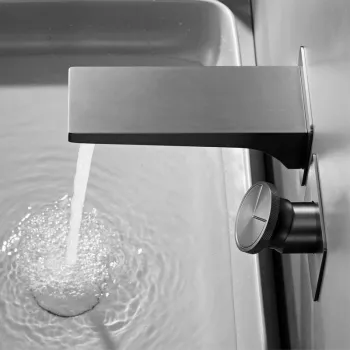
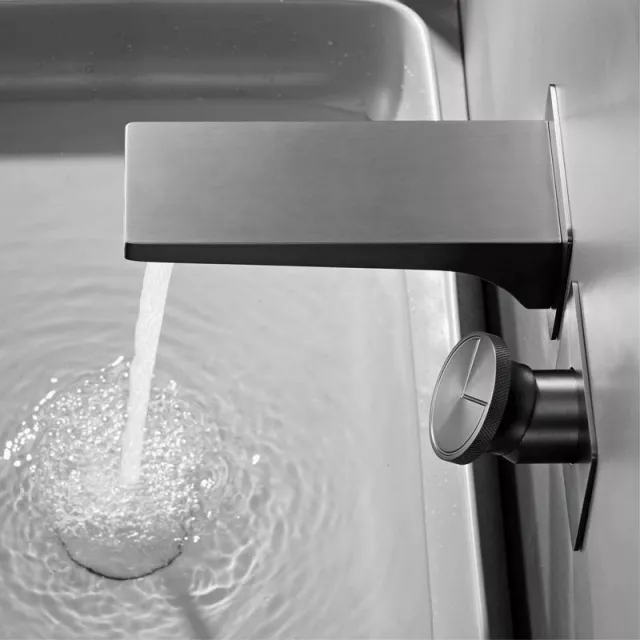
A wall-mounted faucet in chrome-plated brass creates a clean, high-end sink area while making daily use more precise with separate hot and cold controls. This style is popular for modern vanities because it frees up counter space, simplifies wipe-downs, and gives a crisp architectural look around the basin.
What Makes a Wall-Mounted Dual-Control Faucet Feel Truly Luxurious
Luxury in a bathroom isn’t only about shine—it’s about how the space works every day. A wall-mounted faucet changes the entire feel of a vanity by moving plumbing hardware off the countertop and making the sink zone look intentional and uncluttered.
- A clear countertop line: Wall-mounted installation keeps the deck open, which can make even smaller vanities feel calmer and more “designed.” With fewer seams and edges around the faucet base, routine wipe-downs around the sink are quicker.
- More deliberate temperature control: Dual handles let you fine-tune hot and cold separately. That can be especially useful when switching between quick handwashing (cooler, faster) and longer routines like shaving or skincare (warmer, more consistent).
- Bright, architectural chrome: A polished chrome finish reflects light and pairs naturally with white porcelain, marble-look surfaces, and minimalist hardware. It tends to read “modern hotel bathroom” in the best way.
- Brass strength where it counts: Brass construction is valued for long-term durability and corrosion resistance when paired with quality plating and water conditions appropriate for the finish.
Materials and Finish: Chrome-Plated Brass Explained
Chrome-plated brass is popular because it balances performance and appearance. The brass body provides a stable, durable foundation for plumbing use, while the chrome plating delivers the mirror-bright finish most people associate with a classic “clean” bathroom aesthetic.
- Plating quality matters: Brass bodies are typically chosen for their durability and stability in plumbing environments; the thickness and quality of plating largely determine how well the faucet resists dulling over time.
- Expect to see spots more easily: Chrome finishes highlight water spots and fingerprints more than brushed finishes. A quick, regular wipe can keep that showroom reflection without heavy scrubbing.
- Hard water needs a plan: Mineral buildup can form at the outlet and around aerators. Periodic descaling protects flow performance and keeps edges crisp and clean-looking.
- Match undertones under real lighting: When coordinating with other fixtures, compare finishes in the same bathroom lighting. “Polished nickel” and similar lookalikes can read warmer than true chrome, even if they seem similar online.
For water-efficiency guidance and fixture best practices, the EPA’s WaterSense program is a helpful reference point. For performance and safety benchmarks, many fittings align with standards such as ASME A112.18.1/CSA B125.1.
Installation Considerations for Wall-Mounted Faucets
Wall-mounted faucets look effortless after installation, but they require extra coordination before the wall is finished. Planning early helps avoid mismatched spout placement, awkward handle clearance, or difficult service access later.
- In-wall plumbing and solid mounting: A wall-mounted faucet requires in-wall plumbing and a sturdy mounting point. Rough-in depth and alignment should be confirmed before tile, stone, or wall panels go up.
- Spout reach must match the sink: Water should land near the drain to minimize splashing. Vessel and semi-recessed sinks need special attention because rim height and basin geometry can amplify splash if the stream lands too close to the edge.
- Handle placement should feel natural: Handle spacing and positioning should allow comfortable knuckle clearance and avoid interference with backsplash ledges, mirror frames, or nearby shelving.
- Serviceability is non-negotiable: Once plumbing is behind finished walls, practical details matter: shutoff access, removable trim, and cartridge replacement options can save time and cost later.
Everyday Performance: Control, Comfort, and Water Use
Dual-control wall-mounted faucets tend to “disappear” into the routine in a good way: they’re stable, predictable, and easy to dial in once everyone in the home gets used to them.
Quick Fit & Feature Checklist
| Feature to Confirm |
Why It Matters |
What to Measure/Check |
| Spout reach |
Reduces splash and improves aim |
Distance from wall to drain center; basin shape |
| Spout height |
Comfortable hand clearance |
Basin depth and rim height |
| Handle spacing |
Ergonomics and visual balance |
Clearance to mirror/backsplash; user preference |
| Valve compatibility |
Prevents rework inside wall |
Required rough-in valve type and connection size |
| Flow rate |
Meets local requirements and saves water |
GPM rating and aerator options |
| Finish matching |
Cohesive bathroom look |
Compare with shower trim, towel bars, drain finish |
How to Choose the Right Wall-Mounted Dual-Control Faucet
Care and Maintenance for Chrome Bathroom Fixtures
FAQ
Do wall-mounted bathroom faucets work with any sink?
They can work with many sinks, but compatibility depends on basin depth, shape, and the faucet’s spout reach and height. Measure the distance from the wall to the drain center and aim for a water landing zone near the drain to reduce splashing, especially with vessel sinks.
Is a dual-control faucet harder to use than a single-handle mixer?
Dual controls usually take a little longer for quick changes, but they can be more precise for dialing in temperature. Ease of use depends a lot on handle design—comfortable levers and smooth cartridges make daily operation feel effortless.
How can chrome faucets be kept shiny without scratching?
Use a microfiber cloth and mild, non-abrasive cleaner, then rinse and dry to prevent spotting. Avoid abrasive pads and harsh powders; for hard-water deposits, use diluted vinegar briefly and rinse thoroughly afterward.
Recommended for you










Leave a comment