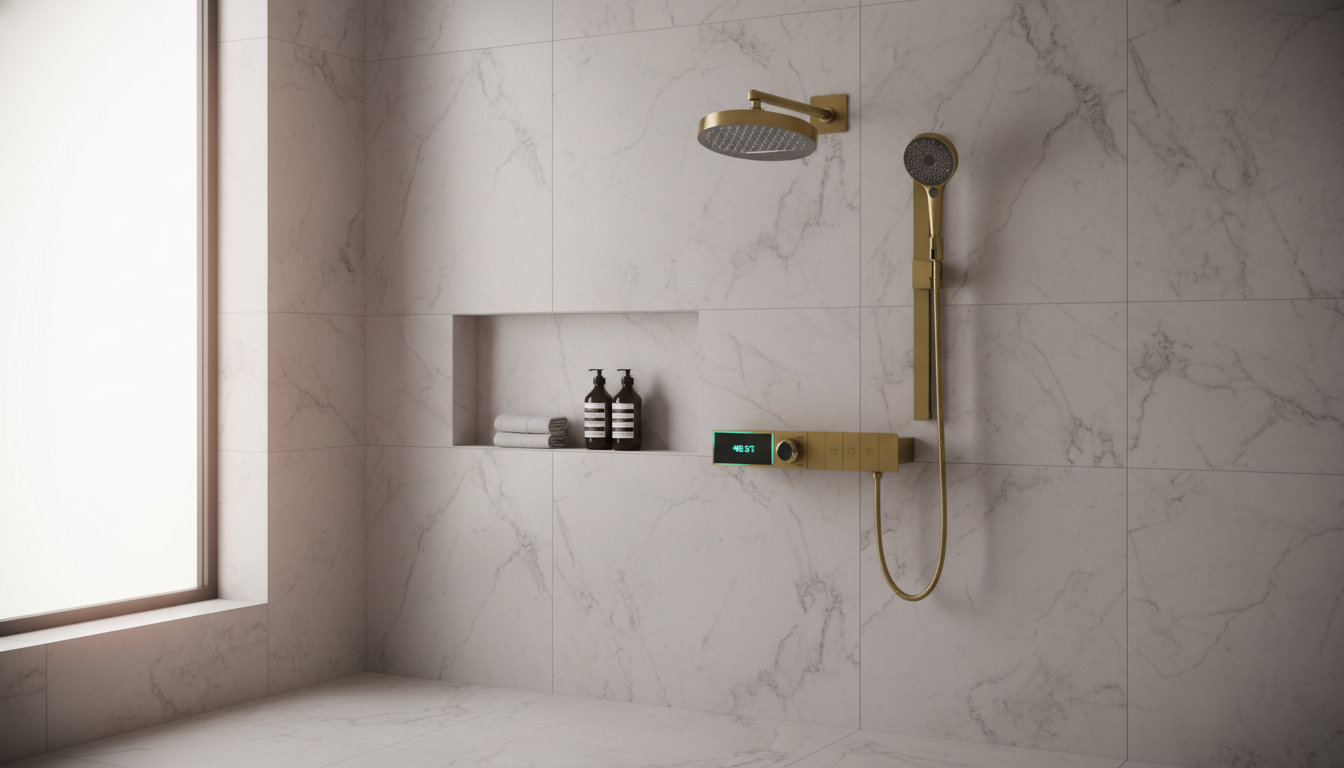
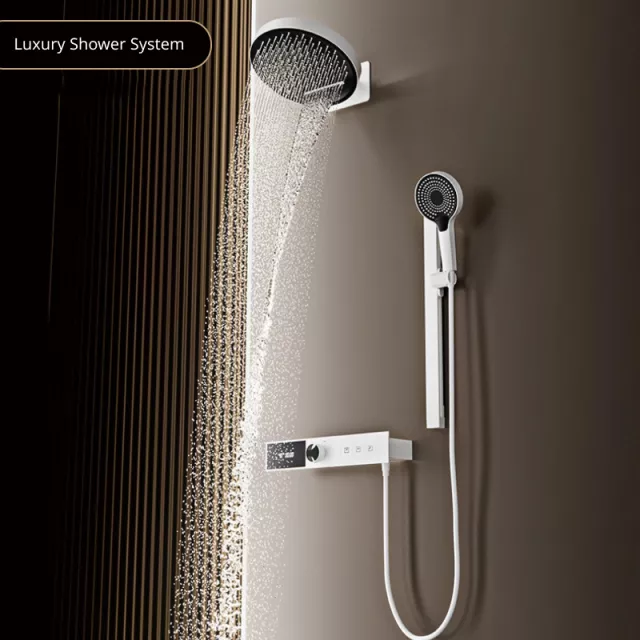
A brushed-gold brass shower system with an LED digital display balances modern control with a classic, high-end finish. The result is a shower that looks tailored and intentional while making everyday routines feel more predictable—especially when temperature, outlet switching, and coverage matter. The details that separate a “nice upgrade” from a truly premium setup come down to material quality, finish behavior in real bathrooms, and installation planning that prevents surprises behind the wall.
What Makes This Shower System Feel Truly Premium
Brushed gold stands out because it reads warm and refined without the mirror-like shine that can feel flashy or show every water spot. In many bathrooms, it pairs naturally with warm neutrals, marble, travertine, and matte black accents, giving the space a layered, designer look.
Beyond the color, a premium system has a solid-metal presence—controls that feel substantial, edges that are cleanly machined, and trim pieces that sit flush without gaps. The LED digital display adds a practical “modern luxury” touch: it’s not only decorative, it can make showering more comfortable by showing temperature and status at a glance. Finally, a cohesive set (valve, trim, head, hand shower, diverter) helps avoid mismatched sheens and slightly different gold tones that often happen when components are sourced separately.
Materials and Finish: Brass Core with Brushed Gold Surface
Brass is a common choice for long-term durability in wet environments because it resists corrosion well and holds up under temperature swings. A brass core can also feel heavier and more stable during handle operation, which contributes to that “built-to-last” impression.
The brushed finish is more forgiving than high-polish gold. It’s designed to soften the appearance of fingerprints and reduce how noticeable water spots are, especially in bright bathrooms. That said, brushed coatings can dull over time if harsh abrasives or aggressive acids are used. A gentle routine—mild soap, warm water, and a soft cloth—typically preserves the finish best.
Gold tones also shift with lighting. Under warmer bulbs (around 2700K), brushed gold can read more champagne and cozy; under cooler lighting (around 4000K), it may appear cleaner and slightly less warm. To keep the room cohesive, match undertones across the bathroom—towel bars, drain covers, and mirror frames—so the gold reads consistently rather than “almost matching.”
LED Digital Display: Practical Benefits and What to Check
An LED temperature readout can improve comfort by making adjustments easier to track. Instead of guessing whether a small handle turn made a meaningful change, the display offers quick confirmation—helpful during rushed mornings or when multiple people share the shower.
It can also reduce temperature surprises when switching outlets (for example, from overhead to hand shower) or when flow changes. Visibility matters: the display should remain readable through steam and droplets, and its placement should be easy to see without leaning forward under the spray.
Before choosing a system, confirm how the display is powered. Common approaches include battery power, hydropower (micro-generation from water flow), or a wired connection. Each affects maintenance and installation complexity, and access for service should be considered upfront. Water protection is equally important—the display area must be designed to handle direct splash and ongoing steam exposure without fogging, failing, or becoming difficult to read.
Water Experience: Coverage, Pressure, and Everyday Comfort
Great showering starts with even coverage. An overhead spray should rinse hair and shoulders without “striping,” where sections alternate between hot/cold or strong/weak flow. Consistency is influenced by internal design, nozzle layout, and—importantly—your home’s water pressure.
Local flow rules and any included restrictors can change performance. If you’re looking for efficiency, it can help to review water-saving guidance such as EPA WaterSense, while still ensuring your pressure and head design will deliver a satisfying spray.
Specifications at a Glance
Quick Checklist for Compatibility
| Feature |
What to Confirm |
Why It Matters |
| Finish |
Brushed gold tone and matching accessories |
Ensures cohesive look across the bathroom |
| Primary material |
Brass body/valve components |
Supports durability and corrosion resistance |
| Display power |
Battery, hydropower, or wired method |
Affects maintenance and installation complexity |
| Valve type |
Thermostatic vs pressure-balance (where applicable) |
Controls temperature stability and comfort |
| Mounting |
Wall-mounted configuration and hole spacing |
Determines fit with existing tile and rough-in |
| Connections |
Plumbing standard and inlet size |
Prevents adapter issues and leaks |
| Water pressure |
Minimum and recommended pressure |
Maintains spray quality and outlet switching |
| Maintenance |
Access to cartridge/display components |
Simplifies future servicing |
Installation Notes: Planning for a Clean, Reliable Setup
If the system supports calibration, verify that the displayed temperature aligns closely with actual water temperature. For homes that prioritize water safety and system management, guidance like ASHRAE Standard 188 can provide helpful context on water system best practices.
How to Choose the Right Brushed-Gold Shower System for the Space
Care and Longevity: Keeping the Finish and Spray Performance Like New
FAQ
Does the LED digital display require wiring?
Not always. Many displays run on batteries or hydropower, while some models use a wired connection; confirm the exact power method and where access is located for future service or replacement.
Will a brushed gold shower system match other gold fixtures?
It can, but gold undertones vary from warm to more neutral, and lighting can shift how the finish looks. Match by undertone and finish family when possible, and check the look under your bathroom’s actual lighting.
How can spray performance be maintained in hard water?
Wipe down the showerhead and hand shower regularly and descale the nozzles periodically to prevent mineral buildup. Keeping screens clear and maintaining consistent pressure helps preserve even coverage and comfortable flow.
Recommended for you










Leave a comment