Luxury Brass Floor-Standing Bathtub Faucet with Waterfall Outlet
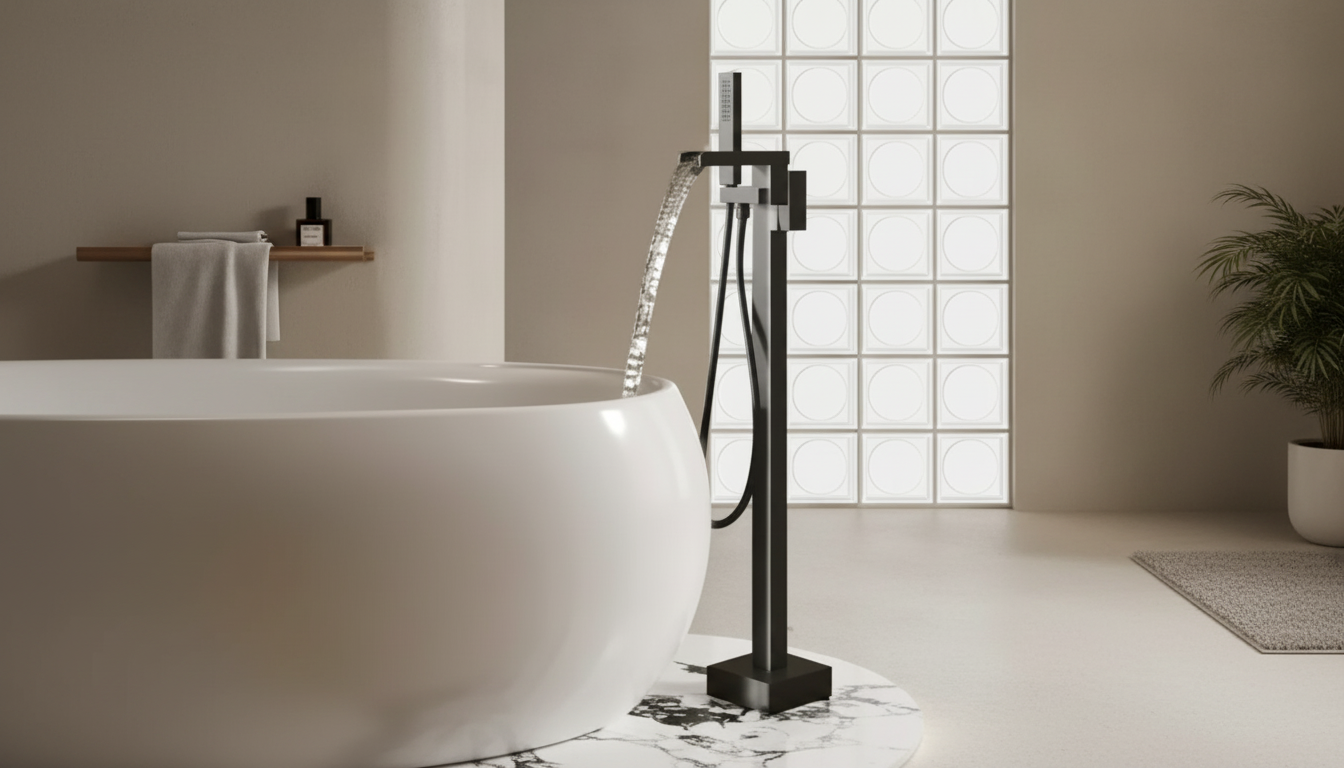
A floor-standing bathtub faucet with a waterfall outlet is designed to become a centerpiece: sculptural, minimal, and made for open-side tubs. With brass construction and a dark, modern finish, this style pairs spa-like flow with durable materials—provided the right measurements, valve compatibility, and installation details are confirmed up front.
What Makes a Floor-Standing Waterfall Tub Filler Different
Unlike deck-mounted or wall-mounted tub faucets, a floor-standing tub filler rises from the finished floor and sits beside a freestanding tub. That changes how it’s supported, how plumbing is routed, and how the spout needs to be positioned for comfort and splash control.
- Freestanding mounting: Anchored to the floor rather than a deck or wall, making it a natural fit for tubs placed away from walls.
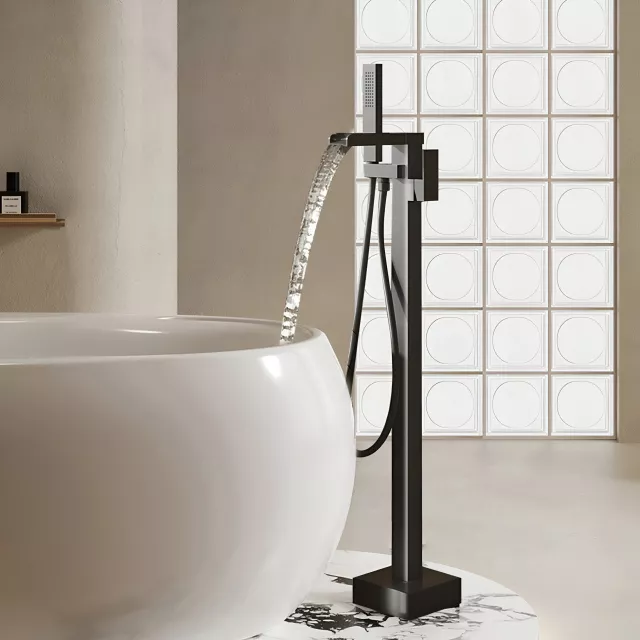
- Waterfall outlet: A wide, open spout creates a sheet-like stream that looks dramatic and can fill quickly when the flow rate is adequate.
- Brass body: Often chosen for strength and corrosion resistance in wet environments, especially at threaded joints.
- Design impact: A tall silhouette and dark brass/black finish can complement modern, industrial, and minimalist bathrooms.
Materials and Finish: Brass Construction and Black Hardware Considerations
Material quality matters most where water, heat, and daily use meet. Solid brass (or brass-heavy construction) is commonly preferred for tub fillers because it holds threads well, tolerates temperature swings, and resists corrosion better than many low-cost alloys.
- Brass internals: Help resist rust and pitting, especially around valve interfaces and fittings that can otherwise seize or degrade over time.
- Black/dark finishes: May be plated or coated; long-term appearance depends on cleaning habits and local water chemistry.
- Gentle cleaning: pH-neutral soap and a soft cloth are typically the safest routine; abrasives can create shiny “burnished” spots or fine scratches.
- Hard-water spotting: Mineral deposits show up faster on black fixtures; drying after use is a simple way to keep the finish crisp.
Waterfall Outlet Performance: Flow, Splash, and Sound
A waterfall spout looks calm and smooth when the stream stays cohesive. That effect depends on the home’s real-world water pressure, the faucet’s flow rating, and the geometry between spout and tub.
- Flow rate is key: Waterfall outlets often need enough volume to form a stable sheet rather than breaking into separate strands. If you’re comparing models, look for a published GPM rating and consider how it performs at your typical household pressure.
- Splash control is positional: The most common cause of splashing is the stream striking a flat surface (or the rim) instead of landing into the basin. Aiming toward the tub’s inner slope usually reduces splatter and keeps the stream quieter.
- Sound is part of the experience: Waterfall streams can be louder than aerated spouts. Hard surfaces like tile and glass amplify sound, while textiles and wood tones tend to soften it.
- Handheld considerations: If a hand shower is included, check hose length and swivel range so it can comfortably rinse the tub walls and reach where needed without kinking.
For general guidance on water efficiency and how flow is discussed in plumbing fixtures, the EPA’s WaterSense program is a useful reference point.
Installation Overview: Rough-In, Stability, and Plumbing Compatibility
- Rough-in and mounting base: Many floor-standing faucets use a rough-in box or mounting base connected to hot/cold supplies beneath the finished floor.
- Subfloor reinforcement: A tall fixture can amplify small movements. Proper blocking/bracing helps prevent wobble when operating handles or a diverter.
- Plumbing compatibility: Confirm supply line sizing, mixing valve requirements, and whether a diverter is used for a hand shower.
- Clearance and usability: Ensure comfortable handle access and safe walking space so the faucet doesn’t become a bump hazard next to the tub.
- Anti-scald and code: Some jurisdictions require specific anti-scald approaches. A discussion with a licensed installer is the best way to align with local requirements and the applicable model plumbing code framework (see the International Code Council i-Codes for background).
Pre-Installation Checklist for a Floor-Standing Waterfall Tub Faucet
| Item to Confirm |
Why It Matters |
What to Measure/Ask |
| Tub placement |
Determines spout reach and landing point |
Distance from tub rim to faucet centerline |
| Spout height |
Affects splash and fill comfort |
Height above tub rim and waterline |
| Rough-in depth |
Ensures the base and connections fit under finished floor |
Subfloor thickness + tile/finish build-up |
| Valve type |
Controls temperature stability and code compliance |
Thermostatic vs pressure-balanced requirements |
| Flow rate |
Impacts fill time and waterfall sheet quality |
GPM rating at the home’s water pressure |
| Finish care |
Prevents premature wear on dark coatings |
Approved cleaners and warranty guidance |
How to Choose the Right Model for a Freestanding Tub
For a plain-language overview of mixing valve behavior, see American Standard’s explanation of pressure-balancing vs. thermostatic valves.
Styling Ideas: Coordinating a Black Brass Tub Filler
Care and Maintenance for Long-Lasting Finish and Smooth Operation
FAQ
Do waterfall tub spouts splash more than regular spouts?
They can, but splash is mostly about spout height, reach, and where the stream lands. Keeping the outlet aimed toward the tub’s inner slope and avoiding excessive height above the rim usually reduces splatter.
What rough-in is needed for a floor-standing bathtub faucet?
Most floor-standing tub fillers require a floor-mount rough-in box or mounting base connected to the supply lines below the finished floor. Confirm rough-in depth, supply line sizing, valve requirements, and subfloor reinforcement with your installer before the floor is finished.
How should a black brass faucet be cleaned to protect the finish?
Clean with mild soap and water using a soft cloth, then rinse and dry. Avoid abrasive pads and acidic or bleach-based cleaners, and dry the surface after use to minimize hard-water spotting.
Recommended for you











Leave a comment