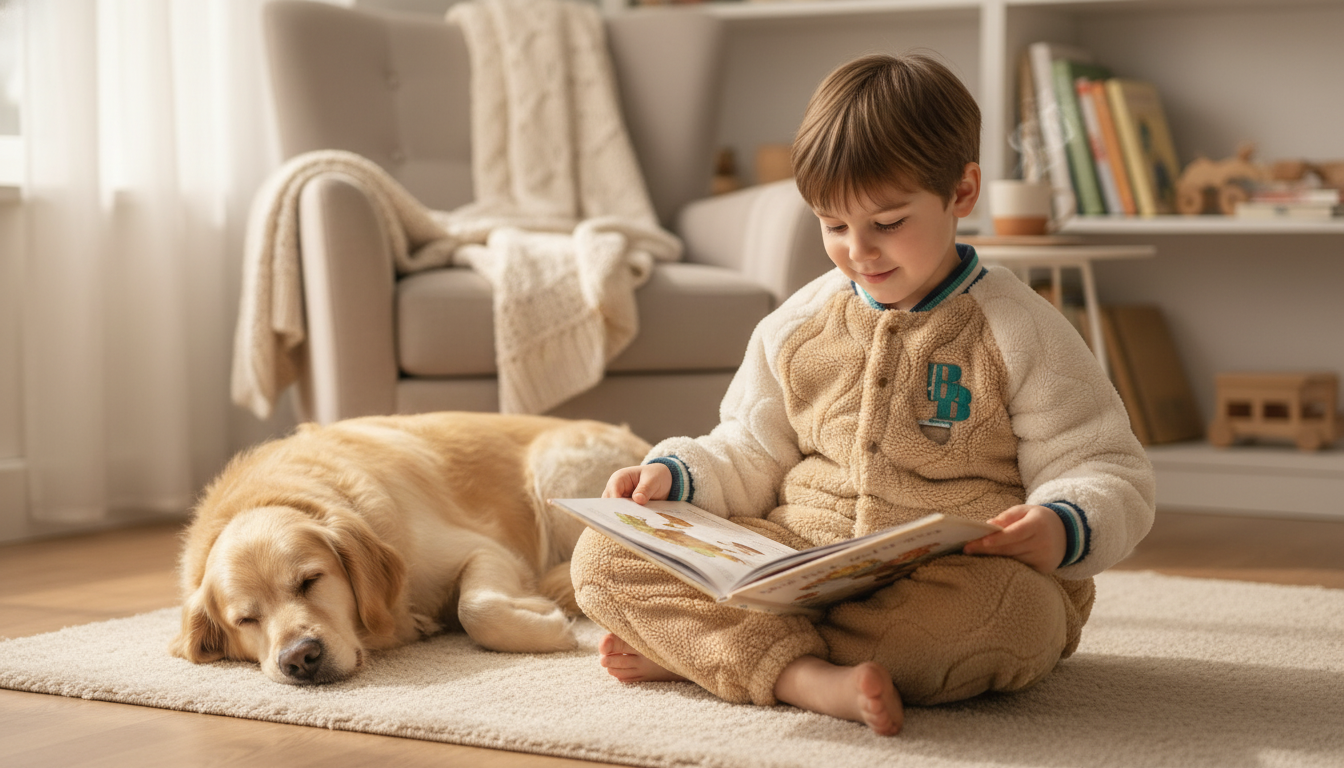
Soft velvet pajamas can make cold nights feel warmer without piling on heavy layers. Velvet’s plush surface is often a favorite for bedtime because it feels smooth against the skin and adds that “snuggly” factor kids notice right away. The key is choosing a set that feels cozy without getting stuffy, fits well for sleep and play, and holds up through frequent winter washing.
Below are the main features that make a boys’ velvet winter pajama set feel truly winter-ready, plus practical fit, comfort, and care tips so the fabric stays plush all season.
What Makes a Velvet Pajama Set Feel Winter-Ready
Velvet is known for its dense pile—those tiny upright fibers that give it a rich, soft feel. That structure helps trap a bit of warmth close to the body, which can make bedtime more comfortable in chilly rooms. Not all velvet sleepwear feels the same, though, so it’s worth checking a few details before choosing a set.
- Warmth from the pile: Velvet’s surface tends to feel warmer to the touch and can reduce that “cold sheet” sensation when a child first gets into bed.
- Nighttime comfort matters most: Look for a smooth inner feel that won’t itch. Sleepwear that feels fine for daytime can feel irritating at night, especially for sensitive skin.
- Breathability balance: Cozy shouldn’t mean suffocating. Overly thick or poorly breathable sleepwear can lead to overheating and restless sleep.
- Movement-friendly softness: A good winter set balances softness with flexibility—kids should be able to curl up, stretch, and roll over without seams tugging.
- Sleep vs. lounge use: Some sets are best strictly for sleeping, while others are comfortable enough for slow winter mornings indoors.
Quick comfort checklist for boys’ winter pajamas
| Feature |
Why it matters |
What to look for |
| Fabric hand-feel |
Reduces bedtime irritation |
Soft pile, smooth lining feel, no scratchy tags |
| Warmth level |
Keeps kids comfortable overnight |
Cozy but not overly heavy; layers if needed |
| Stretch & mobility |
Helps kids move and sleep freely |
Gentle stretch at cuffs/waist; roomy knees/seat |
| Waist comfort |
Prevents digging and slipping |
Elastic waistband that lies flat; adjustable options if available |
| Cuffs & hems |
Helps keep warmth in and legs/sleeves in place |
Soft ribbed cuffs or gently gathered hems |
| Care ease |
Maintains softness over time |
Machine-wash friendly; low-heat drying guidance |
When there aren’t obvious “best picks” to choose from, focusing on the basics makes it easier to land on a set your child will actually want to wear. Start with the environment (bedroom temperature and bedding), then choose fabric feel and fit that match your child’s comfort needs.
- Match the set to the room: A cooler room may call for velvet plus warm bedding, while a warmer room may need lighter pajamas and fewer layers.
- Prioritize skin feel: If your child is sensitive to texture, choose velvet that feels smooth—not stiff—and avoid scratchy labels or bulky seams.
- Check cuffs and neckline: Soft cuffs help hold warmth without feeling tight, and a comfortable neckline reduces rubbing during sleep.
- Plan for real life: Look for machine-wash guidance and durable stitching so the set stays soft and presentable after repeated laundering.
Fabric Notes: Velvet vs. Other Cozy Winter Sleepwear
Velvet is only one way to stay cozy. The best fabric depends on how cold the room gets and whether your child tends to run warm or cold at night. For a quick refresher on velvet as a textile, see Encyclopaedia Britannica’s overview of velvet.
- Velvet: Plush surface feel and typically warmer to the touch—great for chilly rooms and kids who dislike scratchy fabrics.
- Fleece: Very warm and lightweight; it can trap heat quickly, which is helpful in drafty homes but may be too warm for kids who overheat.
- Flannel: A classic brushed winter option; often breathable and comfortable, though it may feel less “plush” than velvet.
- Cotton jersey: Comfortable for moderate temperatures but may need layering when indoor temps drop.
- Best approach: Choose based on bedroom temperature, bedding thickness, and your child’s sleep comfort (sweaty vs. chilly).
How to Choose the Right Size and Fit
Fit can make or break pajama comfort. A set that’s too snug can feel restrictive, while a set that’s too loose can bunch up, twist, or ride up during sleep.
How to Choose for Warmth Without Overheating
Comfort, Safety, and Practical Details Parents Notice
Care Tips to Keep Velvet Soft Through Winter
Velvet’s plush pile can flatten if it’s exposed to too much friction or heat. Simple care habits help keep that soft, cozy feel. For general guidance on care instructions and why they matter, reference the FTC’s Care Labeling Rule and always follow the garment’s tag.
FAQ
Is velvet suitable for winter?
Yes. Velvet’s dense pile tends to feel warm and cozy, which can be especially comfortable on colder nights. The right choice still depends on bedroom temperature and whether your child needs layering to stay comfortable.
Is velvet in for winter 2026?
Velvet remains a recurring cold-weather favorite, especially when comfort is the priority. For sleepwear, it’s less about trend cycles and more about the fabric’s soft feel and cozy warmth.
Is velvet fabric good for winter?
Velvet can work very well in winter because it often feels insulating and warm against the skin. To avoid overheating, choose a set with breathable construction and rely on bedding for adjustable warmth.
Recommended for you










Leave a comment