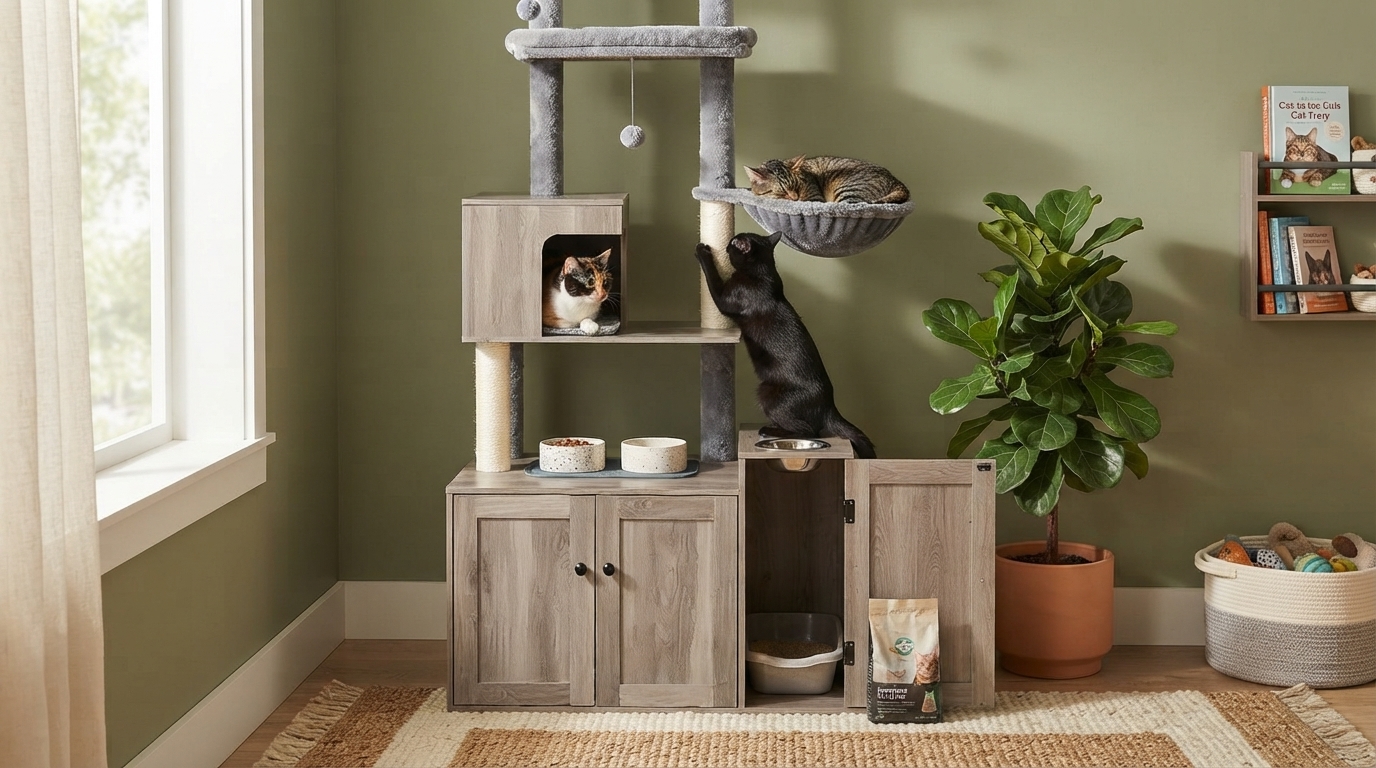
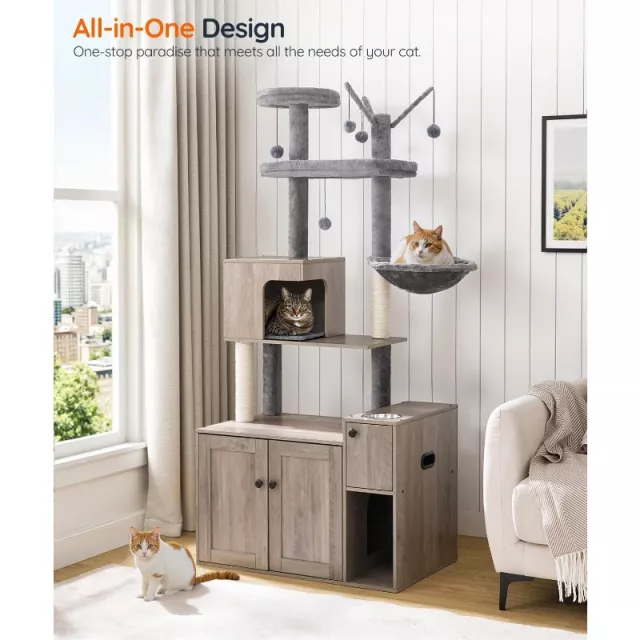
A single station that supports climbing, resting, eating, and litter privacy can make daily cat care simpler—especially in apartments and shared spaces. A well-designed all-in-one cat tower can reduce clutter, keep essentials in one place, and give cats the vertical territory they naturally prefer. Guidance from feline behavior and care organizations highlights how important safe resting spots, predictable routines, and appropriate toileting areas are for a cat’s comfort and confidence (see the American Association of Feline Practitioners and International Cat Care).
What a multi-purpose cat station solves
- Combines common cat zones into one footprint: vertical territory, a feeding corner, and litter privacy.
- Helps reduce tracked litter and visual clutter by keeping supplies in a dedicated spot.
- Encourages healthy behaviors: climbing for exercise, perching for security, scratching to protect furniture.
- Creates predictable routines when food, litter, and rest areas stay organized consistently.
Key features to prioritize before buying
- Stability and safety: A wide base, solid joints, and an anti-tip option matter most—especially with large cats or multiple cats sharing the tower.
- Litter enclosure usability: Look for a door opening that’s easy to enter, enough interior room for the litter box you already use, and clearance for turning, digging, and comfortable posture.
- Ventilation and odor control: Airflow cutouts plus wipeable surfaces help keep things fresher; some enclosures work well with charcoal filters or odor-absorbing liners.
- Feeding station placement: Bowls should sit away from the litter entry to maintain separation and limit mess.
- Storage that actually fits: Prioritize space for a scoop, bags, deodorizer, wipes, spare bowls, and a small sealed container of kibble.
- Scratch and comfort materials: Sisal posts tend to last longer than fabric-only scratching areas. Removable or replaceable cushions make long-term upkeep easier.
Size, layout, and cat-fit checklist
- Measure the intended corner: Include door-swing clearance for the litter enclosure and enough room to slide the litter tray out smoothly.
- Confirm platform spacing: Older cats do better with shorter, easier steps; athletic cats enjoy taller climbs and varied levels.
- Check perch dimensions: The top bed should allow a full curl without edges pressing into the cat’s body (especially for larger breeds).
- Consider multi-cat dynamics: Two cats often do better with multiple resting levels and more than one scratch zone to reduce competition.
- Plan for noise and foot traffic: Keep the feeding side away from loud appliances; place the litter entry away from busy pathways if a cat startles easily.
Comparison table: what to look for in an all-in-one cat tree
Use this as a quick filter while browsing similar designs.
All-in-one cat tree feature checklist
| Feature |
Why it matters |
Good baseline to aim for |
| Anti-tip support |
Reduces wobble and climbing accidents |
Wall anchor option + wide base |
| Litter enclosure interior size |
Prevents cramped turning and box misses |
Fits the litter box size used with extra clearance |
| Feeding station distance |
Helps maintain hygiene and comfort |
Bowls placed on a separate side/level from litter entry |
| Scratch post coverage |
Encourages scratching where it’s allowed |
At least one full-height sisal post |
| Cleanable surfaces |
Makes daily upkeep easier |
Wipeable panels + removable pads if included |
| Storage volume |
Keeps tools handy and reduces clutter |
Space for scoop, bags, deodorizer, and small food container |
Where to place it for the smoothest routine
- Choose a low-draft, low-noise corner so the cat feels safe using the litter enclosure.
- Keep food and water away from the litter entry; if possible, face the feeding side outward into the room.
- Avoid tight hallways where passing feet might startle the cat mid-use.
- Protect floors: place a litter mat at the enclosure exit and a washable runner under the feeding station.
- If wall anchoring is available, position near a stud or solid anchor point for maximum stability.
Setup and training tips (especially for cautious cats)
Cleaning and maintenance without hassle
- Daily: Scoop litter, wipe the feeding surface, and shake out mats to prevent buildup.
- Weekly: Vacuum platforms and seams; wipe enclosure walls with a pet-safe cleaner; wash removable pads if included.
- Monthly: Check screw tightness and inspect scratch posts for fraying; rotate or replace worn parts when possible.
- Odor management: Prioritize ventilation and frequent scooping; avoid strongly scented products that may deter use.
- Food hygiene: Wash bowls regularly and keep dry food sealed to reduce pests and staleness (the ASPCA cat care resources include additional basics to keep routines sanitary).
How to choose the right one for your home
FAQ
Is it okay for a cat’s food station to be near the litter enclosure?
It can work if the bowls are positioned on a different side or level and not right next to the litter entry. Keep surfaces clean, prioritize airflow, and wipe down the feeding area daily; placing water a bit farther away is often more comfortable for cats.
What litter box size fits inside an enclosed cat tree compartment?
Measure the compartment’s interior width, depth, and height, then compare those numbers to your litter box’s outer dimensions while leaving extra clearance for turning and scooping. High-sided boxes need more height, and some top-entry boxes won’t be practical if the enclosure doesn’t allow vertical access.
How can a cat be encouraged to use the enclosed litter area?
Transition gradually: let your cat explore first, use familiar litter, and add a small amount of used litter to cue the correct location. Keep the area quiet and consistent, reward curiosity, and avoid forcing your cat into the enclosure.
Recommended for you









Leave a comment