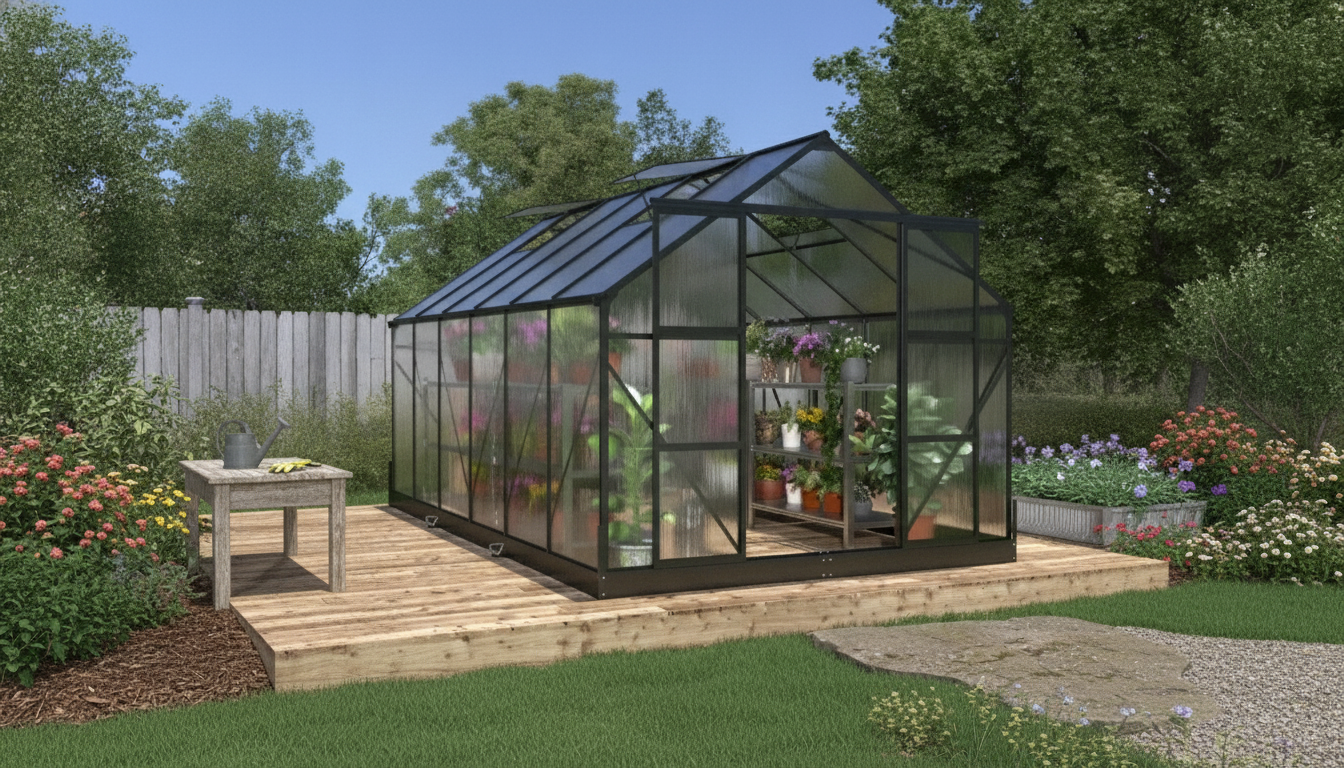
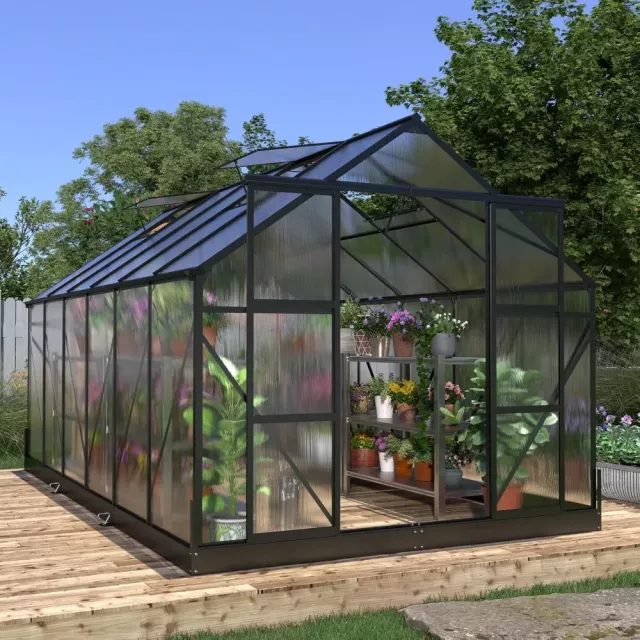
An 8×14 greenhouse hits a sweet spot for backyard growers: enough space to juggle seed trays, salad greens, and taller warm-season crops, while still fitting on many residential lots. With polycarbonate panels, light is softened and heat retention typically improves compared to single-pane options, helping smooth out temperature swings. Add a sliding door for easy entry and four vent windows for quick heat release, and daily climate management becomes more straightforward across shoulder seasons and summer spikes.
Quick look: size, access, and airflow
This footprint and feature set is designed for practical, day-to-day growing—moving supplies in and out, keeping plants comfortable, and making room for a layout that matches how you garden.
Core specifications and highlights
| Feature |
What it means for daily use |
| 8×14 ft footprint |
Room for multiple beds or long staging benches while preserving a central walkway |
| 7.5 ft height |
Improves comfort and supports taller crops, shelves, and hanging accessories |
| Polycarbonate panels |
Helps retain warmth and diffuses light to reduce harsh sun on foliage |
| Sliding doors |
More convenient in tight spaces and less likely to swing shut in wind |
| 4 vent windows |
Supports passive heat release and humidity control without opening the main door |
- Footprint: 8 ft x 14 ft growing area with a 7.5 ft peak height for headroom and trellised plants.
- Access: Sliding doors help when hands are full of trays, soil bags, or tools.
- Ventilation: Four vent windows provide a fast way to dump heat and moisture on bright days.
- Use cases: Seed starting, season extension, protected container gardening, and overwintering tender plants (with added heat when needed).
Polycarbonate panels: light diffusion and temperature stability
Polycarbonate is popular for hobby greenhouses because it changes the quality of light and can be more forgiving in rough weather. Diffused light tends to reduce intense hot spots on leaves and can make growth more even across benches—especially useful when trays sit near the walls where sun angles can be sharp.
- Gentler light: Diffusion can lower the risk of leaf scorch and help seedlings stay compact when paired with good spacing.
- Durability: Polycarbonate is typically more impact-resistant than glass, a practical advantage in hail-prone or windy areas.
- Insulation depends on details: Panel structure (single vs. multiwall), tight seals, and weathered gaps all influence heat retention at night.
- Cold-climate upgrades: Careful sealing plus optional interior bubble insulation can noticeably improve overnight temperature stability.
For best results, keep edges protected and pay attention to how panels are oriented and fastened. Small air leaks add up, especially during windy cold snaps when warm interior air is constantly pulled out and replaced.
Vent windows and sliding doors: managing heat, humidity, and plant health
Overheating is one of the most common greenhouse surprises: a sunny 45°F day outside can still push interior temperatures far higher than expected. Vent windows are your first line of defense, letting hot air escape near the top where it naturally collects.
- Prevent heat spikes: Cracking vents early can keep temperatures from racing upward mid-morning.
- Reduce disease pressure: Better airflow helps limit stagnant humidity around foliage, lowering the risk of fungal issues.
- Simple daily routine: Open vents slightly in the morning on bright days, adjust around midday, and close before evening temperatures drop.
- Automation option: Automatic vent openers are worth considering if schedules make manual venting inconsistent.
The sliding door also plays a role: it can be opened for a quick blast of cross-ventilation without swinging into benches or catching wind. On very warm days, using both door and vents together improves air exchange more than either alone.
Layout ideas for an 8×14 greenhouse
An 8×14 footprint supports several efficient layouts, and the “right” one depends on whether you’re mostly staging seedlings or growing to harvest inside.
- Two long side benches + center aisle: A classic seed-starting setup that keeps trays organized and leaves a clear path for watering and cart access.
- One bench + one in-ground bed: A flexible mix—containers and propagation on one side, deeper-root crops on the other.
- Turning space near the door: Leaving an open zone at the entrance makes daily work smoother (watering can, hose, harvest tote, or wheelbarrow).
- Use vertical space: Trellis strings, tomato clips, hanging baskets, and tiered shelving can increase capacity without crowding the floor.
When planning, think beyond square footage and consider “work flow” space: where soil mixing happens, where plants drip after watering, and where tools live so the aisle stays clear.
Placement and site prep
Assembly and long-term durability tips
How to Choose the right greenhouse size and ventilation setup
For more on balancing temperature, ventilation, and humidity, see guidance from University of Georgia Extension, NC State Extension, and the Royal Horticultural Society.
Everyday care: cleaning, condensation, and seasonal transitions
FAQ
Do vent windows replace the need for a fan?
Vent windows provide passive airflow and help dump heat, but a small circulation fan improves air mixing and reduces humid pockets around dense foliage. In humid climates or when plants are packed closely, a fan can make a noticeable difference in leaf dryness and overall plant health.
How should the greenhouse be anchored?
Common options include ground anchors, securing the frame to a wood or concrete base, or building on a leveled gravel pad with appropriate tie-downs. The best method depends on wind exposure and soil type, so it’s important to follow manufacturer guidance and any local requirements.
Can polycarbonate handle winter conditions?
Polycarbonate is generally impact-resistant and offers useful insulation, but winter success depends on tight sealing, keeping vents closed during storms, and managing snow loads. In freezing temperatures, tender plants typically still need supplemental heat to prevent damage.
Recommended for you









Leave a comment