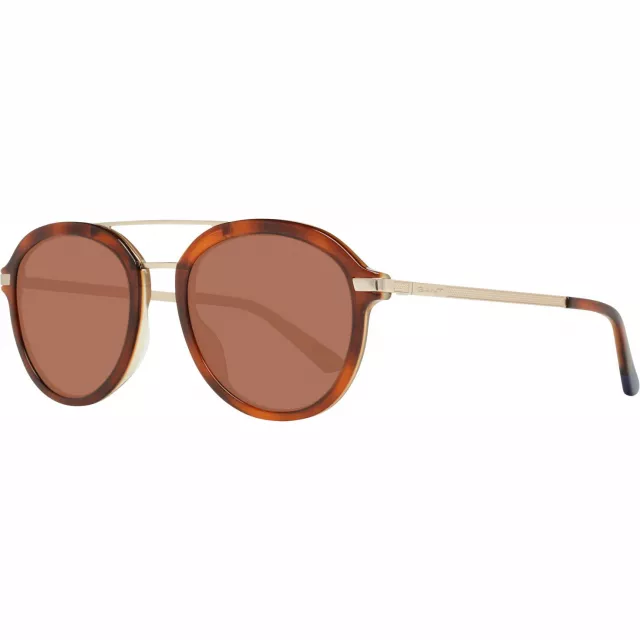
Oval sunglasses are a versatile shape for everyday wear, balancing a classic look with comfortable coverage. This Gant men’s pair in brown is built for regular outdoor use, offering full UVA/UVB protection for clearer, more comfortable days in bright conditions—whether walking around town, commuting, or spending time outdoors. For more guidance, see [PDF] btt-journal-2016.pdf – Bonefish & Tarpon Trust.
What Makes These Oval Sunglasses Stand Out
If you want sunglasses that look intentional without feeling loud or overly sporty, an oval silhouette is a dependable pick. This Gant men’s style keeps the profile clean and wearable while focusing on the feature that matters most for sun safety: verified ultraviolet protection.
- Oval silhouette that suits many face shapes and outfits, leaning timeless rather than trend-driven
- Brown colorway that pairs easily with casual and smart-casual looks
- 100% UVA & UVB protection designed to help reduce exposure to harmful ultraviolet radiation
- A practical everyday accessory for bright weather, travel, and general outdoor use
Key Details at a Glance
Here’s a quick snapshot for easy comparison while shopping.
Shop the featured pair here: Gant Men’s Brown Oval Sunglasses with 100% UVA & UVB Protection.
Fit and Styling Notes for Oval Frames
Oval frames have a natural “balancing” effect: they soften edges without adding bulk. That’s a big reason they’re easy to wear for long stretches—especially if you rotate between workdays, weekends, and travel.
- Oval frames typically soften sharper angles and work well for many face shapes, especially square, rectangular, and diamond profiles
- For round faces, oval shapes can look streamlined when the frame width is close to (or slightly wider than) the cheekbones
- Brown frames tend to read warmer and more understated than black, making them easy to wear with earth tones, denim, navy, and neutrals
- A classic oval shape can transition from daytime errands to travel and outdoor dining without looking overly sporty
For a simple outfit formula: brown oval sunglasses pair cleanly with a white tee, dark denim, and a tan or olive overshirt. They also work with business-casual staples like a navy polo or a lightweight blazer—brown tends to blend rather than dominate.
UVA & UVB Protection: What It Means in Daily Use
Lens tint changes how bright things look, but UV protection is about what your eyes don’t see. UV exposure can still be present even on hazy days or when the temperature feels mild.
- UVA rays are present throughout the day and can penetrate clouds; UVB rays are stronger in midday sun and contribute to sunburn
- Sunglasses labeled as providing 100% UVA & UVB protection are intended to block UV radiation rather than simply darken visible light
- Darker lenses without UV protection can be risky because pupils may dilate, potentially increasing UV exposure—so verified UV blocking matters
- For strong sun, pair sunglasses with other sun-safety habits such as shade, hats, and timing outdoor activities away from peak UV hours
For more guidance on what to look for, see the American Academy of Ophthalmology’s recommendations on sunglasses and eye health: https://www.aao.org/eye-health/tips-prevention/sunglasses. The FDA also highlights why darkness alone doesn’t guarantee UV safety: https://www.fda.gov/radiation-emitting-products/home-business-and-entertainment-products/sunglasses.
Polarized vs. UV Protection: Choosing the Right Feature Set
These two terms are often lumped together, but they solve different problems. Knowing the difference makes it easier to buy the right pair for your day-to-day.
- UV protection addresses ultraviolet radiation; polarization addresses glare from reflective surfaces (water, snow, windshields, pavement)
- A lens can be polarized and still need full UVA/UVB protection—these are different features
- For driving and city use, polarization can improve comfort by reducing harsh reflections; for general sun safety, UV blocking is the baseline requirement
- If frequent glare is an issue, consider prioritizing polarization next—while keeping 100% UVA/UVB protection non-negotiable
If your main use is commuting or walking around town, UV protection is the essential baseline. If you spend lots of time around water, snow, or wide-open pavement, polarization can be a meaningful comfort upgrade.
Care Tips to Keep Lenses Clear and Frames Looking New
A few small habits can help sunglasses stay crisp and comfortable, especially if they’re part of an everyday carry.
When Oval Sunglasses Are a Smart Pick
In-Stock Picks to Round Out Your Kit
FAQ
Is polarized better than 100% UVA UVB protection?
No—polarization reduces glare, while 100% UVA/UVB protection blocks ultraviolet radiation. UV protection is the must-have baseline for sun safety, and polarization is a helpful comfort feature for driving or reflective environments.
Should sunglasses be UVA and UVB?
Yes. Both UVA and UVB can affect eye health, so choosing sunglasses labeled 100% UVA/UVB protection (often listed as UV400) is a strong standard; lens darkness alone doesn’t guarantee UV blocking.
Who makes Gant sunglasses?
Gant is the brand, and its eyewear is commonly produced through licensed manufacturing partners that can vary by region and season. For the most precise details, check the product labeling or packaging for the listed manufacturer or importer.
Recommended for you









Leave a comment