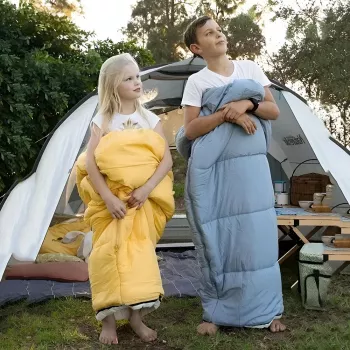
Family camping is easier to enjoy when bedtime gear has a place in your packing plan. Our ultralight splicing cotton sleeping bag for kids is a compact, portable option to consider for camping and other overnight trips. Before you leave, pair it with a suitable sleeping pad and make sure your child’s sleep setup matches the conditions you expect.
A Sleeping Bag Made for Going Along
Our ultralight splicing cotton sleeping bag for kids is positioned as a warm, compact, portable option for nights away from home. A dedicated sleeping bag gives your child a designated place to settle in and helps you organize their overnight essentials separately from the rest of the family’s gear.
When you pack, keep the bag near your child’s sleepwear and sleeping pad so you can find everything without searching through several bags. That small bit of organization can be especially helpful when you arrive late or need to set up camp before dark.
The sleeping bag is listed at $194.01, though the price is subject to change. Review the product details and manufacturer guidance before deciding whether it suits your child and your trip.
Planning for a Comfortable Night
Start with the forecast for your destination, paying particular attention to overnight temperatures, rain, and wind. Conditions can change, so plan for the weather you may encounter rather than relying only on a pleasant daytime forecast. The National Weather Service’s weather safety resources can help you prepare for changing conditions.
A temperature rating for this sleeping bag is not provided. Check the manufacturer’s guidance and choose all of your child’s sleep gear for the expected conditions. If you cannot confirm that a setup is appropriate for the weather, choose an alternative you can verify.
A suitable sleeping pad is another part of the setup. It provides cushioning and insulation from the ground, which a sleeping bag alone may not provide adequately. Choose a pad appropriate for your child and the conditions, and make sure it fits inside your shelter where your child will sleep.
Before the trip, check that your child fits comfortably in the sleeping bag and can settle into the planned sleep area. Follow any manufacturer guidance for use, and avoid assuming the bag is right for a particular age or temperature without that information.
Kids’ Overnight Packing Checklist
| Item |
Purpose |
| Kids’ sleeping bag |
A dedicated place to sleep |
| Suitable sleeping pad |
Cushioning and insulation from the ground |
| Dry sleepwear |
A clean change for bedtime |
| Weather-appropriate shelter |
Protection suited to the trip conditions |
You can adapt the checklist to your destination and the length of your stay. Pack a spare set of dry sleepwear if your plans or the weather make it useful, and keep bedtime essentials easy to reach once you arrive.
From Packing to Bedtime
Keeping sleep gear dry starts before you leave home. Place the sleeping bag and sleepwear where they are protected from spills and wet outdoor gear during travel. If rain is in the forecast, consider how you will move them from the car to the shelter without exposing them to moisture.
Once your shelter is ready, prepare your child’s sleeping area before bedtime. Place the sleeping bag on a suitable pad inside the shelter, keeping it away from wet items and areas where water might enter. Set out dry sleepwear nearby so the bedtime routine is straightforward when everyone is tired.
For a family camping trip, our family-sized mushroom tent is a separate shelter option to consider. Choose any tent based on the number of people, the space your sleep setups require, and the conditions at your destination. The National Park Service camping guide offers additional planning resources for outdoor stays.
Before lights out, take a moment to make sure your child has their bedtime essentials and that the sleeping area is dry and ready. A little preparation leaves less to sort out after dark.
After the Trip
At home, air out the sleeping bag after use and make sure it is completely dry before storing it. This is also a good time to check whether it needs cleaning. Follow the product’s care instructions rather than assuming a particular washing or drying method is suitable.
Keep the sleeping bag with your family’s other camping gear so it is easy to find for your next overnight trip. When you’re ready to plan, explore our kids’ sleeping bag and consider how it fits your child’s needs and your destination.
Before choosing, compare the product details with your daily routine, available space, care needs, and preferred setup. The strongest option is usually the one that fits the intended use clearly and remains simple to clean, store, and check before repeat use.
FAQ
Is this sleeping bag suitable for cold-weather camping?
A temperature rating is not provided. Check the manufacturer’s guidance and match all sleep gear to the expected overnight conditions.
What should a child use underneath a sleeping bag?
A suitable sleeping pad can provide cushioning and insulation from the ground. Choose one appropriate for your child and the conditions.
How should the sleeping bag be cleaned?
Follow the product’s care instructions when cleaning it, and make sure the sleeping bag is dry before storage.
Recommended for you









Leave a comment