Everyday belongings have a way of gathering quietly: another mug in the cupboard, another shirt in the closet, another book on the nightstand. The one-in-one-out rule offers a flexible way to slow that buildup. When something new comes in, you choose something to let go. For more guidance, see How to Organize and Declutter for a Stress-Free Space ….
We like this approach because it turns a large organizing project into a series of small decisions. Our printable checklist can help you remember the habit while you make it your own, without treating every purchase or gift like a test. For further reading, see 21 Organizing Rules for a Clutter-Free Home (That Actually ….
Start with One Category
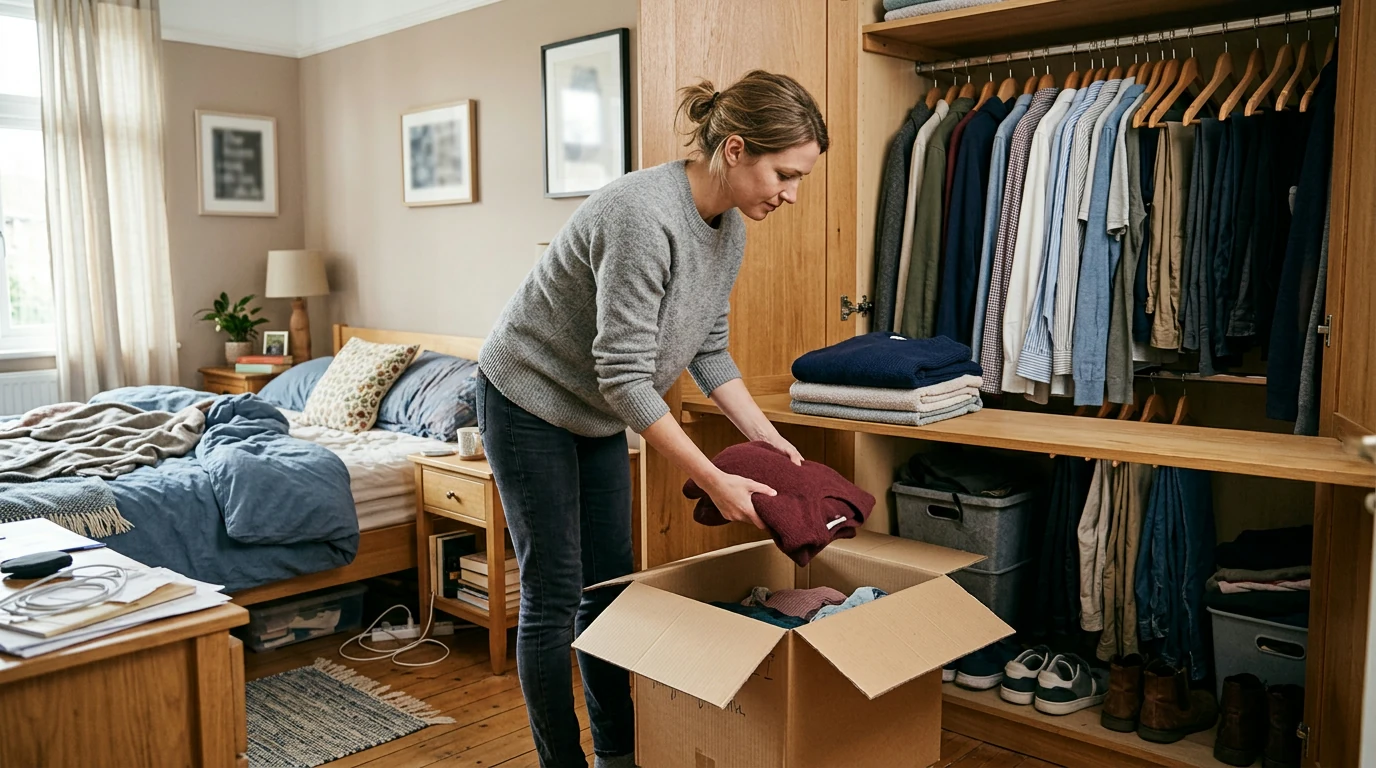
Choose one manageable category, such as clothing, mugs, or books. Each time an item joins that category, look for one you no longer use, need, or enjoy. If you bring home a new sweater, for example, you might set aside an older one that no longer fits your routine.
Starting small makes it easier to notice what you actually use. You can look through a single shelf or drawer instead of sorting the whole house. Once the decision feels familiar, you can extend the habit to another category—or keep it focused on the area where it helps most.
The goal is a comfortable amount of stuff, not a perfect item count. You may need more supplies during a busy season or fewer belongings after a change in routine. Let your space and your needs guide you.
Make the Rule Fit Your Home
When possible, choose a similar item to release. Matching a new shirt with an old shirt helps keep the same part of your home from becoming crowded. But a close match is a guideline, not a requirement. If all your shirts earn their space, you might decide to pass along an unused accessory instead.
It also helps to decide on exceptions ahead of time. Essential items can come in when you need them. If you already discarded a broken item, you do not have to remove something else when its replacement arrives. Gifts deserve flexibility, too, and shared belongings should be discussed with the people who use them before you make a decision.
One-In-One-Out Examples
| New item |
Possible item to let go |
Next step |
| A shirt |
A shirt that no longer fits |
Donate if in good condition |
| A mug |
An unused mug |
Pass it on |
| A book |
A book already read |
Donate or share |
Keep a donation box somewhere accessible, such as a closet floor or an entryway. When it fills, arrange a drop-off or schedule a regular trip so the box does not become another storage spot. Before donating, confirm that the organization accepts your items and that they are in usable condition.
Use the Printable Checklist to Stay on Track
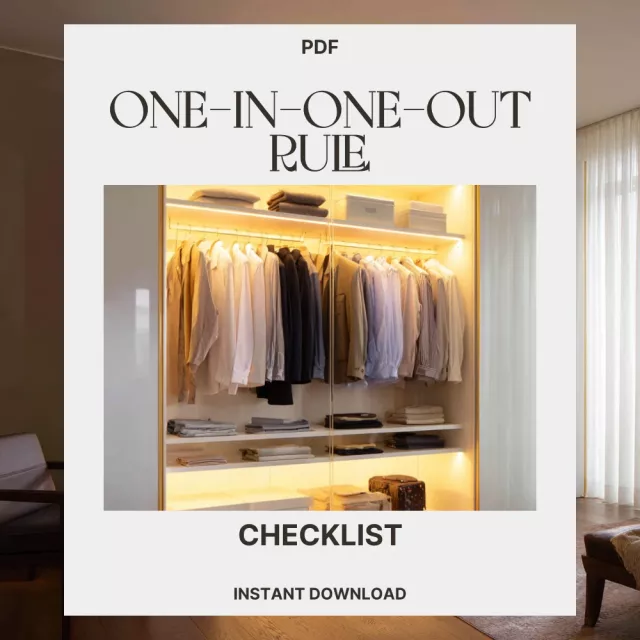
Our one-in-one-out printable checklist is a digital download designed to support a simple-living routine. Keep a printed copy near the closet, donation box, or another place where you often make decisions about belongings.
Our Tips for Following the One-In-One-Out Rule printable is listed at $5.99; pricing may change. Use it as a reminder to pause and choose your next step, rather than as a demand to clear out everything at once.
Apply the Habit to Practical Purchases
The rule can be useful beyond clothing and household collections. Before buying a device accessory, consider what you already own and whether the new item solves a problem. If you need a way to connect equipment to a laptop, our USB-C Hub 6-in-1 is one option. If it replaces an accessory you no longer need, set the older one aside for reuse or an appropriate electronics collection.
There is no need to remove a useful cable or adapter just to satisfy a count. For purchases that add a new capability rather than replace an old one, decide whether the item has a clear purpose and a convenient place to live.
Keep the Habit Flexible
Before bringing something home, pause and picture where you will put it. Ask whether you already have something that serves the same purpose and whether you are willing to care for the new item. A thoughtful pause may prevent an unnecessary purchase, even when you have something available to give away.
When an item leaves your home, choose its next step based on its condition and the options available locally. You might reuse it elsewhere, offer it to someone who can use it, donate it, recycle it, or dispose of it. The EPA’s reducing and reusing guidance offers ideas for keeping usable materials in circulation.
If clutter builds up again, our team recommends restarting with one category. Pick a small area, make a few decisions, and continue from there. A missed opportunity does not cancel the progress you have already made.
FAQ
Does the item going out have to match the new item?
No. Choosing a similar item can make the habit easier to follow, but you can use an approach that works for your household.
What if I receive a gift?
Treat gifts with flexibility. You can pass along something you no longer use if that is helpful, without making the rule a source of guilt.
Can the one-in-one-out rule reduce existing clutter?
It helps limit further accumulation, but reducing existing clutter may also mean setting aside items you already own. Start with one category if you want to make additional space.
Recommended for you








Leave a comment