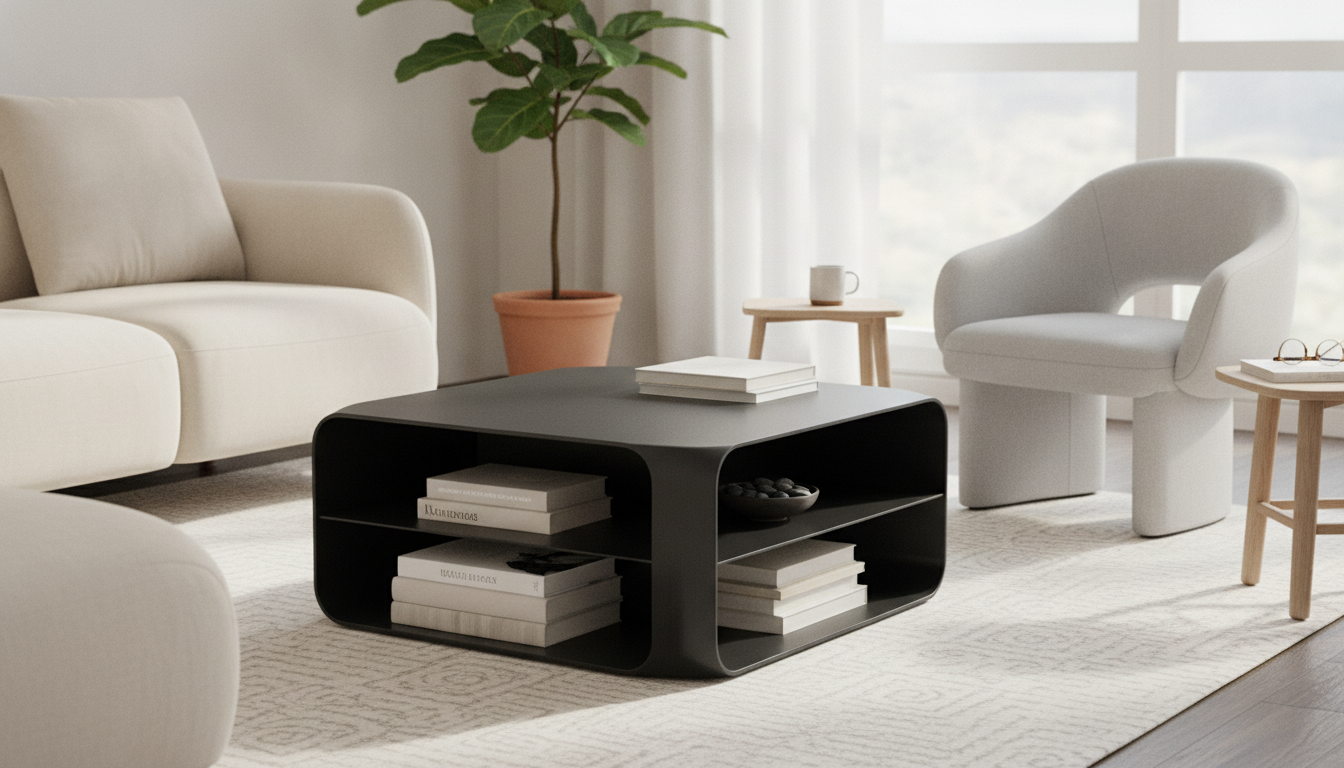
A square coffee table with built-in storage keeps the center of the living room calm, functional, and visually balanced. With a minimalist modern look, it can anchor seating, hide everyday clutter, and still leave enough surface space for books, trays, and drinks. The right choice depends on room size, storage style, material durability, and how the table will be used day to day.
What Makes a Minimalist Modern Square Coffee Table Work
Square coffee tables tend to feel “right” in modern living rooms because they reinforce order and symmetry. The shape naturally supports conversational seating layouts, especially sectionals and L-shaped arrangements, where a central surface is shared from multiple sides.
Minimalist profiles rely on clean lines, low visual noise, and restrained finishes. That usually means slim tops, simple legs, and minimal hardware—details that help the table blend with modern interiors instead of competing with them.
Storage is the feature that keeps the look polished in real life. A drawer, lift-top, shelf, or concealed compartment reduces countertop clutter so the room stays open and intentional even when it’s being used every day.
Proportions matter as much as style. A table that’s too tall can feel awkward to reach over, and a table that’s too large can block walkways and overwhelm the seating area—two issues that quickly make a living room feel tight.
Storage Styles: Choosing the Right Type for Daily Use
Storage design changes how the table functions. The “best” option is the one that matches how the room actually runs—movie nights, working from the sofa, kids’ toys, frequent guests, or a little of everything.
- Hidden compartments: Great for remotes, chargers, and small items that look messy when left out. This option prioritizes a clean top surface.
- Open shelves: Easy access for baskets, books, and decor, but can look busy if not styled intentionally.
- Drawers: Ideal for organized storage. Check whether drawers are full-extension and which side they open from to match seating placement.
- Lift-top designs: Useful for casual dining or laptop use. Confirm the lift mechanism feels stable and that there’s enough knee clearance while seated.
Storage options at a glance
| Storage type |
Best for |
Trade-offs |
Good fit for |
| Hidden compartment |
Remotes, cables, small essentials |
Requires opening a panel; may limit tall items |
Minimalist spaces and small living rooms |
| Open shelf |
Baskets, books, throws |
Can look cluttered if overfilled |
Family rooms and frequent access |
| Drawer(s) |
Sorted items, coasters, tools |
Hardware can wear; needs clearance to open |
Apartments and organized layouts |
| Lift-top |
Work, snacks, board games |
Heavier top; moving parts require care |
Multifunction living rooms |
Sizing and Layout: Getting the Fit Right
A minimalist table works best when it’s easy to move around—no bumping knees, no squeezing past corners, no awkward reaching.
- Height: Aim for the tabletop to sit close to seat cushion height for comfortable reach. (Seated reach and comfort vary by person; general anthropometric references can help when comparing dimensions. See the CDC/NIOSH anthropometry resources.)
- Spacing: Leave enough clearance from the sofa to the table so legs can move freely, and keep walkways open around the seating zone.
- Footprint: Square tables suit square or symmetrical seating areas. In narrow rooms, confirm the table won’t pinch traffic paths at corners.
- Surface needs: If game nights, snacks, or a large tray are common, choose a top that won’t feel cramped once essentials are out.
Materials and Finishes That Hold Up in Living Rooms
Living room furniture gets constant contact: cups, keys, feet on movie night, and the occasional drag from a heavy decor object. Durability is less about “fancy” materials and more about smart finishes and solid construction.
- Wood or wood-look finishes: Warm, versatile, and generally forgiving. Look for scratch resistance and durable edges that won’t chip easily.
- Engineered wood: Often budget-friendly. Prioritize sealed surfaces, stable joinery, and a build that doesn’t wobble. For a deeper look at wood properties and performance, the USDA Forest Products Laboratory Wood Handbook is a strong reference.
- Metal accents: Add a crisp modern line. Inspect for protective coatings that resist chips and corrosion, especially at corners and foot points.
- Easy-care surfaces: In high-use homes, wipe-clean finishes matter most. If kids are around, rounded corners or protected edges help reduce dings (and stress).
How to Choose
When stock is limited or styles change quickly, choosing by function first makes the decision easier—and makes it more likely the table will still feel right months from now.
How to Choose for Different Living Room Scenarios
Styling a Minimalist Square Coffee Table Without Making It Feel Bare
Care and Maintenance for a Clean, Modern Look
FAQ
How much space should be left around a square coffee table?
Leave enough clearance from the sofa for comfortable leg room and easy reach, plus open walkway space around the seating area so traffic doesn’t bottleneck at the corners. Painter’s tape on the floor is a quick way to test the footprint against real movement paths.
Is a square coffee table better than a rectangular one for a sectional?
Square tables often work especially well with L-shaped seating because they serve multiple seats evenly and support a conversation-centered layout. Rectangular tables can be a better match for long sofas or narrower rooms where traffic flow benefits from a longer, slimmer shape.
What storage type keeps a minimalist look the cleanest?
Concealed storage—like drawers or a hidden compartment—keeps the cleanest visual line because everyday items disappear completely. If an open shelf is preferred, using matching baskets helps preserve a minimalist look while keeping access easy.
Recommended for you









Leave a comment