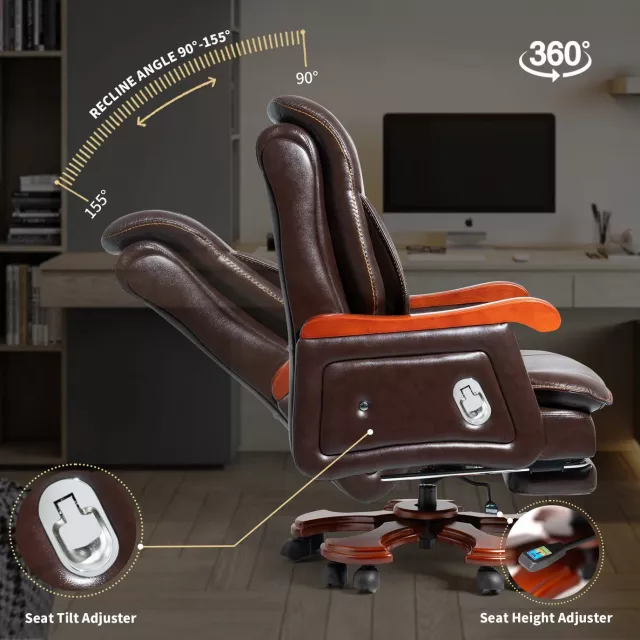
A premium office chair should support long work sessions, move smoothly with the day’s tasks, and look refined in a home office or executive space. This luxury swivel lift chair with a backrest focuses on ergonomic basics—adjustable height, stable support, and easy mobility—wrapped in an elevated style that suits modern interiors.
What Makes This Chair “Luxury” in Daily Use
Luxury shows up in the small moments: how easily the chair swivels when reaching for a file, how steady it feels when leaning back to think, and how well it holds its presence in a carefully designed room. Rather than feeling like a purely utilitarian desk seat, a well-made swivel lift chair with a dedicated backrest becomes part of the workspace experience—comfortable enough to stay focused, polished enough to look intentional.
- Support-first design: A dedicated backrest helps maintain an upright, comfortable posture through focused work.
- Swivel functionality: Reduces twisting at the torso when reaching for desks, drawers, or secondary screens.
- Lift adjustment: Makes it easier to align seat height with desk surface and keyboard/mouse positioning.
- Visual upgrade: A statement piece that complements modern interiors and refined workspaces.
- Ideal settings: Executive desk setups, design studios, meeting rooms, and elevated home offices.
Key Features to Look For Before Buying
Even within the “luxury” category, comfort can vary widely. A few practical checkpoints help narrow options quickly, especially when buying for daily use.
- Seat height range: Enough adjustment to keep feet flat on the floor and thighs roughly parallel to the ground.
- Backrest shape and support: Look for a contour that supports mid-to-upper back; add a lumbar cushion if needed.
- Seat comfort: Padding density that stays supportive over time; edge comfort that doesn’t press behind the knees.
- Swivel and mobility: Smooth rotation and easy rolling that matches the flooring type (hardwood vs. carpet).
- Stability and base quality: A wide, sturdy base helps prevent wobble and supports confident leaning.
- Materials and finish: Upholstery and frame finishes that match the space and are easy to maintain.
Quick Feature Checklist
| Feature |
Why it matters |
What to verify |
| Lift (height) adjustment |
Aligns chair to desk and supports neutral posture |
Minimum/maximum seat height and ease of lever action |
| Swivel |
Reduces strain from repeated reaching and turning |
Smooth rotation without grinding or play |
| Backrest support |
Helps maintain upright posture during long sessions |
Comfortable curve and supportive feel when leaning back |
| Base and casters |
Stability and easier movement around the desk |
Solid base, caster quality, floor compatibility |
| Upholstery/finish |
Comfort and long-term appearance |
Cleanability, wear resistance, match to décor |
How to Choose the Right Setup for Your Desk and Body
A luxury chair performs best when it’s adjusted to fit both the desk and the person using it. Small alignment tweaks can noticeably reduce neck, shoulder, and lower-back fatigue across long work blocks. For practical ergonomics guidance, consult resources like OSHA’s Computer Workstations eTool and Mayo Clinic’s office ergonomics overview.
- Match seat height to desk height: Elbows should rest near 90 degrees when typing, with shoulders relaxed.
- Check seat depth: Leave a small gap (about 2–3 fingers) between the seat edge and the back of the knees.
- Set the backrest for steady support: The chair should support the back without forcing an exaggerated arch.
- Choose casters for your floor: Softer wheels often suit hardwood/tile; standard casters may suit low-pile carpet.
- Plan for movement space: Allow enough clearance for swivel and rolling so tasks don’t turn into repeated twisting.
- Consider add-ons if needed: A footrest for shorter users, a lumbar cushion for extra lower-back support, and a chair mat to protect flooring.
Comfort, Posture, and Long-Session Habits
A supportive chair is a strong foundation, but comfort across a full day also depends on how the workstation is used. The goal is not a single “perfect” posture held for hours, but a setup that makes healthy movement easy and frequent. For deeper background on reducing strain, NIOSH ergonomics resources provide a helpful starting point.
- Alternate positions: Small posture changes throughout the day can reduce fatigue even in a supportive chair.
- Screen and keyboard alignment: A great chair works best when monitors are near eye level and input devices allow neutral wrists.
- Use the backrest intentionally: Sit back periodically so the backrest can share the workload instead of the spine doing all the work.
- Micro-breaks: Brief standing or walking breaks help circulation and reduce stiffness during long work blocks.
Care and Maintenance for a Premium Look
Luxury finishes tend to look best when maintenance is simple and consistent. The goal is to prevent tiny issues—embedded grit, sticky spills, clogged casters—from becoming visible wear.
At-a-Glance Details
FAQ
How high should an office chair be set for proper posture?
Adjust height so feet rest flat on the floor, knees are roughly level with hips, and elbows land near 90 degrees at the desk. Fine-tune until shoulders stay relaxed while typing.
Do swivel office chairs work well on hardwood floors?
Yes, as long as the casters suit the surface. Softer wheels or a chair mat can reduce noise, protect the finish, and improve glide.
What’s the simplest way to keep a luxury chair looking new?
Dust or vacuum regularly, clean small spills quickly using a gentle method matched to the material, and remove debris from casters to prevent scuffs and uneven rolling.
Recommended for you









Leave a comment