Geometric wall mirrors add structure, light, and a gallery-like focal point to living rooms without relying on heavy artwork. The clean angles work especially well with modern, Scandinavian, contemporary, and eclectic spaces, while reflective surfaces help brighten darker corners and visually open smaller layouts. The key is choosing a shape, scale, and finish that fits the room’s proportions and existing materials—then placing the mirror where it enhances both function and style. For more guidance, see Wall Mirrors – Stylish & Functional Decor for Every Room.
What geometric mirrors change in a living room
Unlike traditional round or rectangular mirrors, geometric wall hanging mirrors introduce crisp lines that read as both décor and function. A single hexagon can feel like a sculptural accent, while a clustered arrangement can look like a curated installation. For further reading, see Modern Geometric Wall Mirror Set of 2 Glam Decorative Accent Mirrors.
- Creates a focal point with clean angles that feel intentional—part art, part mirror.
- Boosts brightness by reflecting windows, lamps, and lighter wall tones (especially helpful in rooms with limited natural light).
- Adds visual depth, making narrow or compact living rooms feel less flat.
- Balances soft furnishings (curtains, rugs, sofas) with sharper geometry for a more designed look.
- Anchors key zones like a console table, fireplace mantel, or reading nook when framed art feels too busy.
For general mirror-decor principles—like using mirrors to bounce light and enhance proportion—helpful references include HGTV’s guide to decorating with mirrors and Architectural Digest’s mirror-decor tips.
How to choose the right geometric wall mirror
Geometric mirrors look best when the choice feels connected to what the room needs—more light, more definition, or a stronger focal point. Start with purpose, then narrow down shape, scale, and finish so the mirror feels integrated rather than “added on.”
- Pick a primary purpose: brightening a dim corner, creating a statement above furniture, or adding symmetry to a feature wall.
- Match shape to the room’s lines: hexagons and diamonds complement angular furniture; circles and rounded polygons soften boxy rooms; clustered shapes add movement to long walls.
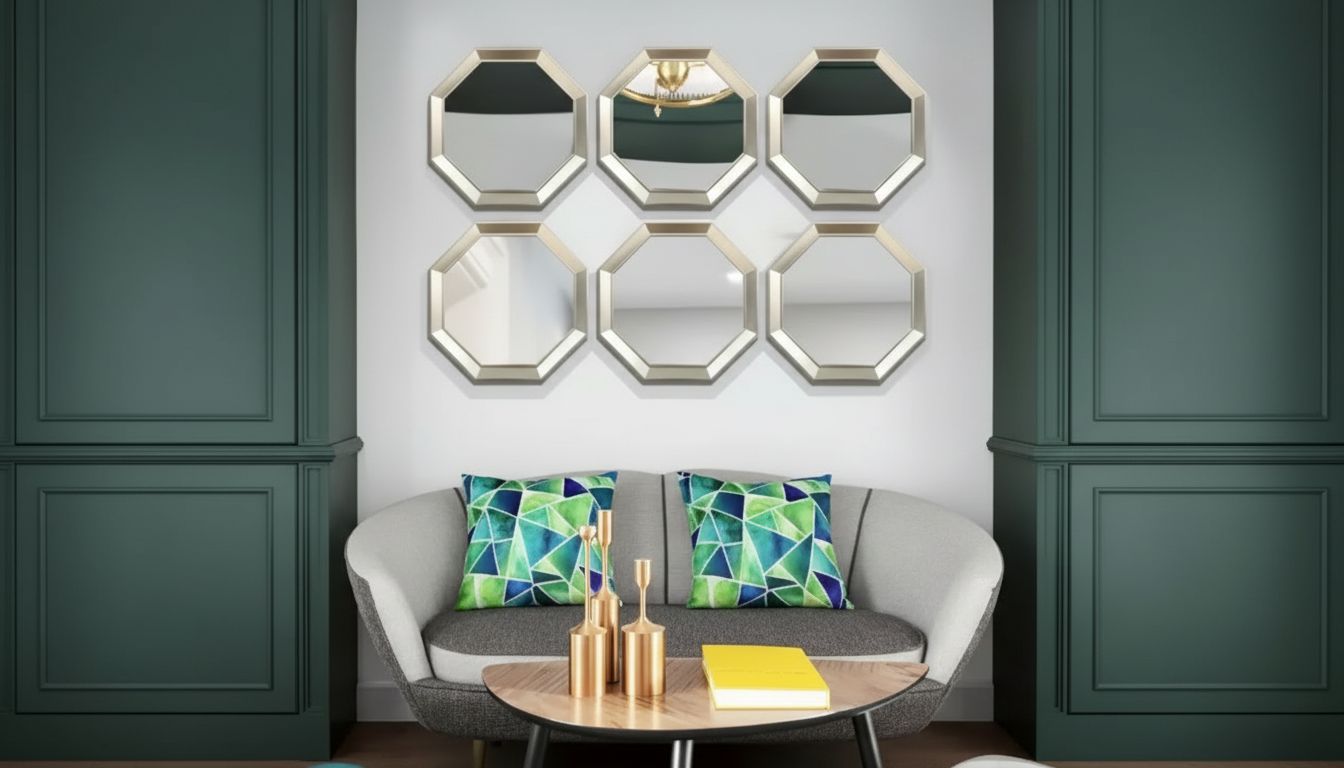
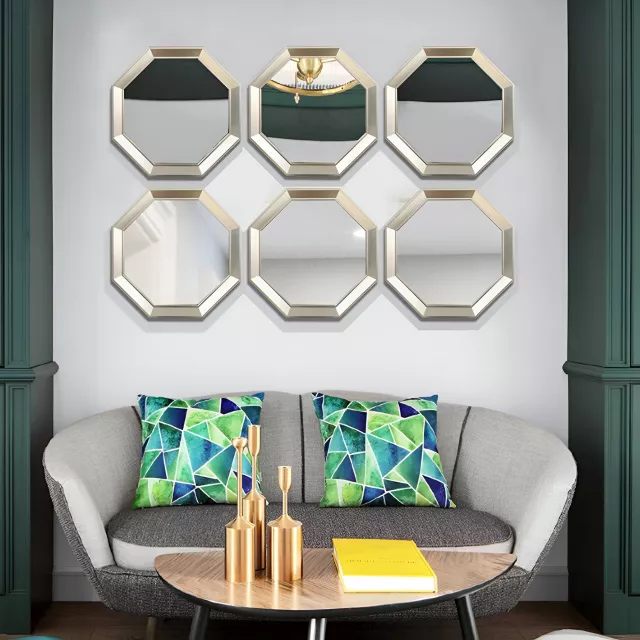
- Choose scale based on wall width: a single large piece for a bold focal point, or a multi-piece geometric set for wider walls and sectional seating areas.
- Consider frame finish and surrounding materials: black metal suits industrial/modern; gold or brass warms neutral palettes; wood tones pair naturally with organic modern and Scandinavian spaces.
- Decide on edge detail: beveled edges feel more classic and “sparkly”; flat edges read minimal and contemporary.
- Check placement height: eye-level center (roughly 57–60 inches from the floor) works for most living rooms; over furniture, leave 6–10 inches of breathing room above a console or mantel.
- Plan reflections: aim toward something worth doubling—windows, greenery, artwork, or a lamp—while avoiding reflections of clutter or TV glare.
Quick guide to choosing a geometric mirror for common living-room setups
| Living-room spot |
Best size approach |
Shape/arrangement ideas |
Placement notes |
| Above a sofa |
Large single piece or 2–3 coordinated pieces |
Hexagon, diamond, or asymmetrical cluster |
Center on the sofa; keep the bottom edge 8–12 inches above the backrest |
| Over a console table |
Medium-to-large; about 2/3 the console width |
Round polygon, octagon, or layered geometric frame |
Leave 6–10 inches between tabletop and mirror bottom |
| Near an entry corner within the living room |
Medium; functional glance-check size |
Clean-lined hexagon or tall diamond |
Place near a light source to amplify brightness; avoid traffic pinch points |
| Above a fireplace mantel |
Medium-to-large statement piece |
Octagon or clustered geometry for drama |
Keep centered and ensure heat clearance; use appropriate wall anchors |
| Gallery wall mix with art |
Small-to-medium accent pieces |
Mini hex sets or mixed geometric tiles |
Treat mirrors like art: align edges and keep spacing consistent |
How to choose (when you want a “designer” result)
When a living room feels close-but-not-finished, the mirror choice often needs one extra layer of intention: echoing existing lines, controlling reflections, and matching finishes without over-matching.
Styling ideas that look intentional (not random)
Placement tips for light, balance, and comfort
Care and mounting basics
FAQ
What size geometric mirror works best above a sofa?
Aim for a mirror (or coordinated set) that spans about two-thirds to three-quarters of the sofa’s width. Keep the bottom edge roughly 8–12 inches above the backrest and center the arrangement on the seating.
Where should a geometric mirror be placed to make a living room look bigger?
Place it so it reflects a window or the brightest part of the room for a stronger depth effect. Avoid reflecting clutter or the TV, and consider a larger single mirror or a cohesive cluster to make the expansion feel intentional.
How do geometric mirror sets look cohesive on the wall?
Keep spacing consistent (about 2–4 inches), align key edges or centers, and repeat the mirror’s finish elsewhere in the room. Planning the layout with painter’s tape before mounting helps the set look curated rather than scattered.
Recommended for you










Leave a comment