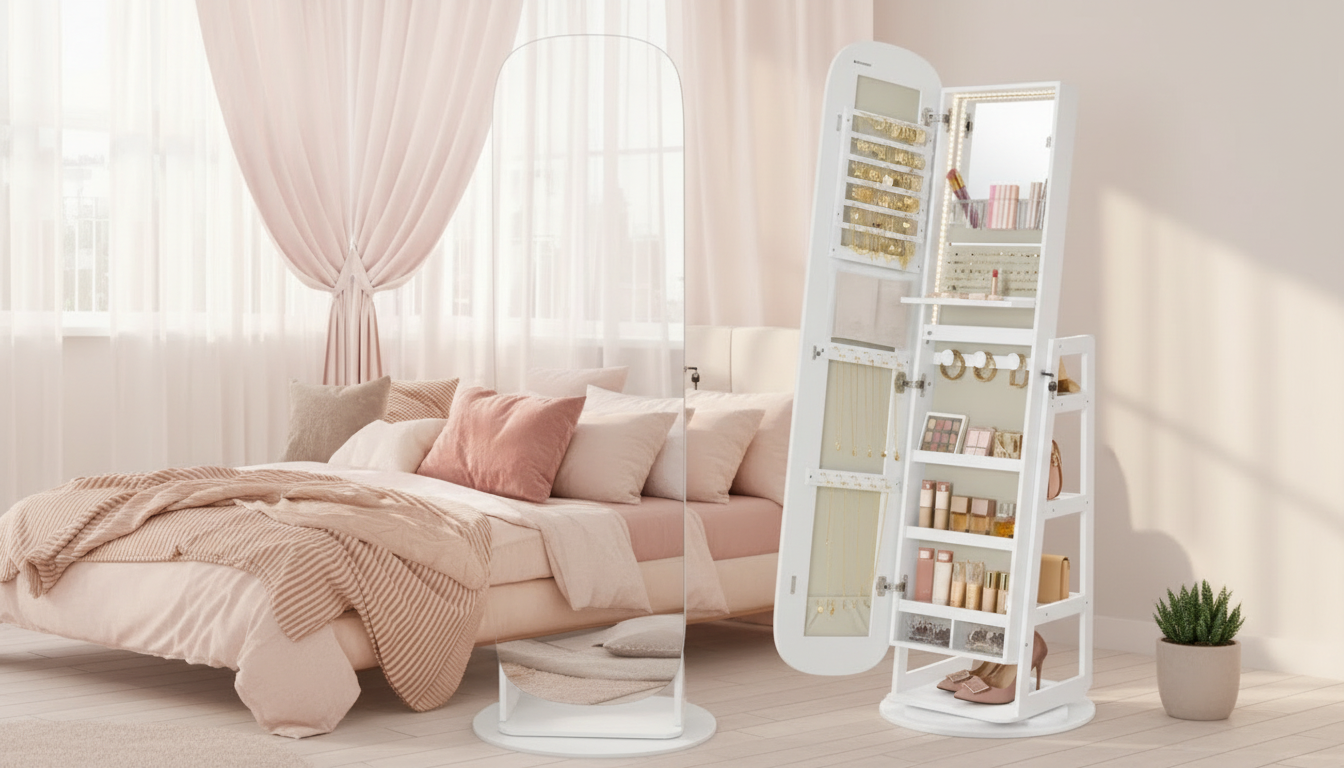
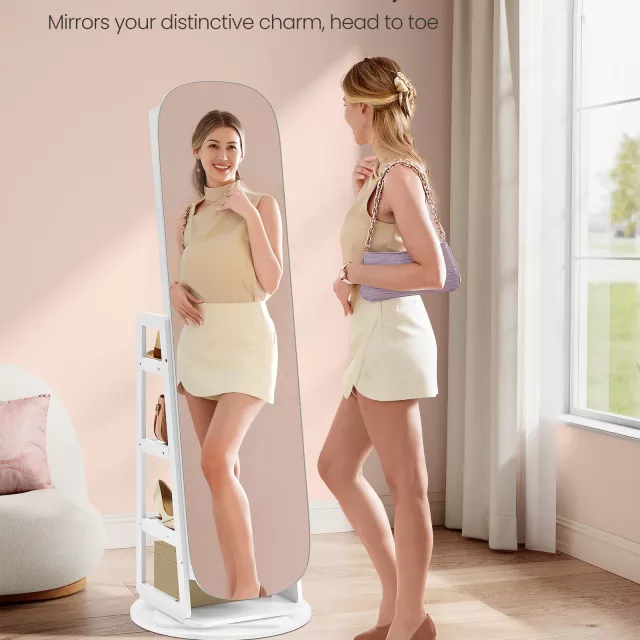
A lockable mirror jewelry cabinet combines a full-length dressing mirror, organized storage, and built-in lighting in one footprint. The mirror door conceals a surprisingly roomy interior, so everyday pieces stay sorted instead of scattered across a dresser. Add a 360° swivel base, and it becomes easier to angle the mirror for outfit checks and to access the cabinet comfortably without shuffling furniture. The lock provides an extra layer of privacy and helps limit access to small valuables and sensitive items.
What It Is and Who It Fits Best
This style of cabinet looks like a classic standing mirror, but the door opens to reveal a storage compartment designed for jewelry and small accessories. It’s a practical match for anyone who wants to streamline morning routines, protect pieces from tangling, and keep a tidier surface area.
- Full-length mirror on the exterior with a hidden storage compartment behind the door
- Lockable design for jewelry, watches, cosmetics, perfumes, or small keepsakes
- 360° swivel base for adjusting the mirror angle and accessing the cabinet comfortably
- LED lights inside to improve visibility for small items and color-matching during styling
- Works well for bedrooms, closets, dressing areas, and space-conscious apartments
Key Features to Look For in a Swivel Mirror Jewelry Cabinet
Not all swivel mirror cabinets feel the same day-to-day. Small construction details—like base geometry, door alignment, and interior layout—make the difference between “smooth and sturdy” and “wobbly and annoying.”
- Stable base: wide stance and solid weight distribution to reduce wobble while swiveling
- Smooth rotation: consistent swivel movement without grinding or sudden stops
- Secure locking: sturdy latch alignment and a lock that closes cleanly without forcing
- Organized interior: dedicated hooks, slots, and compartments to prevent tangles and scratches
- LED placement: lighting positioned to reduce shadows across hooks and shelves
- Mirror quality: clear reflection with minimal distortion across the full length
Quick Buying Checklist
| Feature |
Why it matters |
What to verify before buying |
| Lock & keys |
Helps secure valuables and keeps items away from children |
Lock aligns smoothly; spare key availability |
| 360° swivel base |
Improves access and lets the mirror face different directions |
Base stability; clearance needed to rotate |
| LED interior lighting |
Makes small pieces easier to see and helps during styling |
Power type (battery/plug-in); brightness and switch placement |
| Necklace hooks |
Prevents chains from knotting and reduces wear |
Hook count; spacing; drop length for longer necklaces |
| Ring/earring storage |
Keeps pairs together and minimizes loss |
Ring rolls are firm; earring slots fit studs and dangly styles |
| Shelves/compartments |
Supports watches, bangles, perfumes, cosmetics |
Shelf height; lip or divider to stop items from sliding |
| Mirror size |
Improves head-to-toe outfit checks |
Overall mirror height and viewing angle for user height |
| Assembly |
Affects sturdiness and setup time |
Tools required; pre-drilled holes; clear instructions |
Interior Storage: Keeping Jewelry Tangle-Free and Easy to Find
The biggest daily benefit is speed: when everything has a “home,” getting ready takes less time and fewer pieces go missing. A thoughtful layout also reduces wear—chains don’t knot, stones don’t scrape, and delicate items stay protected.
- Assign zones: earrings and rings near the top for quick daily access; necklaces on dedicated hooks to avoid knots
- Separate metals and stones: store delicate pieces away from heavier items to reduce scratches
- Use compartments for sets: keep matching necklace/earring sets in one section to avoid mismatches
- Reserve shelf space for watches and bracelets: lay flat or use soft liners to prevent scuffs
- Keep perfumes and cosmetics upright and capped: reduces spills and protects the interior lining
LED Lighting: Visibility, Color Accuracy, and Convenience
Interior LEDs are more than a nice touch—they help with the fiddly parts of jewelry: tiny earring backs, clasps, and fine chain links. Good lighting also supports makeup and accessory coordination, especially in rooms where overhead lighting casts shadows.
- Interior LEDs help spot small earring backs, clasps, and ring details without extra lamps
- Check switch placement: should be reachable while the door is open and hands are occupied
- Prefer even coverage: multiple light points reduce shadows created by hooks and shelves
- Consider heat and safety: LEDs typically run cool, which is helpful near cosmetics and fabrics
- Plan for power: confirm whether lighting is battery-powered or uses an adapter, and where the cord routes if applicable
For general lighting safety guidance, it helps to follow third-party best practices and the manufacturer’s instructions; see UL Solutions — Lighting Safety (General Information).
Locking and Security: What a Lockable Cabinet Can (and Can’t) Do
A built-in lock is ideal for privacy and “keep-out” convenience in shared spaces. It’s a practical deterrent against casual access, not a substitute for a safe for high-value jewelry or sensitive documents.
Swivel Design and Space Planning
For broader home stability guidance (especially in households with kids or pets), review CPSC Furniture Tip-Over Prevention and consider anchoring other tall furniture in the same area.
How to Choose the Right One for a Bedroom or Dressing Area
Setup and Everyday Use Tips
Care and Maintenance
FAQ
Do LED lights inside a jewelry cabinet get hot?
LEDs typically run much cooler than older bulb types, which helps around cosmetics and fabrics. Still, follow the manufacturer’s instructions and switch the lights off when you’re done to reduce heat buildup in an enclosed space.
Will a swivel base make the cabinet unstable?
It can be stable when the base is wide, the weight is well distributed, and all fasteners are tightened correctly. Place it on a flat surface and avoid overloading one side with heavier items.
What’s the best way to store necklaces to prevent tangles?
Use individual hooks, fasten clasps before hanging, and group necklaces by length so chains don’t overlap. Keep delicate chains separated from heavier pendants to reduce pulling and knotting.
Recommended for you









Leave a comment