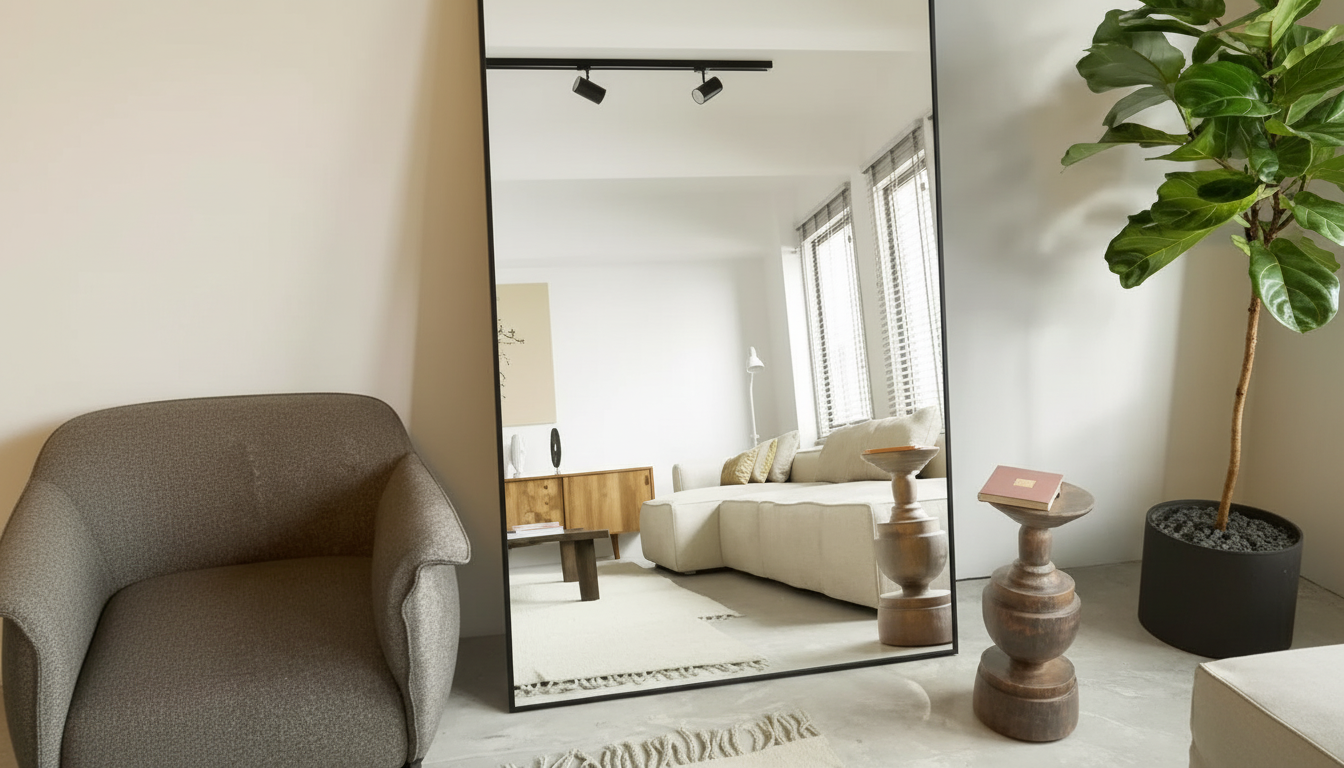
A full-length floor mirror with a stand adds instant function and depth to a space—useful for outfit checks, grooming, and visually opening up smaller rooms. Choosing the right size, frame, and support style helps the mirror feel stable, flattering, and easy to live with, whether it’s placed in a bedroom corner, a dressing area, or near a bathroom vanity.
What a freestanding full-length mirror changes in a room
- Creates a head-to-toe view without wall drilling, making it easy to reposition as the layout changes.
- Reflects daylight and artificial light to brighten darker corners and reduce the “closed-in” feel of narrow rooms.
- Adds a strong vertical design element that can visually raise ceiling height when placed on a long wall.
- Works as a flexible styling tool: angled for dressing, more upright for checking posture and proportions.
Because it’s not permanently mounted, a freestanding mirror can move with you—closer to a closet on busy mornings, then back to a corner to open up the room visually. That flexibility is also helpful in rentals where drilling isn’t an option.
How to choose the right size and viewing comfort
- Aim for a mirror height that comfortably captures from head to ankles when standing at a typical distance (about 2–5 feet away).
- A wider mirror improves side-to-side visibility for coats, layered outfits, and shoulder lines—especially in tight hallways.
- Consider who will use it most: a taller household may prefer a taller frame, while compact spaces benefit from a slimmer profile.
- If the mirror will be shared, prioritize a stable base and a tilt range that suits different heights.
Quick sizing guide for common rooms
| Placement |
Recommended mirror height |
Recommended width |
Notes |
| Bedroom dressing area |
58–71 in |
14–24 in |
Choose a tilt option for outfit checks; leave space to step back. |
| Closet or wardrobe corner |
58–65 in |
14–20 in |
Slim width fits tight aisles; prioritize a sturdy stand. |
| Hallway or entry |
60–71 in |
14–22 in |
Position to avoid door swings; consider anti-tip measures. |
| Bathroom overflow spot |
55–65 in |
14–20 in |
Keep away from splash zones; ensure the floor is level and dry. |
Comfort isn’t just about height. The best viewing experience also depends on how far back you can stand. If the only available spot forces you to stand too close, a slim-but-tall mirror (plus the right angle) often feels more accurate than an oversized mirror squeezed into a tight gap.
Stand styles and stability: A-frame, leaner, and tilt designs
- A-frame stands spread weight into a triangle footprint, often offering strong stability for high-traffic areas.
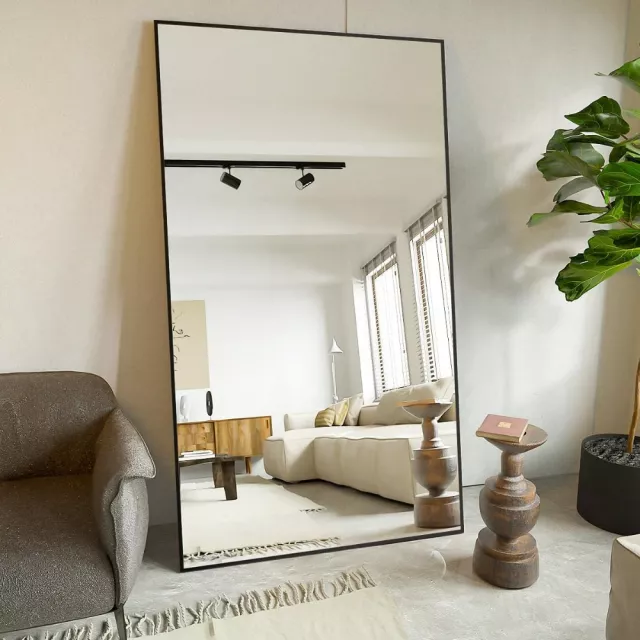
- Leaner-style mirrors can sit against a wall while still using a stand support; they look minimal but benefit from anti-tip security.
- Tilt mirrors help dial in the best angle for full-body viewing; check that the hinge feels firm and doesn’t drift over time.
- Base footprint matters as much as weight: a wider stance generally resists wobble better on uneven floors.
If your floors are even slightly uneven (older homes, thick rugs, or tile transitions), pay attention to how the feet contact the floor. A stable mirror should feel planted with gentle pressure at the top edge, not “rock” from corner to corner.
Frame materials and finishes that match everyday use
- Metal frames can feel sleek and modern; look for smooth edges and durable coatings that resist scuffs near shoes and vacuum bumps.
- Wood or wood-look frames add warmth and pair well with bedroom furniture; sealed finishes help reduce moisture sensitivity.
- Minimal or thin frames keep the look light in small rooms, while thicker frames can anchor a large wall visually.
- For high-contrast décor, a darker frame can define the mirror as a statement piece; lighter frames blend in and feel airy.
Finish choice is also practical. Matte finishes tend to hide fingerprints and tiny dings better than high-gloss, while textured wood grains can disguise minor wear in busy dressing areas.
Where to place it for the most flattering reflection
- Use indirect, even lighting when possible; harsh overhead light can create shadows that distort how outfits read.
- Face the mirror toward a window (not directly into bright sun) to bounce natural light without glare.
- Keep enough clearance to step back at least 2 feet; closer distances can exaggerate proportions.
- Avoid placing it where doors will strike the frame or where foot traffic regularly brushes the base.
How to Choose: Safety, durability, and daily maintenance
Tip-over incidents can be serious, especially in multi-use spaces like bedrooms and hallways. For guidance on safer home setups, see the U.S. Consumer Product Safety Commission’s resources on tip-over prevention and general home safety ideas that reduce slips and stumbles, such as basics from falls prevention. For cleaning best practices, the American Cleaning Institute is a helpful reference for product-safe routines.
Simple styling ideas
FAQ
How do you keep a full-length floor mirror from tipping over?
Use anti-tip straps or brackets when possible, place the mirror on a level surface, and keep it out of door-swing paths. Add grippy pads under the feet and avoid spots where kids or pets can push against the top edge.
Is it better to lean a mirror or use a standing frame?
A standing frame usually offers more predictable stability and easier angle control. Leaning can look minimal and save space, but it’s best paired with wall support and anti-tip measures in high-traffic areas.
What’s the best way to clean a full-length mirror without streaks?
Use a microfiber cloth and spray cleaner onto the cloth rather than directly on the glass. Wipe in overlapping strokes, then buff with a dry section of the cloth while keeping cleaner off painted or wood frames.
Recommended for you









Leave a comment