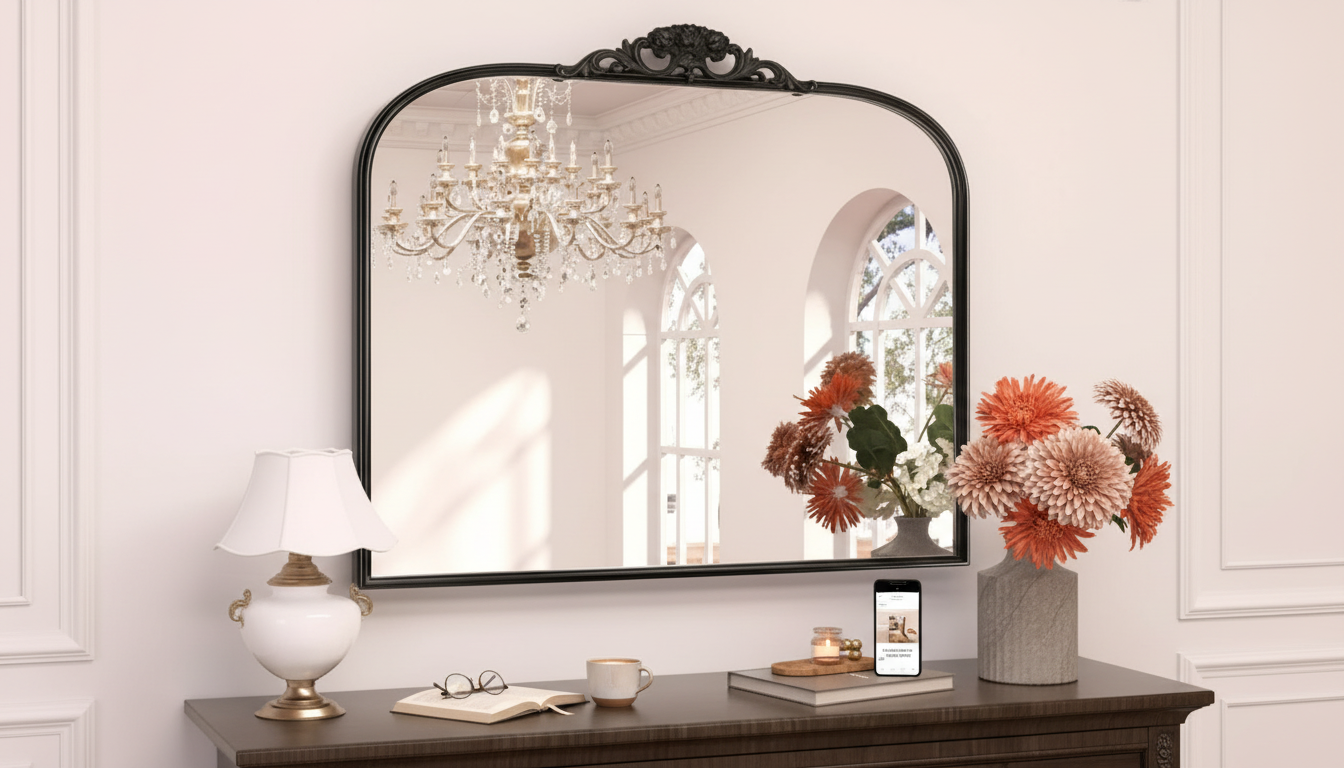
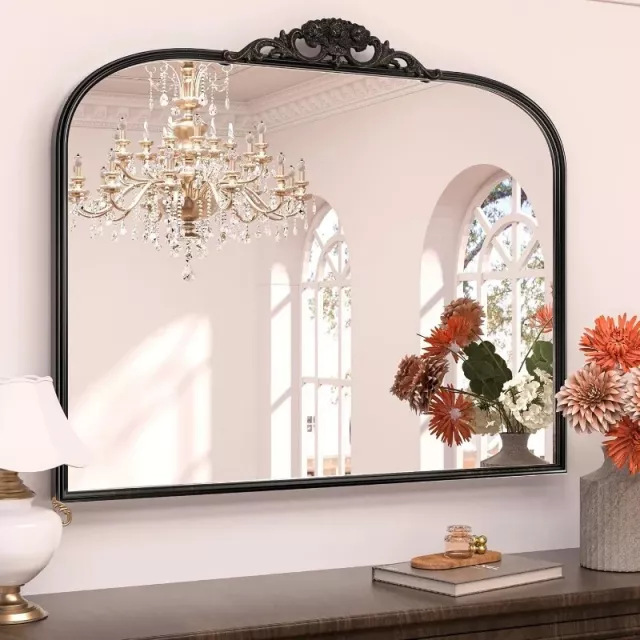
An arched metal mirror with an antique finish brings structure, warmth, and a subtle vintage edge to a room. The curved top softens hard lines, while a metal frame adds durability and contrast against tile, plaster, or wood. The result can feel architectural (like a window) without becoming heavy or ornate. Below are practical ways to choose the right size and finish, plus installation and care tips so it looks intentional for years.
What Makes an Arched Metal Mirror Feel “Antique”
“Antique” isn’t only about age—it’s about the visual cues that suggest time and character. With arched metal mirrors, that effect usually comes from a mix of shape, finish, and framing details.
- Arched silhouette: Creates a classic architectural profile that echoes doorways and windows, making a room feel more grounded and cohesive.
- Antique character: Often comes from a distressed or patinated finish that looks timeworn rather than glossy or factory-perfect.
- Metal frame presence: Adds a crisp outline that can balance soft materials (linen, warm paint) or sharpen modern spaces (flat-panel cabinetry, minimal hardware).
- Visual height: The arch naturally draws the eye upward, which can help small bathrooms, narrow hallways, or low-light corners feel taller and brighter.
Best Places to Use It at Home
An antique arched metal mirror is versatile because it can read as traditional, transitional, or modern depending on what surrounds it. These placements tend to look especially natural.
- Bathroom vanity: Pairs well with stone, ceramic tile, and mixed-metal fixtures; the arch softens rectangular sinks and countertops.
- Entryway: Reflects light, offers a last-look spot, and creates a focal point above a console or bench.
- Bedroom: Works above a dresser, or as a leaning mirror only if designed for leaning and properly secured.
- Living room: Adds dimension over a mantle or sideboard and bounces window light deeper into the space.
- Dining room: Amplifies candlelight and adds a layered, collected feel when paired with art or simple sconces.
How to Choose the Right Size and Placement
Size and placement do most of the design work. The goal is comfortable daily use plus proportions that look balanced from across the room.
- Over a vanity: A common guideline is choosing a mirror frame width slightly smaller than the vanity width so the edges don’t feel crowded.
- Height matters: The arched top needs breathing room; leave space to the ceiling or lighting so the curve reads clearly.
- Centering: Align the mirror to the sink and faucet centerline (or the vanity center for a double sink setup).
- Viewing angle: Place it so most users can see from upper chest to above the head without tilting or leaning forward.
- Light balance: In dim spaces, positioning adjacent to or opposite a window can brighten the room without creating harsh glare.
Quick Fit Guide for Arched Mirrors
| Decision point |
What to measure or check |
A practical rule of thumb |
| Width over a vanity or console |
Furniture top width |
Mirror frame is usually narrower than the surface below for cleaner proportions |
| Vertical spacing |
Distance to ceiling, shelf, or light bar |
Leave visible clearance so the arch isn’t visually cut off |
| Side clearance |
Distance to adjacent wall cabinets or sconces |
Keep enough space so the frame doesn’t crowd hardware or lighting |
| Reflection usefulness |
User height range and sink/console height |
Mount so faces and hairline are easy to see without bending |
| Style balance |
Nearby finishes (brass, chrome, black, wood) |
Match undertones (warm vs cool) rather than forcing an exact metal match |
Finish and Style Pairings That Look Intentional
The easiest way to make an antique-look mirror feel “meant to be there” is to coordinate undertones and repeat key materials around it.
Installation Basics and Safety Considerations
- Wall type: Determine whether you’re mounting into studs, masonry, or drywall. Use anchors rated for the mirror’s weight, and follow the hardware instructions for your wall material.
- Moisture planning (bathrooms): Choose a frame finish suitable for humid environments and keep ventilation consistent to reduce condensation.
- Leveling: Measure twice and mark carefully so the arch sits square; even small tilts are more noticeable with curved tops.
- Lighting coordination: If adding sconces, plan their height and spacing before drilling; account for junction box locations and shade clearance.
- High-traffic or seismic areas: Consider extra safety hardware to reduce sway and improve stability. For anchoring and tip-over prevention guidance, reference the CPSC’s Anchor It! resources.
Care and Maintenance for an Antique-Look Metal Frame
If you’re choosing cleaning products for frequent use, the EPA’s Safer Choice program is a helpful reference point for ingredient and product safety standards.
How to Choose When Stock Is Limited or Unavailable
FAQ
Can an arched metal mirror be used in a bathroom?
Yes. Choose a finish rated for humid environments, use proper anchors for the mirror’s weight, and keep ventilation consistent so moisture doesn’t linger on the frame.
How high should an arched mirror be hung above a vanity?
Align the mirror to the sink and faucet centerline, then adjust the height so most users can see from upper chest to above the head comfortably. Leave enough clearance above so the arch isn’t cramped by a light bar or the ceiling line.
Do antique metal frames need special cleaning?
They do best with gentle care: use non-abrasive cloths, avoid overspraying cleaner onto the metal, and dry the frame after splashes. Skip harsh chemicals that can strip or unevenly darken the patina.
Recommended for you










Leave a comment