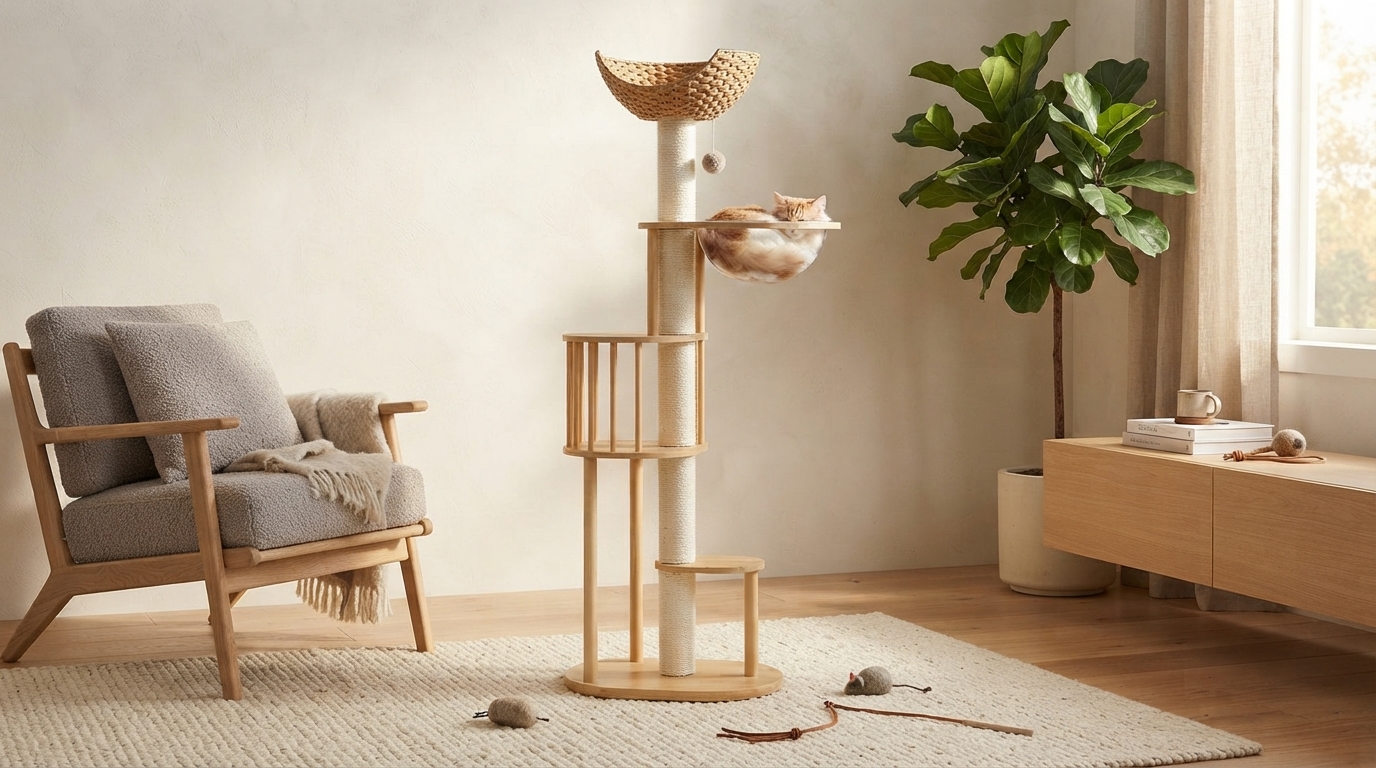
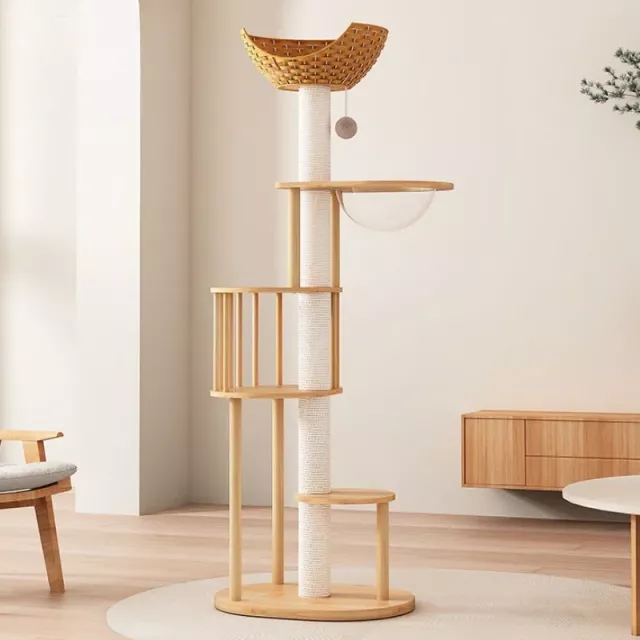
A multi-level cat tree can turn a corner of the home into a dedicated zone for climbing, scratching, resting, and play. This solid-wood design combines stable platforms, a cozy bed perch, dangling toys for enrichment, and sisal scratching areas to help protect furniture while supporting natural feline behaviors. It’s a practical way to offer more “cat space” without taking over the room’s floor plan.
What This Cat Tree Adds to a Home
Cats thrive when they have options: places to get up high, safe spots to decompress, and appropriate surfaces to scratch. A multi-tier scratching tree helps create that variety in one footprint.
- Vertical territory that helps cats feel secure, especially in multi-pet households
- Dedicated scratching surfaces that redirect clawing away from sofas and rugs
- A built-in rest spot (bed/perch) for naps, observation, and decompression
- Play features (toys) that encourage daily activity and reduce boredom
- Multi-tier layout that supports jumping practice and confidence building
Scratching is also a normal feline need for claw maintenance and scent marking. Providing a satisfying alternative can reduce the urge to use household items. For context on the importance of keeping cats’ claws intact while managing scratching in humane ways, see the American Veterinary Medical Association (AVMA) policy on declawing.
Key Features at a Glance
- Solid wood frame aimed at dependable stability during climbing and jumping
- Multiple tiers to separate lounging and play zones across heights
- Integrated bed/perch for a comfortable resting area
- Hanging toys to stimulate hunting and batting behavior
- Sisal scraper/scratch sections designed to satisfy scratching needs
Feature Overview
| Component |
Purpose |
What to Look For |
| Solid wood structure |
Stability and durability |
Wide base, secure joints, minimal wobble |
| Multi-tier platforms |
Climbing and perching |
Enough space for turning around; safe step distances |
| Bed/perch |
Rest and comfort |
Supportive rim, easy-to-clean surface or removable cushion |
| Sisal scraper |
Healthy scratching outlet |
Tightly wound sisal, generous scratching length |
| Dangling toys |
Enrichment and play |
Replaceable attachments; safe length without tangling risk |
Who This Style Works Best For
- Indoor cats that need a reliable climbing and scratching station
- Cats that prefer watching the room from elevated perches
- Homes aiming to reduce furniture scratching by offering an attractive alternative
- Cats that enjoy a mix of lounging and interactive play without needing multiple separate items
- Apartments and smaller spaces where vertical enrichment matters more than floor space
Multi-purpose cat furniture can also support healthier daily routines. The ASPCA’s guidance on feline enrichment highlights how climbing, exploring, scratching, and play help meet core behavioral needs—especially for indoor cats.
Sizing, Placement, and Setup Tips
Placement can make or break whether a cat tree becomes “the favorite spot” or a rarely used piece of furniture. A little strategy up front often leads to faster adoption.
- Place near a window for natural entertainment and a preferred resting location.
- Avoid blocking walkways; allow clear takeoff/landing space around the base.
- For scratch training, position close to the cat’s usual scratching target at first, then gradually move if desired.
- If there are multiple cats, ensure there are separate resting levels to reduce resource guarding.
- On smooth floors, add a non-slip mat under the base for extra grip.
- After assembly, check all fasteners and re-tighten after the first week of use.
A helpful rule of thumb: if the top perch is the “prize,” make sure the route up feels doable for your cat’s age and athleticism. Confident cats may bound up in two jumps; cautious cats often prefer smaller, predictable steps.
How to Encourage Use (Especially for New or Shy Cats)
Some cats climb immediately; others need time to evaluate a new object. Encourage curiosity while keeping the experience calm and positive.
- Rub a small amount of catnip or silvervine on the sisal areas (if the cat responds to it).
- Reward with treats when the cat sniffs, steps on, or scratches the tree.
- Temporarily remove dangling toys if a timid cat finds movement startling; reintroduce gradually.
- Create a positive association by feeding meals nearby (not on the tree unless designed for it).
- Redirect unwanted scratching by calmly moving the cat’s paws to the sisal and praising immediately.
Consistency matters more than intensity. Gentle repetition—paired with quick rewards—typically works better than trying to “teach” everything in a single day.
Care, Cleaning, and Longevity
Regular upkeep keeps the tree more inviting and extends the life of the scratching surfaces and fabric areas.
- Vacuum platforms and bed areas weekly to manage fur and dander buildup.
- Spot-clean fabric surfaces with pet-safe cleaner; allow full drying before use.
- Inspect sisal for fraying; trimming loose strands helps maintain a neat surface.
- Rotate toy positions (when possible) to keep play interesting and reduce wear on one spot.
- Periodically check for wobble and tighten bolts to maintain stability over time.
How to Choose the Right Cat Tree for Your Cat
Safety Notes for Daily Use
FAQ
How do cats learn to use a new scratching tree?
Place it near the current scratching spot, add catnip (if your cat likes it), and reward any investigation or scratching with treats and praise. Calmly redirect scratching from furniture to the sisal without scolding so the tree stays a positive, “safe” option.
Is a solid wood cat tree better for larger cats?
Often, yes—solid wood can improve stability and long-term durability. The best indicators are a wide, heavy base, secure fasteners, and platforms large enough for your cat to turn around comfortably.
How often should the sisal scratching surface be replaced?
It depends on how frequently your cat scratches and how aggressively they dig in. Inspect it regularly, trim loose fibers, and replace or repair sisal when it becomes overly frayed, loose, or no longer provides good resistance.
Recommended for you









Leave a comment