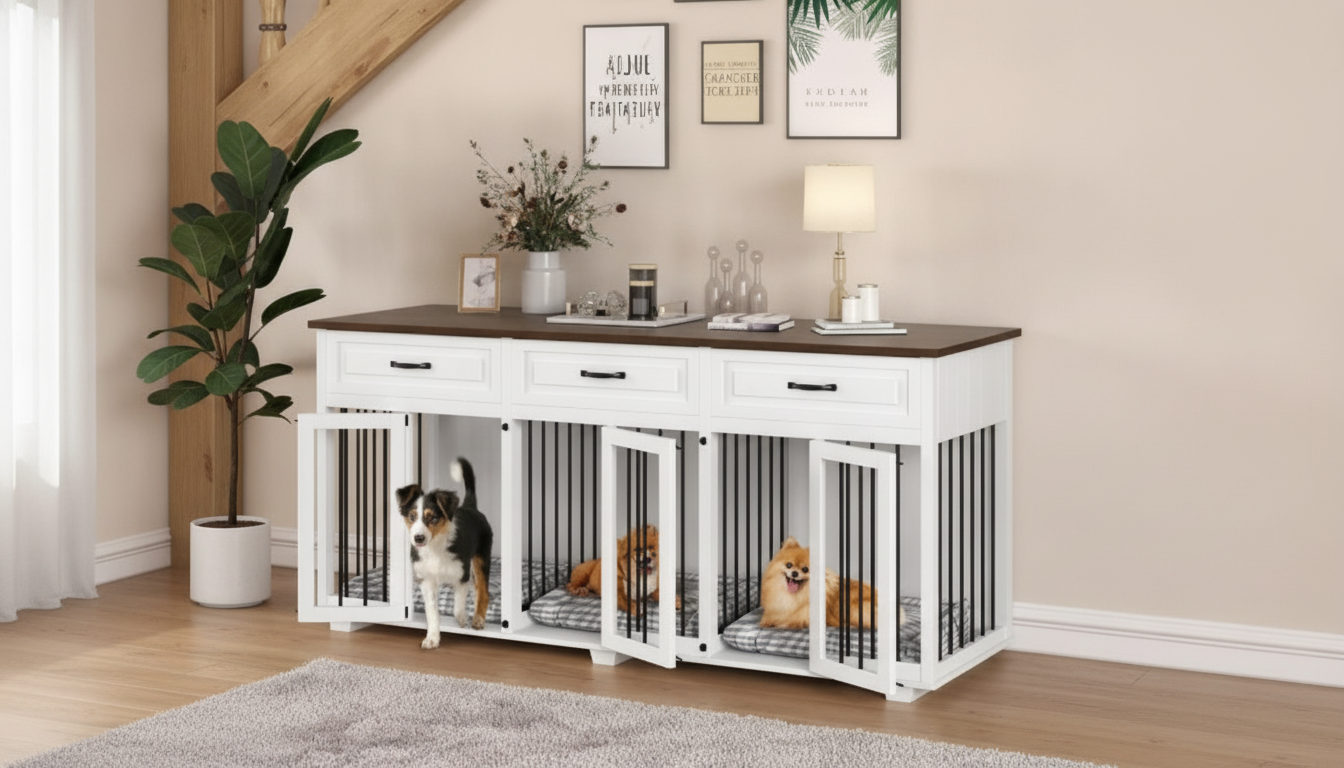
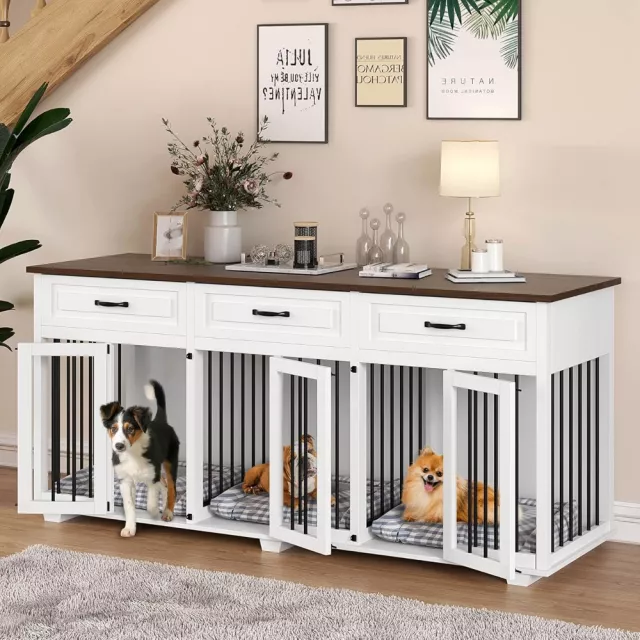
A furniture-style dog crate can solve two everyday problems at once: giving dogs a secure, calm space while adding practical storage that looks intentional in the home. This 71-inch wooden design pairs three separate rooms with drawers, aiming to support multi-dog households, mixed routines (rest, feeding, quiet time), and cleaner organization without the visual clutter of traditional wire kennels. For more guidance, see 71-Inch Large Dog Crate with 3 Drawers for 2 Dogs, Spacious ….
What Makes a Furniture-Style Crate Different
Unlike a typical kennel that reads as pet equipment, a furniture-style crate is designed to blend into common living spaces—more like a sideboard or console table than a temporary setup. That matters in rooms where the crate is always visible, such as an open living area or an entryway. For further reading, see ZephyPaws 76″ Modern 2-in-1 Dog Crate Furniture, Wooden ….
Wood panels can also reduce visual stimulation compared with open wire crates. For some dogs, fewer sightlines can make it easier to settle, especially during busy household moments. A multi-room layout adds flexibility: dogs can be separated when needed, or one room can be reserved for a specific routine (like decompression after walks) while another holds supplies or rotates between pets.
Built-in drawers and a wide top surface support everyday storage—leashes, treats, grooming tools—so dog gear doesn’t drift across counters, chairs, and hallway hooks.
Layout Overview: Three Rooms and Built-In Drawers
The three-room configuration is designed for real households: two dogs with different schedules, a visiting pet, or a single dog that benefits from consistent “zones” for calm time. Drawers keep high-use items accessible while preventing dogs from pulling items out of open baskets.
The 71-inch footprint often fits naturally along a wall where a console table might normally go. One practical detail to plan for is door swing and traffic flow: each room should open into clear space so dogs can enter and exit without feeling cornered or jostled by people passing by.
Room-and-Storage Planning Ideas
| Zone |
Best Use |
What to Store Nearby |
| Room 1 |
Primary sleeping space |
Bed, calming mat, lightweight blanket |
| Room 2 |
Quiet-time or rotation space |
Chews approved for supervision, enrichment toy |
| Room 3 |
Second dog or utility space |
Spare bed, towel, portable water bowl |
| Drawers |
Daily essentials |
Leash, treats, grooming brush, waste bags |
Where This Style Works Best at Home
Placement can make or break how well a multi-room crate functions day to day. In a living room, it can act like a credenza while keeping a dog’s den near the family—often a good balance between togetherness and boundaries. In an entryway, drawers can hold leashes and outdoor items, and the rooms can support predictable “go to your spot” routines that help reduce door-dashing.
A home office is another strong match: it creates a consistent settle location during calls or focused work blocks. Wherever it goes, avoid placing it directly next to heating vents or fireplaces, and steer clear of narrow corridors where doors could be bumped or blocked during busy times.
Comfort and Safety Considerations
A wooden, furniture-style crate should still meet the same core standards as any crate: comfort, ventilation, and secure containment.
- Sizing: Each dog should be able to stand, turn around, and lie down comfortably in their assigned room. Measure your dog (nose-to-base of tail, floor-to-top of head) and compare with the crate’s interior room dimensions rather than relying on breed averages.
- Ventilation: Ensure each room has sufficient airflow, and avoid blocking openings with heavy blankets that restrict circulation.
- Chewing and scratching: Wood can be more vulnerable than wire. For dogs that tend to chew or dig, add a durable mat and provide appropriate chew outlets so the crate isn’t the primary target.
- Latch security: Confirm doors close consistently and hardware feels sturdy. If a dog is an escape artist, double-check closure points before leaving them unsupervised.
- Separation management: With multiple dogs, confirm each dog is comfortable resting independently. If barrier frustration appears (pacing, barking, intense fixation on another room), adjust placement, routines, and training time.
For training fundamentals and safety reminders, reputable guides like the American Kennel Club’s crate training overview and the ASPCA’s crate training resource are helpful references.
Daily Routine Benefits: Cleaner Space, Calmer Dogs
How to Choose the Right Multi-Room Wooden Crate
Quick Fit Checklist
| Checklist Item |
Target |
Why It Matters |
| Floor space |
71″ length plus door swing |
Prevents blocked walkways and cramped door access |
| Dog comfort |
Stand/turn/lie down easily |
Supports rest and reduces stress |
| Use plan |
Separate dogs or separate functions |
Improves consistency and household flow |
| Cleaning plan |
Wipeable surfaces + liner option |
Helps odor control and hygiene |
| Behavior fit |
Chewing/escape tendency assessed |
Avoids damage and safety issues |
Care, Cleaning, and Setup Tips
FAQ
Can two or three dogs use the same furniture-style crate safely?
Yes, if each dog has a separate room, doors latch securely, and the dogs are comfortable resting apart. Avoid placing multiple dogs together in one room, and monitor for barrier frustration when dogs are crated side by side.
Is a wooden crate a good choice for dogs that chew or scratch?
It can work with training and appropriate chew outlets, but heavy chewers may damage wood surfaces. If chewing is persistent, use gradual acclimation and consider whether a more chew-resistant crate style is a better match for safety and durability.
Where should a multi-room dog crate cabinet be placed in the house?
Choose a low-traffic spot near the family with good airflow and enough clearance for each door to open fully. Keep it away from heat sources and avoid tight corridors where doors can be bumped or blocked.
Recommended for you









Leave a comment