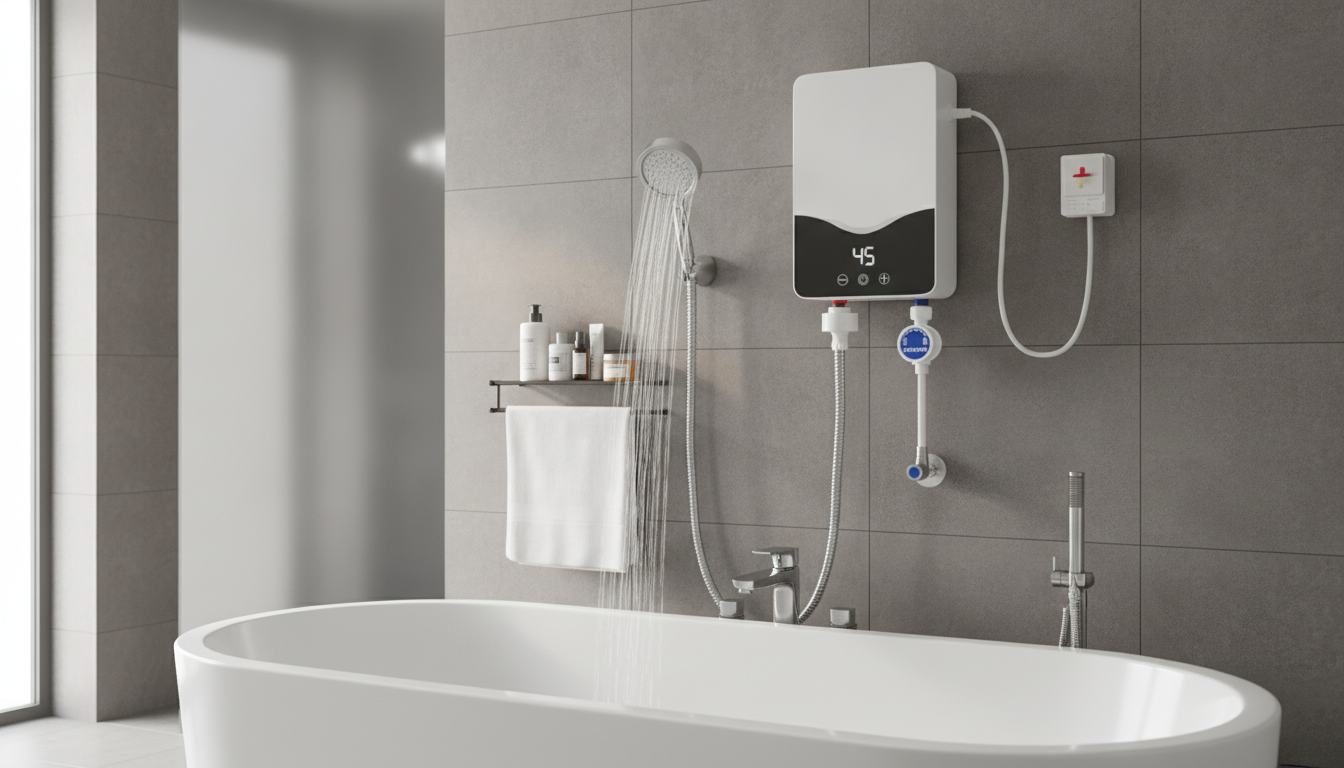
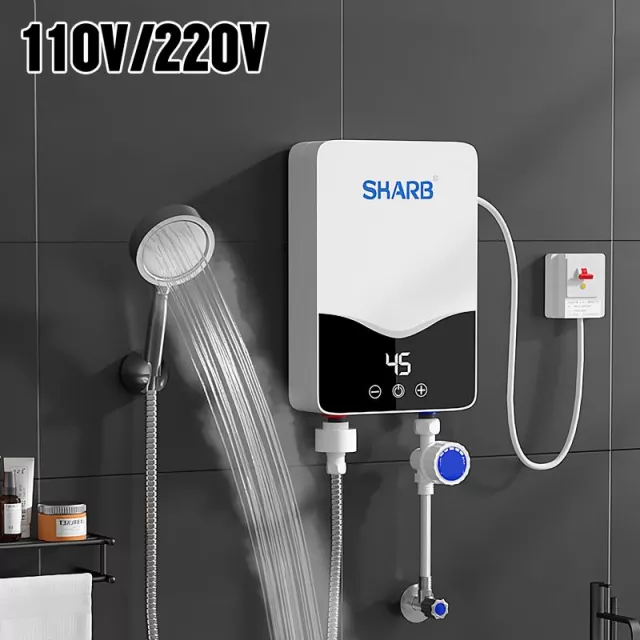
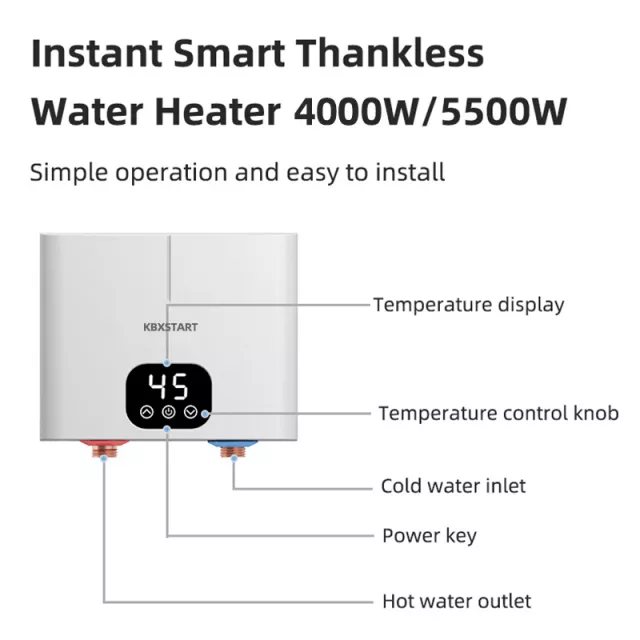
An instant tankless electric water heater delivers hot water on demand without storing it in a tank, making it a practical option for bathrooms, sinks, and small home hot-water zones. A 110V/220V 5500W unit can be a strong fit for point-of-use comfort when it’s matched to the fixture’s flow rate, your local incoming water temperature, and the electrical capacity available. The key is understanding what this power level can realistically do, then planning installation so the heater can perform consistently and safely.
What an instant tankless electric heater does well in a bathroom
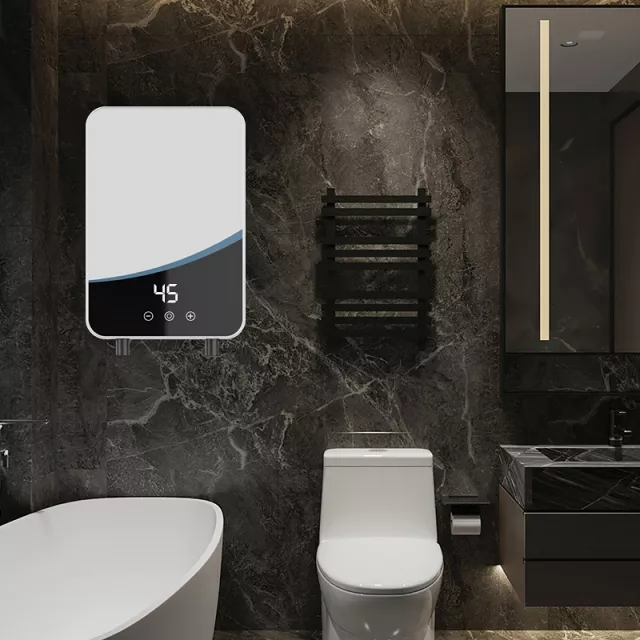
Bathrooms are often ideal for tankless electric units because the run between the heater and the faucet or shower can be short. Short runs mean less waiting and less heat loss through piping, which is exactly where on-demand designs tend to shine.
- Provides hot water only when a tap is opened, reducing standby heat loss compared with storage tanks.
- Compact size can work for tight bathroom vanities or utility spaces (placement must allow safe access and required clearances).
- Best for point-of-use or short-run plumbing where heat loss in long pipes is minimized.
- Useful as a dedicated heater for a single bathroom sink, shower zone, or guest bath depending on flow demand and incoming water temperature.
Tankless systems are also appealing when a bathroom is far from the main water heater. Instead of flushing gallons down the drain while waiting for hot water to arrive, a dedicated unit placed near the fixture can reduce the delay and water waste. For background on demand-type operation and efficiency considerations, see the U.S. Department of Energy overview of tankless water heaters.
110V vs 220V operation: what changes in real use
With electric tankless heaters, real-world results come down to how much heat the unit can add to water as it flows through. Voltage, circuit capacity, and the heater’s internal design determine the wattage it can actually deliver in a given configuration. In practical bathroom terms, 220V operation typically supports a stronger temperature rise than 110V when the electrical supply is correctly sized and the unit is designed to accept both voltages.
- Voltage and wiring capacity largely determine how much heat can be added to the water at a given flow rate.
- 220V operation typically supports stronger temperature rise than 110V at similar current limits, which can matter for showers and colder climates.
- 110V setups can be suitable for handwashing sinks or mild incoming water temperatures, but may struggle at higher flow.
- Correct breaker sizing, wire gauge, and grounding are essential; electrical work should follow local code and may require a licensed electrician.
Practical differences between 110V and 220V setups
| Aspect |
110V (typical use) |
220V (typical use) |
| Best fit |
Single sink / light duty |
Sink + higher demand / stronger output |
| Temperature rise potential |
Lower to moderate |
Moderate to higher |
| Electrical requirements |
May use standard circuits (verify amperage) |
Often requires dedicated higher-capacity circuit |
| Common limitations |
Hot water may be lukewarm at higher flow |
Needs proper installation and panel capacity |
Because electrical requirements can vary significantly by model and installation scenario, it’s important to treat the nameplate rating as the source of truth and ensure compliance with local requirements. For code context, refer to the NFPA National Electrical Code (NEC) overview.
Understanding performance: temperature rise, flow rate, and comfort
Instant heaters don’t “make hot water” in a vacuum; they add heat to water that’s already at a certain temperature. Performance is governed by three variables: incoming water temperature, desired outlet temperature, and flow rate. A 5500W unit can feel powerful at a slow faucet flow but underwhelming at a high-flow shower, especially in winter when supply water is colder.
- Output is governed by incoming water temperature, desired outlet temperature, and flow rate.
- Colder incoming water requires more power (or lower flow) to reach comfortable shower temperatures.
- For bathroom comfort, stable temperature matters as much as peak heat; consider fixtures with consistent flow and pressure.
- Low-flow showerheads can improve perceived performance by reducing the required heating load.
For showers, stability is often the deciding factor. If someone flushes a toilet or opens a nearby faucet, pressure and flow can shift. Since tankless heaters react to flow in real time, sudden flow changes may show up as a temperature swing. Fixtures that hold a steadier flow (and sensible pressure balancing in the plumbing) help keep the experience consistent. Efficient fixtures can also reduce the heating load; the U.S. EPA WaterSense program offers guidance on water-saving fixtures that can support comfortable performance with less flow.
Installation essentials and safety checks
A compact heater can still demand serious planning. Before mounting anything, confirm both electrical and plumbing conditions so the unit can run safely at its rated output.
How to choose the right instant heater for a bathroom or small home zone
Operating tips for steady hot water
FAQ
Can a 5500W instant electric heater run a shower comfortably?
It can, but comfort depends on incoming water temperature and the shower’s flow rate. In colder months or with higher-flow showerheads, you may need to reduce flow to maintain a comfortable outlet temperature, and a 220V configuration (when supported and properly installed) typically improves temperature rise.
Does a tankless electric heater need a dedicated circuit?
Many units do require a dedicated breaker and correctly sized wire to safely carry the load. Verify the heater’s nameplate amperage and follow local electrical code; if there’s any uncertainty, a licensed electrician can confirm circuit sizing and protection.
How can scale buildup be reduced in a bathroom tankless heater?
Use filtration or conditioning where water is hard, keep any inlet screens clear, and follow the manufacturer’s guidance for periodic descaling if permitted. Reducing scale helps maintain efficient heat transfer and can prevent temperature instability over time.
Recommended for you









Leave a comment